

Description
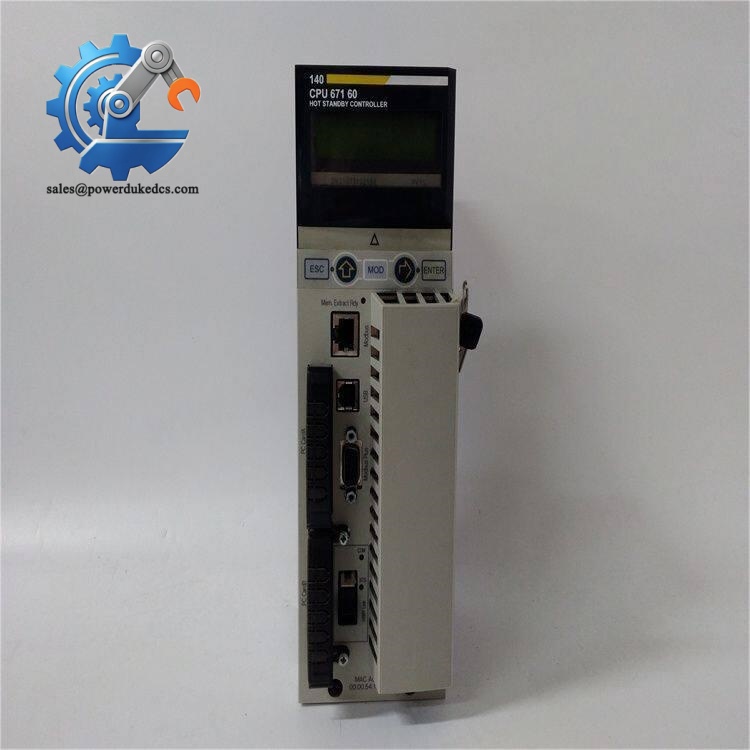
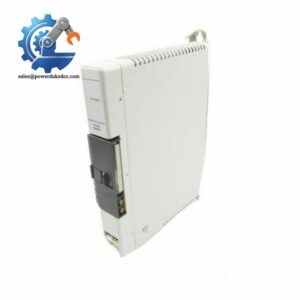
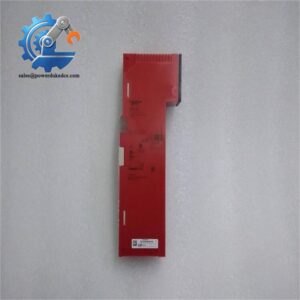
- Schneider 140CPU67160 | Authentic Redundant CPU Hardware
2. Unboxing & Physical Snapshot
- Brand & Model: Schneider Electric 140CPU67160
- Product Family: Modicon Quantum Automation Platform.
- Product Type: Unity Hot Standby Processor Module with Multimode Ethernet.
- Primary Function: Executes PLC logic while supporting Hot Standby redundancy for high-availability industrial control systems.
- Processor: 266 MHz Pentium-class CPU.
- Approximate Physical Dimensions (W × H × D): 103 × 250 × 45 mm (standard Quantum CPU module dimensions).
- Estimated Shipping Weight: Approximately 1.4 kg (3.1 lb).
- Mounting Style: Direct installation into a Modicon Quantum backplane.
- Mechanical Features:
- Reinforced industrial housing
- Front status LEDs
- Integrated Ethernet Hot Standby port
- USB programming port
- Modbus serial interface
- Modbus Plus communication interface
- Lockable keyswitch
- Cooling Method: Passive cooling assisted by cabinet airflow.
- What’s in the Box:
- Schneider 140CPU67160 CPU module
- Protective anti-static packaging
- Connector protection cover (when supplied)
- Inspection documentation if included
3. Product Introduction
Inside a redundant Modicon Quantum architecture, the 140CPU67160 functions as the primary processing engine that synchronizes application memory with its standby partner. The processor installs directly into the Quantum rack and communicates across dedicated redundancy links, allowing process control to continue after a controller failure (which is particularly valuable in continuous-process facilities where downtime carries significant cost).
This CPU should be treated as a controlled lifecycle asset rather than a standard PLC spare. Examine the backplane connector, front communication ports, retaining mechanism, and keyswitch before installation. Check the firmware revision as well. Hardware compatibility between the operating system and coprocessor firmware is important when maintaining redundant systems.
4. Core Technical Specifications
| Parameter | Value |
|---|---|
| Manufacturer | Schneider Electric |
| Model Number | 140CPU67160 |
| Product Family | Modicon Quantum |
| Module Type | Unity Hot Standby Processor |
| Processor | Pentium-class CPU |
| Clock Frequency | 266 MHz |
| User Memory | 1024 KB |
| PCMCIA Expansion Memory | Up to 7168 KB |
| Ethernet | Integrated Hot Standby Multimode Ethernet |
| Serial Port | Modbus RS-232/RS-485 |
| Modbus Plus | Integrated |
| USB Port | Yes |
| Maximum Local Racks | 2 |
| Distributed I/O Stations | Up to 63 |
| Remote I/O Support | Quantum Ethernet, X80, S908 Remote I/O |
| Power Consumption | Approximately 2.5 A from the backplane |
| Mounting Method | Quantum backplane |
| Cooling | Passive cabinet airflow |
| Operating Mode | Redundant Hot Standby PLC |
Schneider 140CPU67160
5. Global Compliance & Industry Certifications
Typical compliance expectations for this class of industrial automation hardware include:
- CE Mark for EMC and Low Voltage Directive compliance.
- UL/cUL Listed or Recognized for industrial control equipment installations.
- RoHS Compliance for applicable production revisions.
- ATEX/IECEx certification is not inherent to the CPU itself; hazardous-area installations require certified enclosures and complete system evaluation.
- Marine Approvals (DNV GL) may be available only for specific certified system configurations.
For redundant PLC systems, EMC compliance is especially important because communication interruptions between the primary and standby processors can trigger unnecessary failovers during plant operation.
Verify specific lot certifications with OEM.
6. Long-Term Storage & Asset Preservation Guide
- Keep the processor inside its original ESD shielding bag until installation. Protect the backplane connector and communication ports from contamination.
- Maintain storage humidity below 60% RH. Gold-plated edge connectors resist corrosion, but prolonged exposure to moisture can still affect contact quality.
- If the CPU remains in storage for several years, inspect electrolytic capacitors before commissioning (older electronic assemblies benefit from careful visual inspection prior to energization).
- Store the module horizontally in a vibration-free cabinet. Avoid placing heavy equipment on top of the enclosure because the retaining clips and front panel can deform.
7. Physical Installation Prerequisites
- Install only in a compatible Modicon Quantum backplane.
- Leave at least 50 mm of clearance above and below the rack to promote cabinet airflow.
- Verify the rack power supply capacity before adding redundant CPU modules.
- Connect the protective earth according to Schneider Electric installation guidelines.
- Confirm Hot Standby fiber or Ethernet connections before placing the controller into service.
- Wear an ESD wrist strap while inserting or removing the processor.
- Inspect the backplane connector for bent contacts before installation.
8. Buyer’s FAQ (Logistics & Compliance Focus)
Q: Which HS Tariff Code is commonly used for the 140CPU67160?
A: PLC processor modules are commonly classified under HS 8537 or HS 8538, depending on the importing country’s customs rules and the declared function. The final classification should always be confirmed with the customs broker.
Q: Does the Country of Origin affect import documentation?
A: Yes. The Country of Origin (COO) influences customs duty, trade agreement eligibility, product traceability, and audit documentation. Ensure the COO matches the commercial invoice, packing list, and certificate of origin whenever one is issued.
Q: Should this processor be shipped with cargo insurance?
A: Absolutely. Although mechanically durable, the CPU contains high-density electronic assemblies and precision communication interfaces. Insurance helps protect against concealed transit damage that may only appear during commissioning.
Q: Does the 140CPU67160 include the latest firmware?
A: Not necessarily. The installed operating system depends on the production revision. Before installation, verify CPU firmware compatibility with the corresponding coprocessor firmware and the existing Unity/Control Expert project version. Schneider Electric has also announced the product’s commercialization has ended, with standard service ending in 2026, making firmware verification even more important for lifecycle planning.


 Start Chat