

Description
- Brand Triconex / Invensys
- Full Model Number 3503EN
- System/Series Family Tricon Safety Instrumented System
- Core Function TMR digital input acquisition for 32 commoned 24 VAC/DC field signals
- Top 3 Hardcore Specs 32 inputs | 20–42.5 VDC recommended range | 47–63 Hz AC capability
- Stock Status New Surplus — verify exact revision, termination panel, baseplate, and field-voltage configuration before shipment
Module 3: Technical Product Introduction
When a safety-system input card stops recognizing field permissives, limit switches, or shutdown contacts, the fault may appear at the controller even though the actual problem is in the input interface. The Triconex 3503EN belongs to the 3503 family of TMR digital input modules, providing 32 input points for 24 VAC/DC-class field signals. The standard 3503E documentation specifies 32 inputs commoned in groups of eight, with DC or 47–63 Hz operation, 20–42.5 VDC recommended input range, and a 42.5 VAC/DC maximum.
The exact suffix matters. Current technical references identify the 3503EN2 as a 24 VAC/DC, 32-input version, while supplier pages also use the 3503EN designation for the broader family. The established 3503 electrical baseline includes 15 VAC/VDC typical Off-to-On switching, 8 VAC/VDC typical On-to-Off switching, greater than 1.25 kΩ nominal input impedance, less than 8 ms Off-to-On delay, less than 15 ms On-to-Off delay, and opto-isolated inputs. For procurement, those established 3503E figures should not automatically be assigned to every EN revision without checking the physical module and controlled documentation.
Module 4: Application Scenarios & Field Realities
- At a refinery shutdown panel, a 3503-family input module can monitor field contacts from pressure switches, valve-position devices, permissives, and other discrete safety signals. The 32-point architecture provides high-density status acquisition while retaining the TMR processing structure.
- Where normally energized shutdown circuits are used, the EN/EN2 family is relevant because enhanced variants are associated with diagnostic monitoring of transitions to the Off state. That diagnostic behavior should be confirmed from the exact hardware revision rather than assumed from the base number alone.
- In a cabinet containing many common-reference field circuits, the eight-point grouping must be respected. A common-wire error can make several healthy channels appear faulty simultaneously, so termination and common-reference checks should precede module replacement.
- During Tricon maintenance, channel mapping deserves strict control. Photograph the termination assembly, record every field tag against its point number, and verify the input source voltage before reconnecting the replacement. A card can pass a bench test and still create a process-status error if one field conductor is moved to the wrong point.
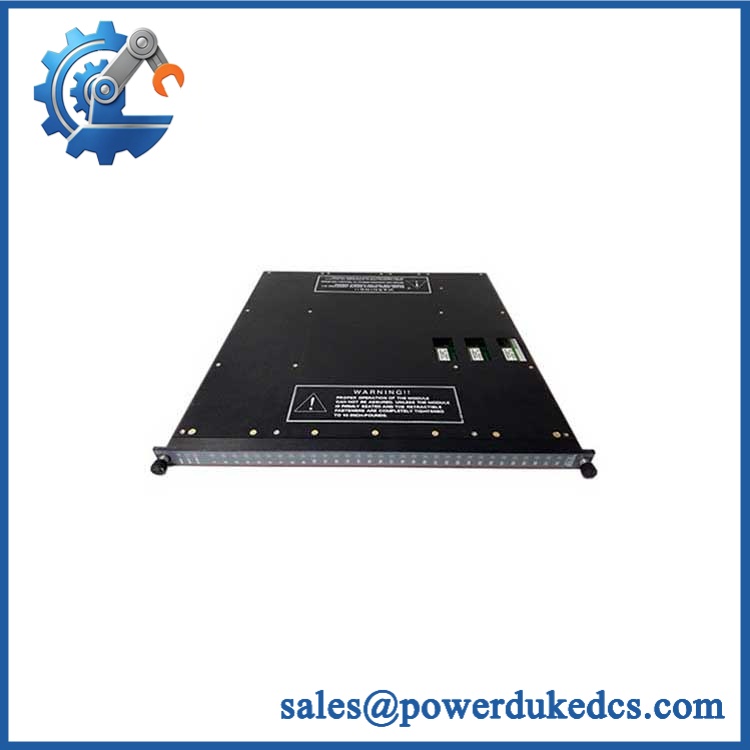
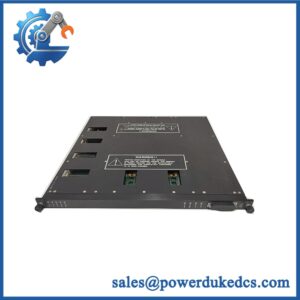
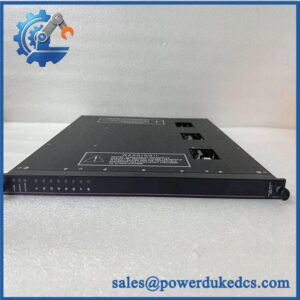
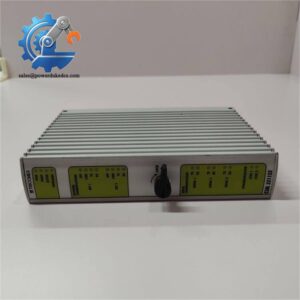
Triconex 3503EN
Module 5: Migration, Compatibility & Installation Traps
Replacement Matrix
| Replacement Status | Engineering Assessment |
|---|---|
| Drop-in Replacement | Yes, for a like-for-like 3503EN installation in a compatible Tricon chassis with the correct baseplate, termination arrangement, hardware revision, and field-voltage class. |
| Software Compatible | Generally yes for an exact module replacement, but the controller configuration, channel assignments, diagnostic settings, and approved Tricon software baseline must be verified. |
| Hardware Modification Required | Normally no for an exact 3503EN replacement. Modification may be required when changing between standard 3503E, EN/EN2 variants, termination architectures, or other digital-input families. |
⚠️ Field Traps: Watch Out
Do not assume 3503EN and 3503EN2 are interchangeable by suffix alone. Publicly indexed technical references specifically identify 3503EN2 as a 24 VAC/DC, 32-input module, while other supplier pages advertise “3503EN” using specifications that appear to be borrowed from 3503E. Verify the exact nameplate and revision before approving the replacement.
Check the field-voltage envelope before testing. The standard 3503E specification uses a recommended 20–42.5 VDC range and a 42.5 VAC/DC maximum. A test fixture should be configured from the actual revision documentation, not simply from a generic “24 VDC” label.
Do not use a 3505E as an automatic substitute. Tricon documentation distinguishes the 3503E 24 VAC/DC module from the 3505E low-threshold 24 VDC input module. The latter has different switching characteristics and is the recommended choice for certain shunt-diode intrinsic-safety barrier applications.
Verify the common-reference arrangement. The 3503E architecture uses 32 points commoned in groups of eight. Field termination must follow the actual Tricon wiring diagram; one misplaced common conductor can affect an entire eight-point group.
Module 6: Quality Assurance SOP
A surplus 3503EN should be evaluated as a safety-related digital input assembly. Every input point should be functionally exercised where the test fixture permits.
- OEM anti-counterfeit visual inspection: Verify Triconex/Invensys identification, exact 3503EN marking, PCB revision, front-panel indicators, connector geometry, enclosure, and manufacturing identifiers against controlled references.
- Part-number and traceability check: Record the complete suffix, hardware revision, serial number, date code, and associated baseplate or termination-panel information.
- Mechanical inspection: Examine the backplane connector, locking/keying features, PCB, front panel, mounting hardware, and field interface for bent contacts, corrosion, contamination, cracking, or unauthorized repair.
- Power-on self-test (POST): Install the module in an approved Tricon test arrangement and verify expected PASS, FAULT, ACTIVE, and individual channel-status indications.
- Field-supply verification: Apply a controlled AC or DC source appropriate to the exact hardware revision. For the established 3503E baseline, the documented recommended DC range is 20–42.5 VDC, with 42.5 VAC/DC maximum.
- 32-channel functional test: Exercise all input points individually at representative Off and On states and verify correct channel reporting.
- Switching-threshold verification: For modules verified as the standard 3503E electrical configuration, confirm approximately 15 VAC/VDC typical Off-to-On and 8 VAC/VDC typical On-to-Off behavior.
- Input-delay verification: Where supported by the test fixture, measure controlled transitions against the standard 3503E reference of less than 8 ms Off-to-On and less than 15 ms On-to-Off.
- Common-group verification: Test each group of eight inputs separately and confirm the expected common-reference behavior without cross-group interaction.
- AC-input verification: For an AC-qualified variant, apply an isolated 47–63 Hz source and verify stable On/Off state detection. The standard 3503E specification supports DC or 47–63 Hz AC input.
- Diagnostic verification: Apply controlled signal-loss or input-toggle conditions permitted by the applicable maintenance procedure and verify the expected input diagnostics.
- Normally energized diagnostic test: Where the exact EN/EN2 revision provides this function, execute the approved diagnostic sequence for detecting a transition from the energized state to Off and verify the expected fault response.
- Isolation verification: Confirm the documented opto-isolation of the input points using the approved laboratory procedure. The standard 3503E documentation specifies minimum isolation of 1000 VAC / 1500 VDC at the point interface.
- Baseplate and termination verification: Confirm correct mechanical mating and electrical continuity through the specified Tricon baseplate and termination assembly.
- System recognition test: Verify correct module identification, point addressing, diagnostics, and data exchange through the Tricon I/O architecture.
- Communication handshake verification: Confirm successful 32-channel state transfer to the Tricon processors. The 3503EN is an I/O module, not a standalone Ethernet or Modbus communication device.
- Fault-response test: Apply controlled open-circuit or loss-of-input conditions allowed by the approved procedure and verify that the expected module/channel diagnostics are generated.
- Extended-run test: Operate representative input channels continuously while monitoring signal stability, diagnostic events, supply current, and abnormal temperature rise.
- Final QC record: Document exact suffix and revision, AC/DC test source, all 32 channel results, threshold measurements, timing results, common-group checks, diagnostic behavior, baseplate compatibility, extended-run observations, traceability data, and packing condition.
Technical Identification Note: The inventory item TRICONEX 3503EN requires careful revision control. Controlled Tricon documentation establishes the 3503E family as a 32-point TMR digital input module for 24 VAC/VDC, with eight-point common groups, while current technical references identify 3503EN2 as a later 24 VAC/DC, 32-input variant. Supplier pages sometimes use “3503EN” while reporting 3503E or 3503EN2 specifications. For procurement, retain the exact 3503EN marking and verify the physical hardware revision and termination configuration before shipment.



 Start Chat