

Description
Module 1: High-Converting SEO Title Matrix (5 Options)
- FOXBORO FBM231 P0926GV RS232 RS422 RS485 Serial Interface
- FOXBORO FBM231 P0926GV New Surplus Redundant FDSI Module
- FOXBORO FBM231 P0926GV Replacement Serial Field Device Module
- FOXBORO FBM231 P0926GV OEM Redundant FDSI Module with Warranty
Module 2: The 10-Second Buyer’s Brief (Snapshot)
- Brand: Foxboro
- Full Model Number: FBM231 P0926GV
- System/Series Family: Foxboro I/A Series / Foxboro Evo 200 Series
- Core Function: Redundant serial interface between dual-ported field devices and the Foxboro control system
- Top 3 Hardcore Specs: 4 serial ports; RS-232 / RS-422 / RS-485 support; redundant 24 VDC power
- Device Capacity: Up to 64 dual-ported devices via four RS-485 buses
- Communication Architecture: Four dual-logical serial ports; redundant FBM-level operation
- Input Voltage: 24 VDC +5% / -10%
- Power Consumption: 7 W maximum per module
- Operating Temperature: -20°C to +70°C for Rev. A–L; 0°C to +70°C for Rev. M and later
- Module Dimensions: 102 × 45 × 104 mm; 114 mm including mounting lugs
- Weight: Approximately 284 g
- Fieldbus Cable: 1–5 m FBM231-to-termination-assembly cable
- Stock Status: New Surplus or Fully Tested Refurbished; exact revision to be confirmed
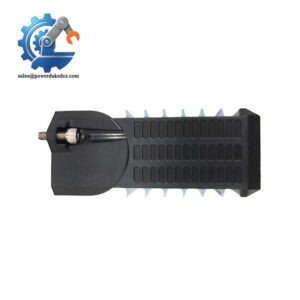
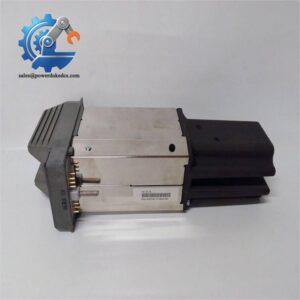
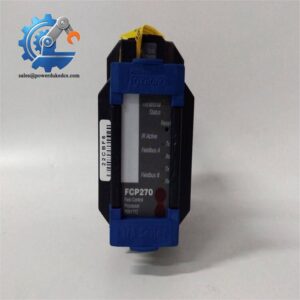
Schneider Electric identifies FBM231 P0926GV as a Field Device System Integrator module with four serial ports and redundant operation. The module provides serial connectivity for direct or multidrop field-device architectures and is designed for modular Foxboro baseplate installation.
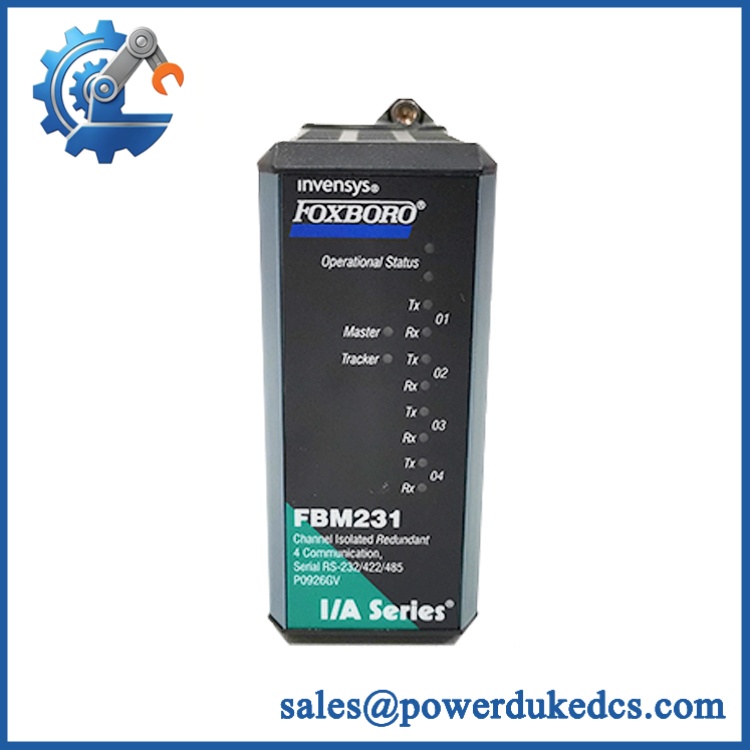
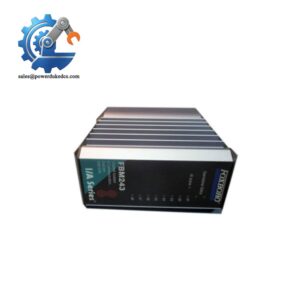
FOXBORO FBM231 P0926GV
Module 3: Technical Product Introduction
Serial field devices are still common in established process plants, particularly where smart instruments, analyzers, packaged equipment, or legacy controllers communicate through RS-232, RS-422, or RS-485 rather than Ethernet. The Foxboro FBM231 P0926GV provides the interface between those dual-ported field devices and the Foxboro control system. Four serial I/O communication ports can support direct connections to RS-232 or RS-422 devices, or multidrop RS-485 networks with up to 16 devices per port. Redundant FBM operation is implemented by using two FBM231 modules as a Master and Tracker.
The electrical interface is equally important during replacement. FBM231 uses a redundant 24 VDC supply with a +5%/-10% tolerance and has a maximum consumption of 7 W per module. Serial cabling can extend up to 1200 m for RS-422 and RS-485 under the stated interface conditions, while custom RS-232 connections between the termination assembly and a modem, converter, or device can extend up to 15 m. The module is approximately 102 mm high, 45 mm wide, and 104 mm deep, with a mass of about 284 g.
Module 4: Application Scenarios & Field Realities
- For analyzer packages using RS-232 interfaces, FBM231 provides a controlled serial connection into the Foxboro system without requiring the field device to be converted to Ethernet. Where a modem or protocol converter sits outside the termination assembly, the documented RS-232 connection limit is up to 15 m for custom cabling.
- When multiple multidrop instruments share an RS-485 network, one FBM231 serial port can support up to 16 devices on the associated bus under the specified architecture. With four ports, the module can therefore support up to 64 dual-ported devices through four RS-485 buses, subject to the installed driver and system configuration.
- In redundant process-control installations, two FBM231 units can operate as Master and Tracker. The redundancy is at the FBM level, so replacing one module without checking the partner unit, termination assembly, and configuration can leave the cabinet apparently healthy while the intended redundancy arrangement is incomplete.
- For long-distance RS-422 or RS-485 device connections, the published interface capability extends to approximately 1200 m. That distance does not eliminate the need to validate termination, shielding, grounding, baud rate, node addressing, and cable characteristics in the actual plant installation.
Module 5: Migration, Compatibility & Installation Traps
Replacement Matrix
Replacement classification: Drop-in Replacement when the installed system already uses FBM231 P0926GV with the same modular baseplate, termination assembly, serial architecture, and configured field-device drivers.
Software compatibility: Configuration verification required. The hardware provides the serial transport layer, but the Foxboro application must still contain the correct device definitions, communication parameters, port assignments, and redundancy configuration.
Cross-model replacement: Not automatically interchangeable. Other Foxboro FDSI modules can provide different serial or Ethernet interfaces, device capacities, or protocol architectures. A module with the same 200 Series mechanical footprint is not necessarily an electrical or application-level equivalent.
Field Traps — Watch Out
1. RS-232, RS-422, and RS-485 are not interchangeable wiring schemes. The termination assembly and external device connection must match the actual serial standard. A polarity or signal-reference error on RS-485, for example, can leave the module powered and apparently healthy while producing persistent communication failures.
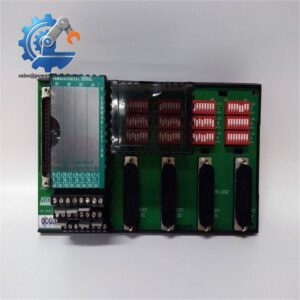
2. Confirm the exact termination assembly. Schneider Electric documents P0926PA as the ring-lug termination assembly and RH926GH, which supersedes P0926GH, as the compression-screw version. The FBM231-to-TA cable is specified in lengths from 1 m to 5 m.
3. Check the hardware revision against cabinet temperature. The current specification distinguishes operating temperature by revision: Rev. A through L: -20°C to +70°C; Rev. M and later: 0°C to +70°C. A replacement with a different revision should therefore be evaluated against the actual ambient-temperature requirement rather than treated as automatically equivalent.
4. Do not test only one serial channel. FBM231 is a four-port interface. A single successful RS-232 test does not establish that Ports 2–4, their termination paths, or the redundant architecture are healthy.
Module 6: Quality Assurance SOP
Pre-Shipment Inspection Protocol for FOXBORO FBM231 P0926GV
- OEM identity inspection: Verify Foxboro markings, FBM231 designation, P0926GV part number, hardware revision, serial number, and visible identification labels.
- Revision verification: Record the exact revision before release, with particular attention to the documented environmental-temperature difference between Rev. A–L and Rev. M or later.
- Mechanical inspection: Examine the module enclosure, mounting interface, connectors, retaining hardware, labels, and accessible PCB surfaces for cracks, deformation, corrosion, contamination, or unauthorized modifications.
- Connector inspection: Inspect all serial interfaces and the module/baseplate connector for oxidation, bent contacts, damaged housings, or foreign material.
- Power-on verification: Install the module on a compatible Foxboro modular baseplate and apply a controlled redundant 24 VDC supply within the documented tolerance.
- Port 1 communication test: Verify representative RS-232, RS-422, or RS-485 communication according to the intended hardware configuration.
- Port 2 communication test: Repeat the electrical and protocol test independently.
- Port 3 communication test: Verify serial transmit/receive operation, error handling, and stable communication.
- Port 4 communication test: Complete the same channel-level verification and record results separately.
- Multidrop verification: Where the test fixture permits, simulate multiple RS-485 nodes and verify stable communication across representative bus loading.
- Redundancy handshake verification: With a second FBM231 available, confirm the intended Master/Tracker behavior and controlled failover under the applicable test conditions.
- Cable and termination verification: Confirm that the supplied termination assembly and FBM231-to-TA cable correspond to the customer’s requested configuration and documented 1–5 m range.
- Thermal observation: Operate the module under representative communication traffic and monitor for abnormal temperature rise, intermittent resets, or serial-port instability.
- Final QC record: Record exact part number, revision, serial number, supply measurements, four-port test results, termination assembly type, redundancy test results where applicable, test date, and inspector approval.
- ESD-controlled packaging: Package the module in an ESD-safe bag with connector protection and mechanical cushioning to prevent impact, contamination, moisture, and PCB flex.
Procurement note: The exact identification FOXBORO P0926GV FBM231 is well supported by Schneider Electric documentation. It is a four-port redundant Field Device System Integrator module, not a generic serial communication card. The associated termination assembly, cable length, serial standard, field-device topology, and module revision should all be matched before approving a replacement.



 Start Chat