

Description
- Brand Foxboro
- Full Model Number RH926GH
- System/Series Family Foxboro I/A Series 200 Series FBM
- Core Function Compression-screw termination assembly for serial communication FBMs
- Top 3 Hardcore Specs FBM224 / FBM230 / FBM231 compatible | Compression-screw terminals | 32/35 mm DIN-rail mounting support
- Stock Status New Surplus — verify revision, terminal configuration, and mating FBM before shipment
Module 3: Technical Product Introduction
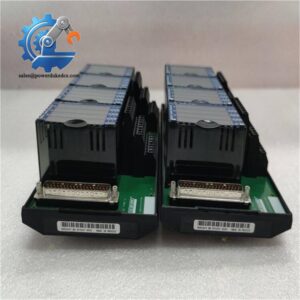
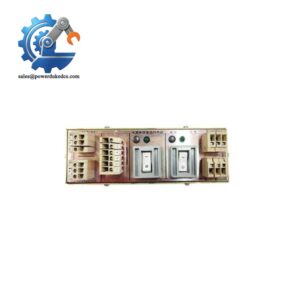
A serial communication module is only as usable as its field termination. Foxboro RH926GH is a compression-screw termination assembly used with the I/A Series FBM224, FBM230, and FBM231 communication modules. Schneider Electric documentation identifies RH926GH as the compression termination assembly that supersedes P0926GH. The associated FBM230/FBM231 documentation specifies that the termination assembly mounts on a combination foot supporting 32 mm and 35 mm DIN rails.
This is passive interface hardware, not a processor or serial communication controller. Its role is to provide the physical field termination for the communication channels while the associated FBM performs protocol handling. Schneider Electric documentation lists RH926GH at approximately 272 g, with FBM-to-termination cable lengths of 1 to 5 m for the FBM230 and FBM231 installations. For the FBM231, supported interfaces include RS-232, RS-422, and RS-485, while the FBM224 supports Modbus communication through its associated termination architecture.
Module 4: Application Scenarios & Field Realities
- For an FBM230 serial integration cabinet, RH926GH provides the compression-screw field termination used with the four-port Field Device System Integrator module. Schneider Electric specifies the RH926GH assembly for FBM230 and permits 1–5 m FBM-to-termination cable lengths.
- Where redundant serial communication is required, the same termination assembly is specified for the FBM231. The module supports four serial ports, with RS-232 and RS-422/RS-485 interfaces used according to the configured port application. Cable distance becomes a real installation constraint here: Schneider Electric specifies up to 15 m for RS-232 custom connections and up to 1200 m for RS-422/RS-485 under the stated conditions.
- For Modbus field integration through an FBM224, is listed as the compression termination assembly for the module. When troubleshooting a failed Modbus link, test the termination hardware and cable path separately from the FBM itself; a loose compression connection can mimic a communication-card failure.
- During a cabinet retrofit, DIN-rail compatibility matters. The termination assembly uses a combination mounting foot designed for 32 mm or 35 mm DIN rail, so the mechanical check should include rail position, cable bend radius, terminal access, and adjacent equipment clearance.
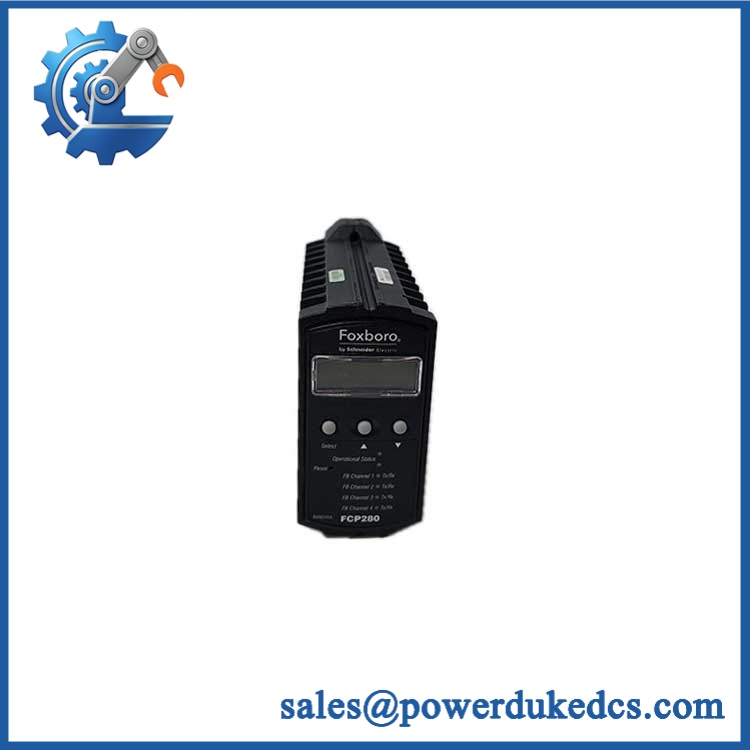
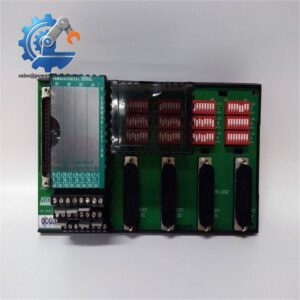
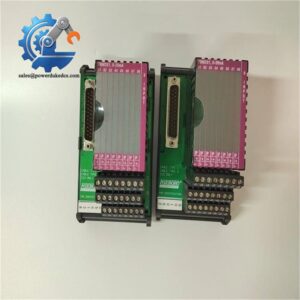
Foxboro RH926GH
Module 5: Migration, Compatibility & Installation Traps
Replacement Matrix
| Replacement Status | Engineering Assessment |
|---|---|
| Drop-in Replacement | Yes, when replacing with the same termination assembly for a compatible FBM224, , or installation. |
| Software Compatible | Not applicable. is passive termination hardware and contains no application firmware. |
| Hardware Modification Required | Normally no for an exact replacement. Modification may be required if the mating FBM, cable assembly, DIN-rail arrangement, or field termination method changes. |
⚠️ Field Traps: Watch Out
Do not buy based only on the word “terminal.” Schneider Electric specifically identifies it as the compression-screw termination assembly for FBM224, , and . Other Foxboro termination assemblies have different channel arrangements and electrical interfaces.
Check the mating FBM before reconnection. is used across several serial communication FBMs, but the associated cable, port assignment, and field wiring depend on whether the connected module is an , , or . The termination assembly does not define the communication protocol by itself.
Do not mistake RS-232 wiring for RS-422/RS-485 wiring. The / architecture supports multiple serial standards, and the field termination must follow the selected interface. RS-232 is point-to-point and has a much shorter permissible cable distance than RS-422/RS-485.
Verify the legacy part number. Schneider Electric documentation states that supersedes P0926GH. If the cabinet drawing still shows P0926GH, document the substitution rather than assuming the old and new identifiers are unrelated components.
Module 6: Quality Assurance SOP
is mechanically simple, but an incorrect termination assembly can create intermittent communication faults that are difficult to diagnose. Pre-shipment inspection should therefore emphasize connector integrity and wiring continuity.
- OEM anti-counterfeit visual inspection: Verify Foxboro identification, exact designation, molded or printed markings, terminal geometry, housing construction, mounting foot, and visible revision information.
- Part-number and traceability check: Record and note the legacy P0926GH designation where relevant because Schneider Electric identifies as its successor.
- Mechanical inspection: Examine the compression-screw terminals, terminal barriers, mounting clip, cable interface, housing, and DIN-rail foot for cracks, deformation, corrosion, contamination, or unauthorized modification.
- Terminal-torque inspection: Confirm that each accessible compression terminal operates smoothly and does not exhibit stripped threads, damaged clamps, or excessive mechanical play.
- Continuity test: Verify every intended conductor path from the termination side through the associated cable interface using a controlled, de-energized continuity test.
- Isolation check: Confirm there is no unintended continuity between adjacent serial conductors, shield connections, or separate communication channels.
- Cable identification check: Match the termination assembly to the correct FBM cable type and verify the installed cable length. Schneider Electric specifies 1–5 m FBM-to-TA cables for the documented / configuration.
- RS-232 wiring verification: Where used with RS-232 equipment, check transmit, receive, and signal-reference wiring against the approved schematic before energization.
- RS-422/RS-485 wiring verification: Verify differential-pair polarity, signal reference, and termination/bias arrangement against the project communication design. A reversed pair can produce a complete communication failure with no obvious hardware damage.
- DIN-rail fit test: Confirm secure installation on the intended 32 mm or 35 mm rail and verify that the mounting clip engages completely.
- Communication handshake verification: Test through the associated FBM rather than the passive termination assembly alone. For an / installation, verify representative serial data exchange; for an installation, verify the configured Modbus communication path.
- Intermittent-connection test: With the approved test fixture, apply controlled cable movement and terminal inspection while monitoring communication errors. This can expose loose compression contacts that pass a static continuity check.
- Final QC record: Document exact part number, successor/legacy designation, terminal inspection, continuity results, cable identification, mating FBM, communication test result, mechanical condition, and packaging status.
Technical Identification Note: Official Schneider Electric documentation identifies as a Compression Screw Termination Assembly for , , and serial communication modules, superseding P0926GH. It is not a CPU or standalone communication processor. The documented termination assembly weighs approximately 272 g, and the / architecture uses 1–5 m FBM-to-termination cables.


 Start Chat