

Description
- Brand: HIMA
- Full Model Number: F8650
- System/Series Family: H51q-MS / H51q-HS / H51q-HRS
- One-Sentence Core Function: Dual-processor central module for safety-related H51q process control systems
- Top 3 Hardcore Specs: 2 × Intel 386EX 32-bit processors at 25 MHz; 2 × RS-485 serial interfaces; 5 VDC / 2 A supply
- Stock Status: Inventory condition to be confirmed before order
Module 3: Technical Product Introduction
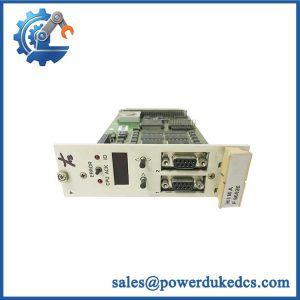
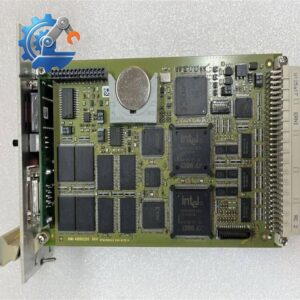
A failed H51q central module can stop the safety control layer even when the I/O hardware remains healthy. HIMA F8650 serves as the central module for the PES H51q-MS, H51q-HS, and H51q-HRS architectures, using two clock-synchronized Intel 386EX 32-bit processors for safety-related processing. The module provides two RS-485 interfaces, a four-digit diagnostic display, dedicated fault indication, and a fail-safe watchdog output rated at 24 VDC and up to 500 mA. It occupies 8 TE in the rack.
Per processor, the F8650 provides 1 MB Flash-EPROM for the operating system, 512 kB Flash-EPROM for the user program, and 256 kB SRAM for data storage. Its operating supply is specified at 5 VDC / 2 A. Those figures are important when evaluating an older spare against an F8650X: the later F8650X documentation lists 1 MB user-program Flash and 1 MB SRAM per processor, so the X variant should not be treated as an identical memory configuration without checking the system revision and firmware requirements.
Module 4: Application Scenarios & Field Realities
- At refinery shutdown systems built around H51q-HS or H51q-HRS, the F8650 is the central processing element rather than an ordinary communications card. A spare must match the installed architecture, since H51q-HS and H51q-HRS use redundant central configurations and differ in I/O-bus arrangement.
- When troubleshooting intermittent CPU or I/O fault indications, use the four-digit diagnostic display before replacing downstream modules. The F8650 provides dedicated indications for central-module and testable I/O faults, while the ACK control is used to reset fault indications. That diagnostic path can prevent unnecessary replacement of healthy I/O hardware.
- For systems communicating through serial infrastructure, verify the two RS-485 channels and the existing station-number and transmission-rate configuration before commissioning the spare. The F8650 uses switch S1 for bus settings; copying the hardware position from the failed module is safer than assuming the default configuration.
- Where an older H51q installation is being supported beyond its original service life, memory revision becomes a practical spare-parts issue. and F8650X are related central-module variants, but published specifications show different user-program and data-memory capacities. Treating the X suffix as cosmetic can create a compatibility problem during migration.
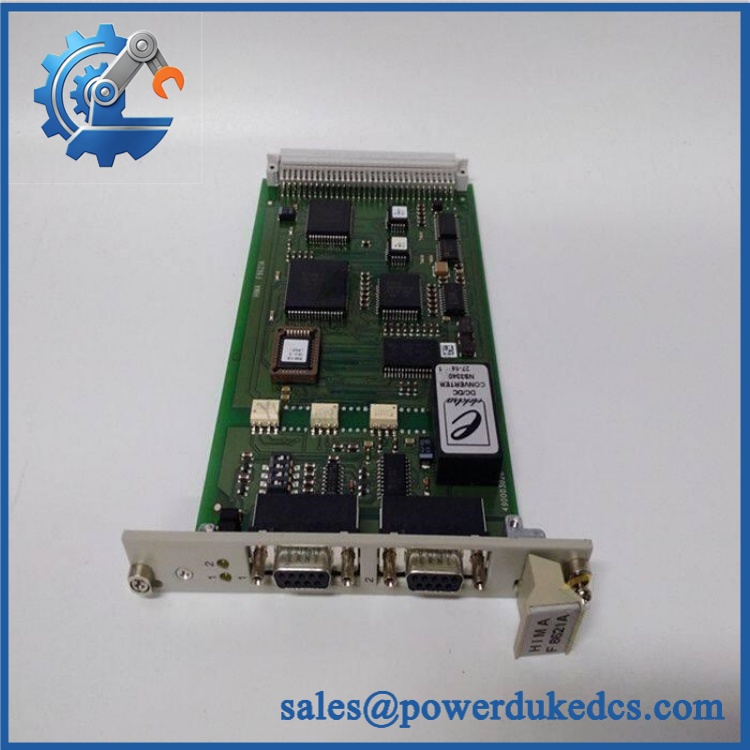
HIMA F8650
Module 5: Migration, Compatibility & Installation Traps
Replacement Matrix
Replacement Classification: Architecture-Compatible Replacement — Configuration and Revision Check Required
is specifically associated with the H51q-MS, H51q-HS, and H51q-HRS PES architectures. Within the same documented hardware family, replacement is intended as a central-module exchange, but it should not be classified as a universal drop-in replacement for every H51q controller variant. Confirm the exact system designation, hardware revision, operating-system version, S1 configuration, and redundancy arrangement before installation.
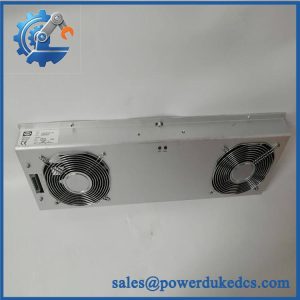
→ F8650X: Do not assume a direct one-for-one substitution. Published specifications identify higher memory capacity on F8650X, and migration guidance indicates that hardware changes associated with the X version can include the fan design. Firmware and system revision checks belong in the replacement procedure.
⚠️ Field Traps — Watch Out
1. Firmware and memory revision mismatch: uses 512 kB Flash-EPROM for the user program and 256 kB SRAM per processor, while F8650X documentation lists 1 MB for each of those functions. Record the installed operating-system version and hardware designation before substitution; never infer compatibility from the front-panel model number alone.
2. S1 configuration and battery condition: The uses S1 for station-number and transmission-rate settings. Preserve the original switch positions during replacement and inspect the buffer battery condition; published maintenance guidance recommends scheduled battery replacement rather than waiting for an end-of-life event.
Module 6: Quality Assurance SOP
Before shipment, each HIMA should be processed through a traceable inspection and test sequence rather than relying on external appearance alone.
- OEM identification visual inspection: Verify HIMA markings, designation, PCB labels, connector condition, front-panel assembly, hardware revision markings, and visible component condition against available documentation.
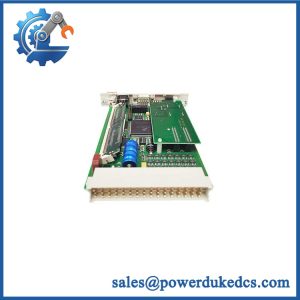
- Mechanical inspection: Check the PCB assemblies, mounting hardware, connectors, diagnostic display, pushbuttons, S1 switch bank, and battery area for damage, corrosion, contamination, or evidence of mishandling.
- Configuration capture: Photograph and record S1 switch positions before testing. The station-number and transmission-rate settings must be preserved when reproducing the customer’s configuration.
- Power verification: Apply the specified 5 VDC supply within the approved test-rack procedure and verify that current behavior is consistent with the documented 2 A operating specification.
- Power-on self-test (POST): Confirm normal startup behavior, diagnostic display operation, and CPU/I/O status indications. Record any diagnostic code rather than clearing it without investigation.
- RS-485 communication handshake: Test both serial interfaces using an approved HIMA-compatible test configuration and verify expected data exchange at the configured station address and transmission rate.
- Watchdog verification: Test the fail-safe watchdog output under the authorized test procedure and verify the 24 VDC output behavior and fault response.
- Battery inspection: Record battery identification and condition. Where applicable, replace the buffer battery according to the maintenance schedule before release.
- Final QC record: Retain identification photographs, hardware revision, S1 settings, power-test results, communication results, diagnostic observations, and final QC approval with the shipment record.
For an spare, traceability should cover the hardware revision and configuration as well as the physical module. The central processor is tied directly to the H51q system architecture, so a visually matching card is not sufficient evidence of compatibility.



 Start Chat