

Description
- Brand: HIMA
- Full Model Number: SB3073-EX
- System/Series Family: SB3000-Ex Isolated Safety Barrier Series
- One-Sentence Core Function: One-channel isolated temperature-signal barrier for hazardous-area RTD, thermocouple, mV, and strain-gauge inputs
- Top 3 Hardcore Specs: 1 channel; mV input −75 to +75 mV; Pt100/Cu50 and J/K/T/E/R/S/N/B thermocouple support
- Stock Status: New Surplus / Fully Tested Refurbished — confirm exact condition and configuration before shipment
Module 3: Technical Product Introduction
A failed temperature interface in an Ex instrument loop can stop a measurement channel even when the RTD or thermocouple itself is healthy. The HIMA SB3073-EX is a one-channel isolated safety barrier intended to convert temperature-related signals from hazardous areas into isolated signals for the safe-area control system. Published technical material identifies support for mV inputs, multiple thermocouple types, and Pt100/Cu50 RTDs, with isolated 4–20 mA or 1–5 V outputs.
The important specification is the input architecture, not simply the output current. The documented mV input range is −75 to +75 mV, while RTD applications cover 0–450 Ω; Pt100 and Cu50 ranges are also specified, with automatic cold-junction compensation for thermocouple service. The published dimensional data is approximately 114.5 × 99.0 × 17.5 mm. Exact configured range, sensor type, and cold-junction parameters should be checked against the original ordering data before replacement.
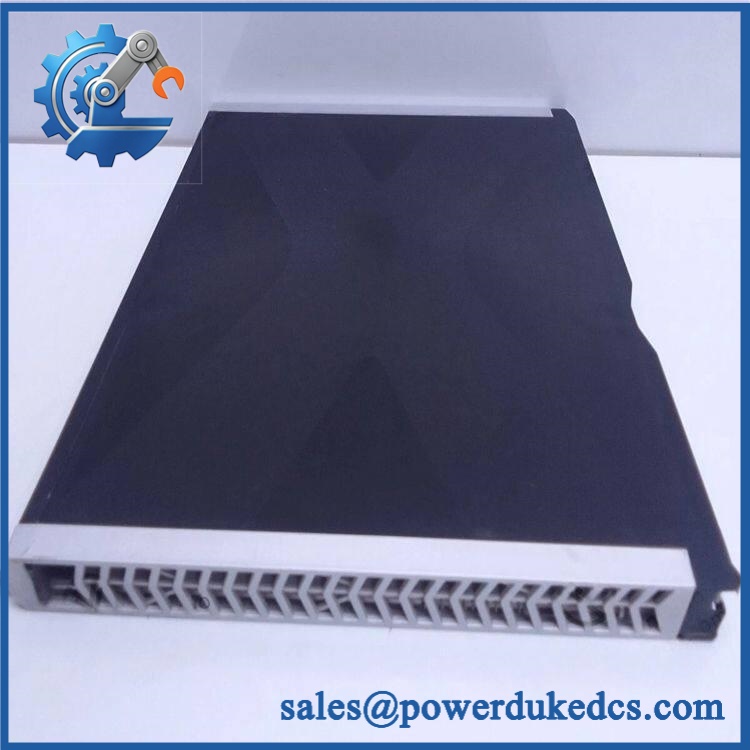
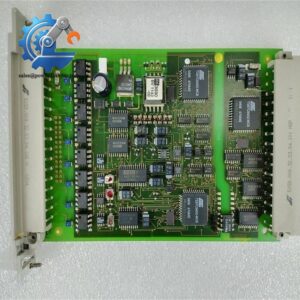
HIMA SB3073-EX
Module 4: Application Scenarios & Field Realities
- For refinery and chemical-process temperature loops, the SB3073-EX can interface hazardous-area Pt100 or thermocouple measurements with the safe-area control system. The isolation stage is particularly relevant where the field sensor wiring crosses the hazardous-area boundary and the receiving system must see a conditioned analog signal.
- When a thermocouple loop becomes unstable after maintenance, verify the sensor type and cold-junction configuration before condemning the barrier. The SB3073-EX documentation covers J, K, T, E, R, S, N, and B thermocouple types, with the thermocouple range and cold-junction information specified during ordering.
- On RTD measurement channels, the device supports Pt100 and Cu50 configurations, with an input range based on resistance measurement. A replacement with a different configured sensor range should not be treated as equivalent merely because the enclosure and terminal arrangement look identical.
- For millivolt or strain-gauge applications, the SB3073-EX is also documented for mV and strain-bridge inputs with analog output. That makes configuration verification essential; the same base model can represent different ordered measurement configurations.
Module 5: Migration, Compatibility & Installation Traps
Replacement Matrix
| Replacement Type | Assessment |
|---|---|
| Drop-in Replacement | Conditional — suitable for a like-for-like SB3073-EX installation when the sensor type, configured range, output type, and hazardous-area requirements match |
| Software Compatible | Not applicable — this is a signal-conditioning/isolation device rather than a programmable controller |
| Hardware Modification Required | Normally no for an exact configured replacement; wiring and cabinet arrangement must be verified before energization |
⚠️ Field Traps — Watch Out
1. Configuration mismatch is the primary trap.
Do not order solely from the base designation. Published documentation shows multiple supported input families—mV, thermocouple, RTD, and strain bridge—and states that the temperature measurement type, range, and cold-junction information may need to be specified when ordering.
2. Verify the hazardous-area installation before substitution.
The barrier is intended for signals originating from hazardous locations. Confirm the applicable Ex certification, field-device classification, loop wiring, and receiving-side requirements against the actual site documentation. A visually identical substitute without the correct certification can invalidate the installed protection concept.
3. Do not assume a 4–20 mA output from every configuration.
Available technical records identify 4–20 mA or 1–5 V output possibilities. Check the original unit’s ordering/configuration data and receiving input card before connecting the replacement.
Module 6: Quality Assurance SOP
Before shipment, each should be processed as a configured safety-interface component rather than as an interchangeable generic isolator:
- OEM anti-counterfeit visual inspection — inspect HIMA/SB3000-Ex markings, labels, enclosure, terminals, and manufacturing identifiers.
- Part-number verification — confirm the complete designation against the purchase order and the physical label.
- Configuration verification — record the available sensor/configuration information, including RTD, thermocouple, mV, or strain-bridge application where documented.
- Mechanical inspection — check the enclosure, terminal blocks, mounting features, and connector areas for cracks, deformation, corrosion, or contamination.
- Power-up verification — energize the unit using the specified supply conditions and inspect for abnormal current draw, visible damage, or fault indications where applicable.
- Input simulation test — apply a controlled RTD, thermocouple-equivalent, or mV input according to the unit’s documented configuration.
- Output verification — measure the corresponding isolated 4–20 mA or 1–5 V output and compare it with the expected transfer characteristics.
- Isolation check — verify electrical isolation between the field/input side and safe/output side using the approved test method and applicable limits.
- Communication handshake verification — not applicable as a standalone function, because is an analog signal isolation device rather than a digital communication module.
- Final QC and packaging — record serial/label information, test results, configuration notes, inspection photos, and protective packaging before release.
Engineering caution: appears in technical records associated with the SUPCON SB3000-Ex barrier family, while the current search evidence does not establish it as a HIMA-manufactured control-system module. The model/brand combination supplied should therefore be verified against the physical nameplate, OEM documentation, and procurement history before publishing an unequivocal HIMA OEM attribution.


 Start Chat