

Description
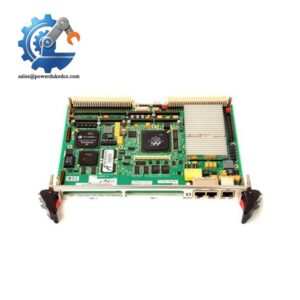
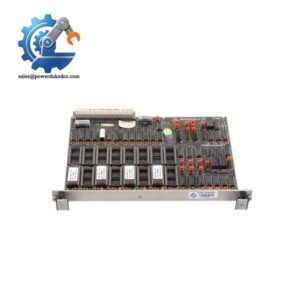
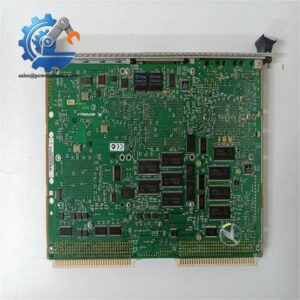
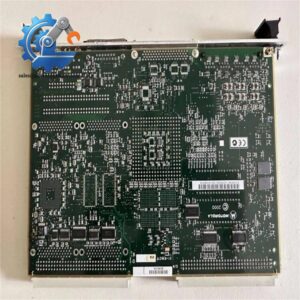
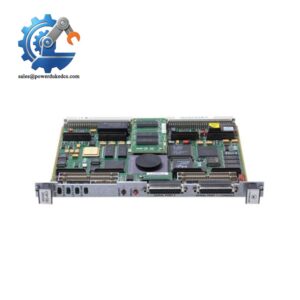
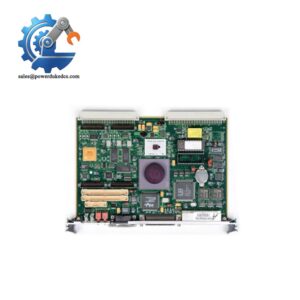
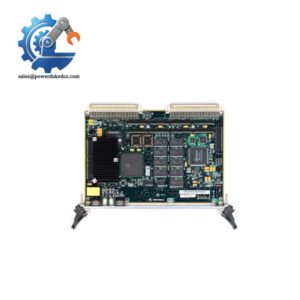
- Motorola MVME2604-712 | Authentic Legacy Control Unit
Unboxing & Physical Snapshot
- Model & Brand: Motorola MVME2604-712
- Product Type: 6U VMEbus single-board computer (SBC) from the MVME2604 family. The -712 version identifies the I/O configuration, supporting Motorola transition module compatibility for rear-panel access. The MVME2604 platform uses a PowerPC MPC604 processor, ECC DRAM expansion, PCI local bus architecture, PMC expansion, Ethernet, SCSI, and VMEbus interfaces.
- Approximate Physical Dimensions (W × H × D):
- Base board: approximately 233 × 160 mm
- With front panel and connectors: approximately 262 × 188 mm
- Double-height 6U VME format.
- Estimated Shipping Weight: Approximately 1.0-1.5 kg including ESD shielding bag, conductive foam, and transport packaging.
- What’s in the Box:
- Motorola MVME2604-712 VME processor board
- Front panel with injector/ejector handles
- MPC604 PowerPC processor assembly
- ECC DRAM module (configuration dependent)
- Flash memory devices
- VMEbus connector assembly
- Anti-static (ESD) shielding bag
- Conductive foam insert
- Documentation package when supplied
Product Introduction
The Motorola MVME2604-712 mounts into a 6U VME chassis backplane and operates as the embedded processing unit within a modular industrial computer rack. The board combines VMEbus communication, PCI expansion resources, processor memory management, and rear I/O capability through compatible transition modules (which is critical when maintaining validated automation systems with decades of operational history).
This controller should be managed as a controlled spare asset. A replacement board is not simply a hardware swap; the installed RAM module, firmware revision, PMC configuration, transition module, and application environment must match the original installation record. The family uses the MPC604 PowerPC processor and supports ECC DRAM modules, optional PMC expansion, and 712-series I/O configurations. Verify the board label before installation.
Core Technical Specifications
| Parameter | Value |
|---|---|
| Manufacturer | Motorola |
| Model | -712 |
| Product Family | Series |
| Product Type | VMEbus Single Board Computer |
| Form Factor | 6U VME |
| Processor | Motorola MPC604 PowerPC |
| Processor Bus | 66 MHz |
| Processor Cache | Optional 256 KB L2 cache |
| Memory Type | ECC DRAM through RAM200 module |
| Memory Capacity | Configuration dependent, up to 512 MB |
| Flash Memory | 4 MB or 8 MB flash configuration |
| NVRAM | Battery-backed RTC/NVRAM |
| VME Interface | VMEbus with Universe VME bridge |
| PCI Interface | 32/64-bit PCI local bus |
| PMC Expansion | 64-bit PMC slot support |
| Ethernet Interface | DEC21140 Ethernet controller |
| SCSI Interface | NCR 53C825A SCSI controller |
| Serial Interface | Multiple serial channels through I/O configuration |
| Rear I/O Compatibility | MVME712 / MVME761 family transition modules |
| Firmware | Motorola debug monitor firmware |
| Power Input | VME backplane supply |
| +5V Current Requirement | Approximately 6 A typical, 8 A maximum for MPC604 versions |
| +12V Requirement | Approximately 250 mA typical |
| -12V Requirement | Approximately 100 mA typical |
| Operating Temperature | 0°C to +55°C with forced-air cooling |
| Storage Temperature | -40°C to +85°C |
| Heat Dissipation | Primarily from processor, cache, memory, PCI bridge, and interface controllers |
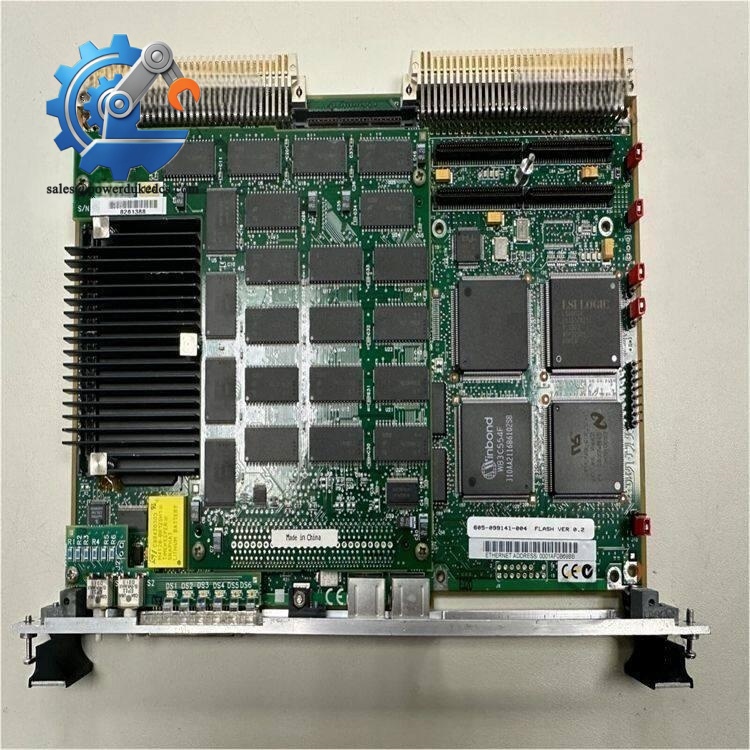
- Motorola -712
? Global Compliance & Industry Certifications
Expected regulatory considerations for tola include:
- CE Mark: May apply when installed inside a compliant enclosure that satisfies EMC requirements.
- UL/cUL Listed: Usually evaluated at the complete VME chassis or finished equipment level rather than the standalone processor board.
- RoHS Compliance: Original production predates many current environmental regulations. Verify the specific manufacturing revision.
- ATEX / IECEx: Not a standalone hazardous-area certified device. Hazardous-area suitability requires evaluation of the complete certified system.
- Marine Approvals (DNV GL): Applicable only when installed within approved marine automation or instrumentation equipment.
Legacy VME controllers require strict asset records. Maintain serial number, PCB revision, firmware image, installed RAM module, and transition module information for compliance traceability.
Verify specific lot certifications with OEM.
? Long-Term Storage & Asset Preservation Guide
the inside its original anti-static shielding bag during storage. Protect the VME edge connector contacts, RAM module interface, and exposed processor circuitry from electrostatic discharge.
Maintain warehouse humidity below 60% RH. Older VME assemblies contain socketed devices and battery-backed components where poor environmental control can accelerate corrosion and contact degradation.
Inspect stored boards every 12-24 months. Check the injector/ejector handles, connector plating, memory module seating, battery-backed RTC/NVRAM area, and PCB surface condition. Before installation, perform a controlled power-up test and confirm the firmware configuration matches the operational spare record.
Physical Installation Prerequisites
- the only in a compatible 6U VME chassis.
- Confirm the backplane supports required VMEbus addressing and transfer modes.
- Use compatible MVME712 or MVME761 transition hardware for rear I/O connections.
- Provide forced-air cooling across the card cage.
- Leave adequate airflow clearance above and below the VME rack assembly.
- Inspect VME connector contacts before insertion.
- Confirm chassis grounding and protective earth bonding.
- Verify backplane power rails:
- +5 VDC
- +12 VDC
- -12 VDC
- Confirm PMC modules match the installed software configuration.
- Verify firmware, operating system, and application files before commissioning.
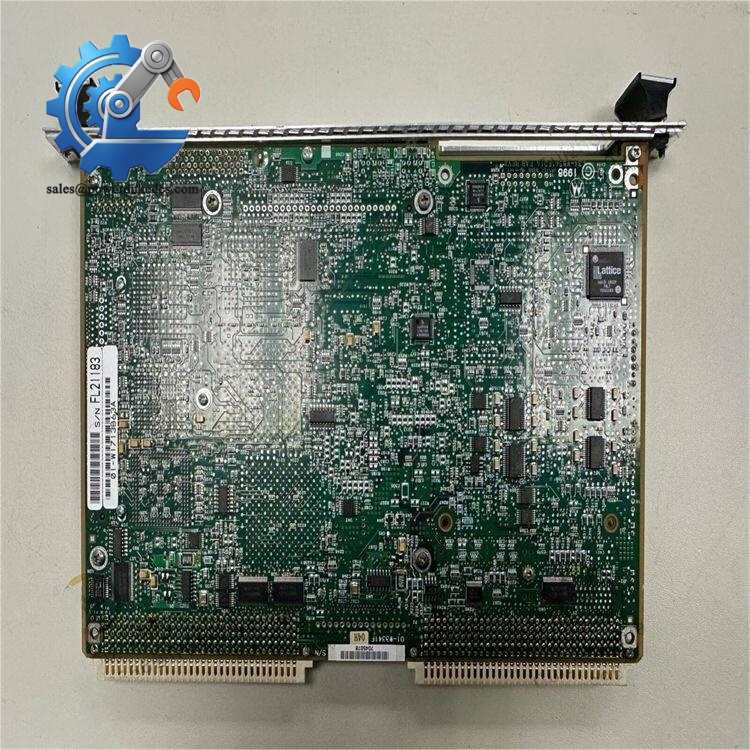
- ola
Buyer’s FAQ (Logistics & Compliance Focus)
Q: What HS Tariff Code is commonly used forola shipment?
A: VME processor boards are commonly reviewed under electronic computing assembly classifications, often within HS 8471 or related electronic board categories. Final classification depends on customs interpretation and the declared function of the imported assembly.
Q: Why does Country of Origin (COO) documentation matter for this VME controller?
A: COO records support customs clearance, asset traceability, and maintenance history. hed units should retain manufacturer identification, inspection records, refurbishment details, and shipment origin information.
Q: Should this Motorola VME board ship with insurance coverage?
A: Recommended. The board contains PowerPC processor circuitry, memory modules, VME connectors, and aging electronic components. Shock, vibration, or moisture exposure may create intermittent faults that appear only during system operation.
the include the latest firmware pre-loaded?
A: Firmware depends on the installed ROM/flash contents and previous service history. The board may include Motorola monitor firmware, but application software, operating system images, and customer-specific configuration files must be verified before replacement.


 Start Chat