

Description
- Brand: HIMA
- Full Model Number: BV7032-0.5 / 990000233
- System/Series Family: HIMA BV 7032 I/O Bus Interconnection
- One-Sentence Core Function: 0.5 m data connecting cable for linking HIMA I/O subracks with the central rack and PES coupling module via the I/O bus
- Top 3 Hardcore Specs: 0.5 m standard length; 50-core flat cable; maximum total bus length 12 m
- Stock Status: New Surplus / Factory Original — discontinued by manufacturer; verify exact label and connector condition before shipment
Module 3: Technical Product Introduction
A failed inter-rack connection can look like a controller, I/O, or communication fault when the real problem is the bus cable itself. The HIMA BV7032-0.5, also identified as 990000233 in the supplied part reference, is a data connecting cable used to connect HIMA I/O subracks with the central rack and PES coupling module through the I/O bus. HIMA technical documentation identifies the standard cable length as 0.5 m and specifies a 50-core flat cable construction.
The cable length is not incidental. HIMA documentation states that special BV7032 lengths can be produced up to 5 m, or longer after testing, while the total I/O-bus length is specified at 12 m. That makes the exact “-0.5” suffix important when matching an installed rack arrangement. Current industrial parts references classify BV7032-0.5 as a data connecting cable and flat cable, while also identifying the part as discontinued by the manufacturer.
Module 4: Application Scenarios & Field Realities
- When an HIMA I/O subrack stops communicating with the central rack, inspect the BV7032 connection before replacing active electronics. A continuity fault, damaged connector, or incorrectly seated cable can interrupt the I/O bus without any failure inside the controller itself. HIMA describes BV7032 specifically as the cable for the I/O-bus connection between subracks, the central rack, and the PES coupling module.
- During a shutdown where adjacent HIMA racks are being serviced, the 0.5 m cable length must be preserved unless the engineered bus arrangement has been reviewed. A longer cable is not automatically equivalent; HIMA specifies a total bus-length limit and notes that special cable lengths require appropriate testing.
- For legacy HIMA spare inventory, book the cable under the complete designation BV7032-0.5 / 990000233, not simply “.” The 0.5 m suffix identifies the physical cable length, while the numeric reference helps distinguish it from other stock records. Current parts catalogs identify -0.5 as a 0.5 m flat data cable.
- When an installed cable has been repeatedly disconnected, inspect the connector ends closely rather than judging the cable only by its external jacket. In safety-system racks, repeated maintenance can produce contact deformation or incomplete seating even when the cable appears visually intact.
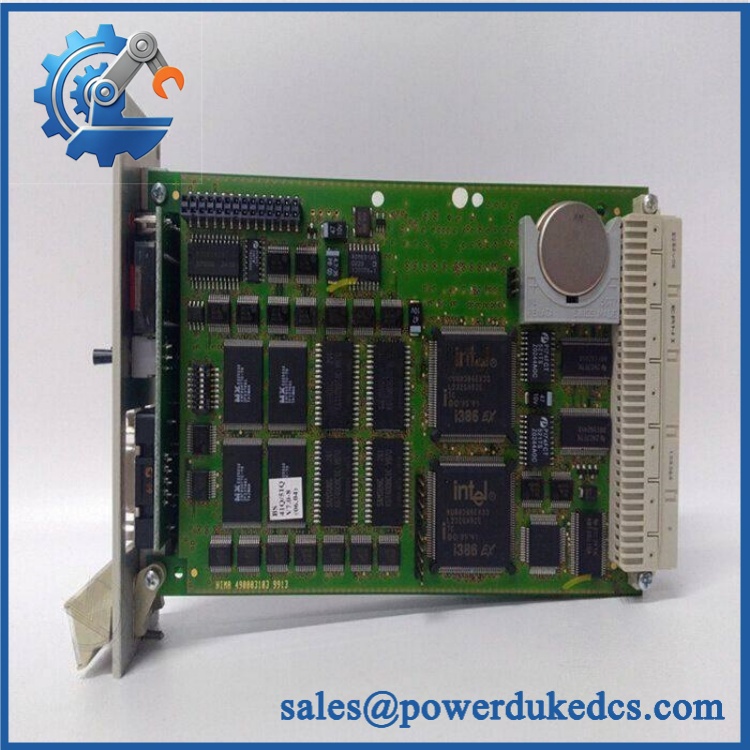
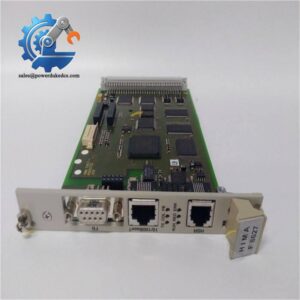
HIMA BV7032-0.5 990000233
Module 5: Migration, Compatibility & Installation Traps
Replacement Matrix
| Replacement Type | Assessment |
|---|---|
| Drop-in Replacement | Yes, for an exact -0.5 replacement in the same HIMA I/O-bus configuration |
| Software Compatible | Not applicable — this is a passive data interconnection cable |
| Hardware Modification Required | No for a like-for-like replacement; cable length, core count, connector style, and bus topology must match |
⚠️ Field Traps — Watch Out
1. Cable-length substitution.
Do not replace the 0.5 m version with a longer cable simply because the connectors appear identical. HIMA’s documentation specifies the standard 0.5 m length and a 12 m total bus-length limit; special lengths require additional engineering consideration.
2. Core-count mismatch.
The documentation identifies the cable as a 50-core flat cable. A visually similar multi-core cable with a different conductor count is not an acceptable substitute.
3. Connector orientation and seating.
Before removal, photograph both ends and the installed routing. Do not force a connector into position. Verify keying, orientation, locking hardware, and mating depth before energizing the rack.
4. Do not diagnose communication faults from the cable alone.
After installation, verify the complete I/O-bus path. A good cable cannot compensate for a damaged mating connector, rack interface, or coupling module.
Module 6: Quality Assurance SOP
- OEM anti-counterfeit visual inspection — inspect HIMA markings, cable identification, connector housings, labels, and visible manufacturing details.
- Exact part-number verification — confirm and the associated 990000233 reference against the purchase order and physical item.
- Length verification — measure the cable and confirm the nominal 0.5 m configuration. HIMA documentation identifies 0.5 m as the standard length.
- Core-count verification — confirm the documented 50-core construction using the approved inspection method.
- Mechanical inspection — inspect the flat cable for cuts, crushed sections, excessive bends, jacket damage, contamination, or signs of improper storage.
- Connector inspection — examine every contact for oxidation, deformation, contamination, looseness, or damaged locking features.
- Point-to-point continuity test — verify each conductor across the complete cable assembly and record the results against the approved pin map.
- Insulation check — where required by the applicable maintenance procedure, verify insulation integrity using the approved test voltage and acceptance criteria for the cable and connected interface.
- Installed I/O-bus verification — after installation, confirm that the associated HIMA rack establishes the expected bus connection and that connected I/O stations report normally.
- Communication handshake verification — not applicable as a standalone bench test for the passive cable; perform the communication test at the installed HIMA system level.
- Final QC and packaging — record the part number, cable-length check, continuity results, connector inspection, photographs, and packaging condition before shipment.
Engineering note: The strongest available technical evidence identifies as a HIMA data connecting cable for the I/O bus, with a standard 0.5 m length, 50-core flat-cable construction, and 12 m maximum total bus length. Several commercial records alk .5 as discontinued, which makes exact suffix and physical-interface verification important when sourcing legacy stock.



 Start Chat