

Description
Module 1: High-Converting SEO Title Matrix (5 Options)
- HIMA F7131 5VDC Triple Supply Monitoring with Battery
- HIMA F7131 New Surplus Power Supply Monitor Module
- HIMA F7131 Replacement for H51q Supply Monitoring
- HIMA F7131 OEM Power Supply Monitor with Warranty
Module 2: The 10-Second Buyer’s Brief (Snapshot)
- Brand: HIMA
- Full Model Number: F7131 / F 7131
- System/Series Family: H51q PES
- Core Function: Monitoring module for up to three 5 VDC system power supplies with buffer-battery support
- Top 3 Hardcore Specs: 3 × 5 VDC supply monitoring; 3 front-panel LED indicators; 3 diagnostic test bits for F8650/F8651
- Additional Monitoring: 3 × 24 VDC outputs PS1–PS3 for B9361 additional power-supply assemblies
- Power Consumption: 5 VDC / 25 mA; 24 VDC / 20 mA
- Space Requirement: 4 SU / approximately 4 TE
- Buffer Battery: CR-1/2 AA-CD
- Stock Status: New Surplus or Fully Tested Refurbished; batch-specific availability
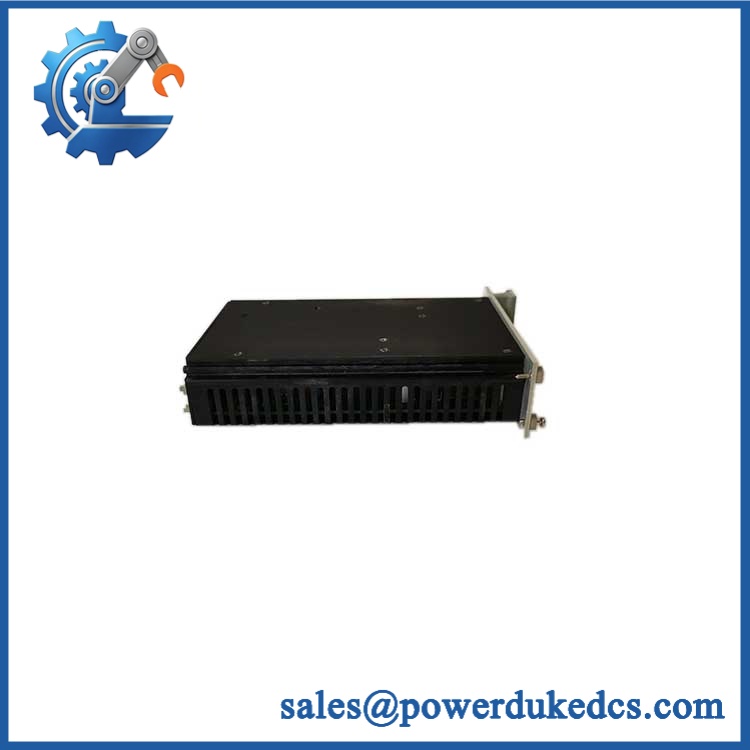
HIMA F7131
Module 3: Technical Product Introduction
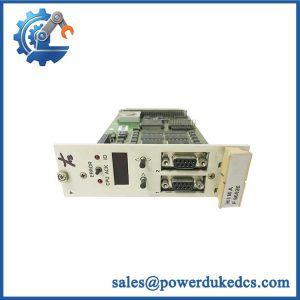
A power-supply fault in an H51q safety system can become a system-level diagnostic problem long before an operator sees a complete controller failure. The HIMA F7131 is designed specifically for this monitoring layer. It supervises the 5 VDC system voltage generated by up to three power supplies, presents their status through three front-panel LEDs, and provides three diagnostic test bits for central modules such as F8650 and F8651. HIMA’s documentation identifies the F7131 as a power-supply monitoring module with buffer batteries for the H51q PES.
The useful distinction is that F7131 does not replace the main power supplies; it supervises them and exposes their condition to the control architecture. Operating data specify 25 mA at 5 VDC and 20 mA at 24 VDC, with a 4 SU installation width. When used with the B9361 additional power-supply assembly, three 24 V outputs identified as PS1 through PS3 can be used for power-supply supervision. The integrated buffer-battery function also matters during loss-of-supply conditions, making correct battery installation and age control part of maintenance rather than an afterthought.
Module 4: Application Scenarios & Field Realities
- Inside an H51q safety cabinet with three independent supply sources, the F7131 provides a dedicated supervision point for the 5 VDC system voltage. The three LED indications give technicians a direct cabinet-level status check before they start tracing downstream modules.
- Where F8650 or F8651 central modules handle diagnostic processing, the three F7131 test bits provide a defined path for power-supply status to reach system diagnostics and the user program. That makes the module more than a local LED indicator; its status can become part of the control logic.
- For installations using the B9361 additional power-supply assembly, the three PS1–PS3 24 V outputs provide a way to supervise the associated supply modules. During troubleshooting, this can separate a supply-source problem from a fault deeper inside the PES.
- During long-running maintenance programs, the buffer battery deserves its own inspection interval. Published technical information identifies a CR-1/2 AA-CD battery, with service figures that vary significantly with ambient temperature; one reference gives approximately 1000 days at 25°C versus 200 days at 60°C without external voltage feeding.
Module 5: Migration, Compatibility & Installation Traps
Replacement Matrix
Replacement classification: Drop-in Replacement for an existing HIMA F7131 installation when the rack type, module revision, wiring, diagnostic architecture, and battery configuration remain identical.
Software compatibility: Hardware-compatible, application-dependent. The module itself is not a programmable controller, but its diagnostic bits are connected to HIMA central modules such as F8650/F8651. Verify that the existing diagnostic logic expects the same F7131 status signals before commissioning.
Cross-model replacement: Not automatically interchangeable. F7131 is specifically documented for H51q power-supply monitoring. A different HIMA monitoring or power-distribution module can have different rack interfaces, monitoring points, battery arrangements, or diagnostic assignments. HIMA’s certification documentation separately identifies F7131 as the H51q power-supply monitoring module.
Field Traps — Watch Out
1. Battery handling is a real installation issue. Before energizing a replacement module, verify the buffer-battery type and connection against the applicable F7131 documentation. Do not install a physically similar battery with unverified chemistry or polarity. Battery condition is especially important when the system relies on the module’s retained diagnostic function during supply interruptions.
2. Check all three monitored supply paths. A healthy F7131 does not prove that all three upstream power supplies are healthy. During commissioning, correlate the three front-panel indications with the actual 5 VDC measurements and, where B9361 is installed, verify the PS1–PS3 monitoring outputs as well.
3. Confirm the diagnostic destination before changing wiring. The three test bits are associated with central-module diagnostics and user-program operation. A wiring change that preserves the physical connector but alters bit assignment can create misleading system diagnostics without producing an obvious hardware fault.
Module 6: Quality Assurance SOP
Pre-Shipment Inspection Protocol for HIMA F7131
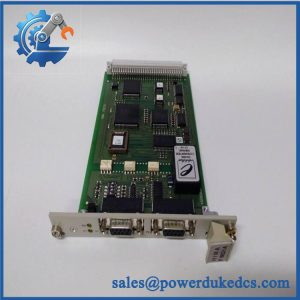
- OEM identity inspection: Verify HIMA marking, exact F7131 / F 7131 designation, nameplate information, connector layout, hardware identification, and visible revision markings against available documentation.
- Mechanical inspection: Examine the 4 SU module body, front panel, LEDs, connectors, mounting guides, retaining hardware, and PCB assembly for cracks, corrosion, contamination, or unauthorized modification.
- Battery inspection: Verify the installed or supplied battery type as CR-1/2 AA-CD where applicable; inspect polarity, connector condition, leakage, physical damage, and battery age information.
- Power-input verification: Apply controlled 5 VDC and 24 VDC test supplies according to the applicable test procedure and confirm expected operating current near the published 25 mA and 20 mA values.
- Power-on verification: Energize the module under controlled laboratory conditions and check all three front-panel LED indications for correct startup behavior.
- Three-channel supply simulation: Apply representative supply conditions to the monitored 5 VDC inputs and confirm that the corresponding status indications respond correctly.
- Diagnostic handshake verification: Interface the module with an appropriate F8650/F8651 test environment and verify the three diagnostic test bits individually.
- PS1–PS3 verification: Where the B9361 interface is applicable, test the three 24 VDC monitoring outputs independently and record the measured values.
- Fault simulation: Where the laboratory setup permits, remove or vary one monitored supply within the documented test limits and confirm that the expected diagnostic indication is generated.
- Final QC record: Record model, serial or hardware identifier, battery status, supply measurements, LED results, diagnostic-bit results, PS1–PS3 results, test date, and inspector approval.
- ESD-controlled packaging: Protect the module, connectors, and battery interface from electrostatic discharge, mechanical shock, moisture, and contamination during final packing and shipment.
HIMA’s certification records identify F7131 as Power Supply Monitoring with Buffer Batteries for the H51q-related automation-system family and assign it T4 in the referenced Canadian certification schedule.



 Start Chat