

Description
- Brand: HIMA
- Full Model Number: K9202
- System/Series Family: HIMA H41 / H51 automation system cabinets; T4 cabinet architecture
- Core Function: Forced-draft cabinet ventilation using a dual-axial-fan drawer to control enclosure heat
- Top 3 Hardcore Specs: 24 VDC; 2 axial fans; approx. 200 m³/h airflow
- Stock Status: Condition-specific; verify current New Surplus or Fully Tested Refurbished lot before order
Module 3: Technical Product Introduction
Cabinet temperature is easy to overlook until a fan failure starts pushing controller and I/O temperatures upward. The HIMA K9202 is a forced-draft cabinet fan drawer intended to maintain airflow inside compatible HIMA control cabinets. HIMA documentation identifies K9202 specifically as a T4 Cabinet Fan Module, while related HIMA documentation distinguishes it from the K9203 fan used for 19-inch subracks. The unit uses two axial fans and fan-run monitoring, with published field specifications of 24 VDC supply and approximately 200 m³/h airflow.
The practical value is thermal control rather than signal processing. At roughly 200 m³/h, the K9202 provides active cabinet air exchange instead of relying on passive convection alone; that matters when a populated rack is dissipating continuous heat. Published specifications also list about 25 W power consumption and IP54 protection for one K9202 configuration. Do not treat every listing as electrically identical, though—field documentation and reseller data are not fully consistent on electrical details, so the installed unit’s nameplate and cabinet wiring should take priority before energization.
Module 4: Application Scenarios & Field Realities
- Inside HIMA H41/H51 cabinets, K9202 is relevant when electronic modules are operating continuously and cabinet heat cannot be allowed to accumulate around the rack. The forced-draft arrangement moves air through the enclosure rather than simply venting the top panel. HIMA documentation lists among the modules associated with H41, H51, H41q, and H51q automation systems.
- During maintenance on an aging safety cabinet, the fan drawer becomes a mechanical reliability item in its own right. Bearing wear, restricted airflow, and fan-run faults can appear long before a controller reports a critical electronics failure. uses two axial fans and incorporates fan-run monitoring, giving maintenance personnel a defined component to inspect and replace.
- Where cabinet heat load rises after an I/O expansion, active ventilation becomes more important. Extra I/O modules, power supplies, and communication hardware all add heat—even when the process load itself has not changed. A cabinet fan should therefore be selected from the actual enclosure arrangement, airflow path, and electrical supply rather than by model number alone.
- For replacement of discontinued hardware, is especially relevant because current documentation and market records identify the part as an established HIMA cabinet fan assembly, while some commercial sources now list it as discontinued by the manufacturer. That makes physical condition, fan operation, and exact mounting compatibility important purchasing checkpoints.
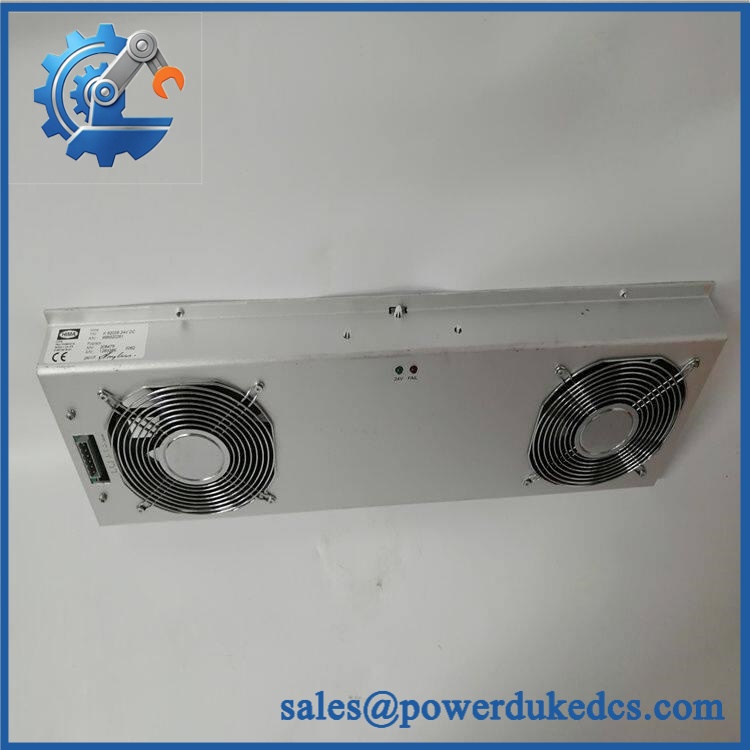
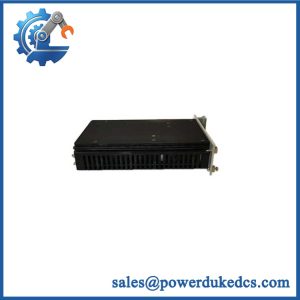
HIMA K9202
Module 5: Migration, Compatibility & Installation Traps
Replacement Matrix
to matching HIMA assembly: Drop-in Replacement
When the cabinet uses the same configuration, cabinet cutout, mounting arrangement, connector interface, and supply voltage, replacement is normally a mechanical and electrical exchange without changing the control application software.
to K9202B: Software Compatible / Hardware Verification Required
Do not assume K9202B is interchangeable solely because the designation is similar. HIMA’s newer documentation identifies K9202B as a two-axial-fan rack fan with characteristics associated with the HIQuad X platform. Verify the rack generation, mounting arrangement, power feed, monitoring circuit, and approved hardware list before substitution.
to another HIMA fan assembly: Hardware Modification Required unless explicitly approved
A different HIMA fan model may have different mounting, airflow direction, monitoring, or power characteristics. The K9203, for example, is identified separately as a fan module for 19-inch subracks.
⚠️ Field Traps (Watch Out)
Fan monitoring mismatch: incorporates fan-run monitoring. Before commissioning, verify that the cabinet’s monitoring circuit recognizes the replacement fan assembly correctly. A motor can physically spin while the monitoring contact or sensing circuit remains incorrect.
Electrical-variant mismatch: Published commercial specifications for are inconsistent across sources, particularly around electrical ratings. One specification set lists 24 VDC and 25 W, while other listings publish different values. Do not energize a replacement from a catalog description alone. Check the original nameplate, cabinet schematic, connector pinout, and measured supply voltage first.
Module 6: Quality Assurance SOP
Pre-Shipment QA Protocol for HIMA
- Step 1 — Identity Verification: Confirm HIMA manufacturer marking, model designation, applicable part-number marking, serial information where available, and physical configuration against the purchasing specification.
- Step 2 — OEM Anti-Counterfeit Visual Inspection: Examine labels, housing finish, fasteners, connector geometry, fan assemblies, markings, and manufacturing details for inconsistencies or evidence of rework.
- Step 3 — Mechanical Inspection: Check the dual-fan assembly, mounting frame, guards, cable routing, connector condition, and visible signs of bearing wear, contamination, corrosion, or impact damage.
- Step 4 — Electrical Pre-Test: Verify supply-side continuity and inspect for abnormal resistance, damaged conductors, loose terminals, and connector contamination before applying power.
- Step 5 — Power-On Test: Energize the under controlled test conditions and confirm normal fan startup. Record abnormal current draw, startup delay, vibration, bearing noise, and airflow behavior.
- Step 6 — Fan-Run Monitoring Verification: Confirm that the monitoring circuit changes state correctly when the fan assembly is operating. A rotating fan without a valid monitoring response is treated as a test failure.
- Step 7 — Airflow Check: Verify that both axial fans operate in the specified direction and that airflow is not restricted by guards, foreign material, or damaged components.
- Step 8 — Extended Run Test: Operate the assembly long enough to identify intermittent startup, thermal rise, vibration, or fan-speed instability. Record test observations.
- Step 9 — Final QC Record: Document model identification, test date, electrical test results, fan status, monitoring result, visual condition, and final QC disposition.
- Step 10 — Packaging Inspection: Protect the fan assembly against impact, connector damage, dust ingress, and vibration during transport; retain traceability between the tested unit and shipment record.
Verification Note: HIMA’s own certification documentation explicitly identifies as a T4 Cabinet Fan Module, which is the key product identity to use when screening replacement parts and correcting misleading listings that describe as a CPU or safety relay.


 Start Chat