

Description
- Brand: HIMA
- Full Model Number: F7126
- System/Series Family: H51q / HIMA PES Automation Systems
- One-Sentence Core Function: Isolated DC/DC power supply converting a 24 VDC source into regulated 5 VDC system power
- Top 3 Hardcore Specs: 24 VDC input; 5 VDC output; 10 A output current
- Stock Status: New Surplus / Factory Original — verify physical condition and revision before shipment
Module 3: Technical Product Introduction
A failed system power module can take an otherwise healthy HIMA rack offline immediately. The F7126 is the power-supply module used with HIMA PES H51q automation systems, converting a nominal 24 VDC input to a 5 VDC output through an isolated DC/DC stage. HIMA documentation specifies a 10 A output rating, current limitation at approximately 13 A, and short-circuit protection on the output.
The electrical margins are worth checking before installation. The specified input range is 24 VDC −15%/+20%, while the output is adjustable around 5 VDC ±0.5 V; the factory adjustment is 5.4 VDC ±0.025 V. Overvoltage protection is set around 6.5 V ±0.5 V, and efficiency is specified at ≥77%. The module occupies 8 TE of rack space. When redundant F7126 supplies are operated together, HIMA states that their output voltages must not differ by more than 0.025 V to prevent unequal load sharing.
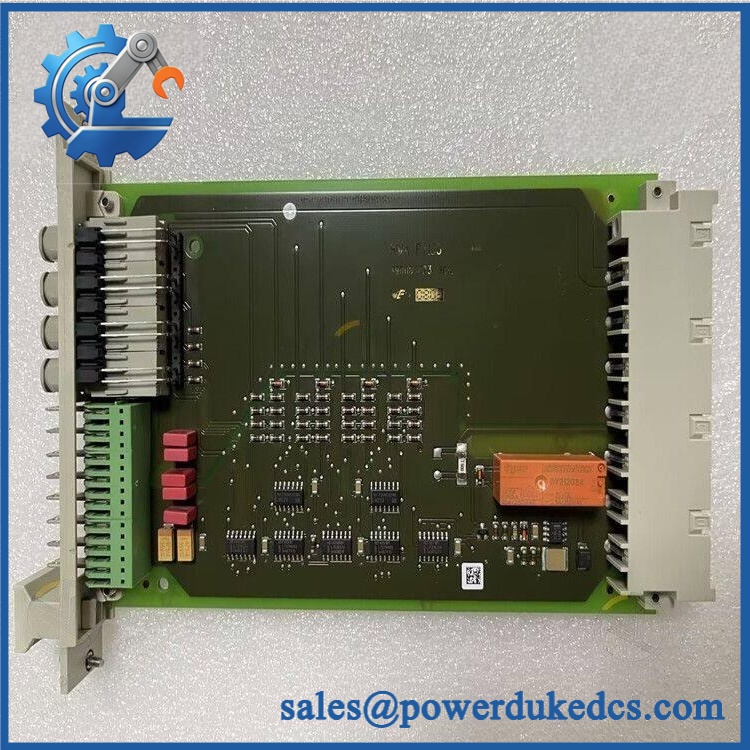
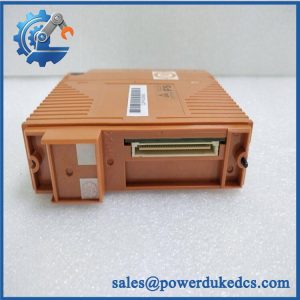
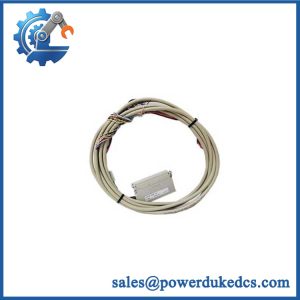
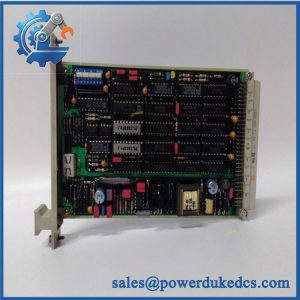
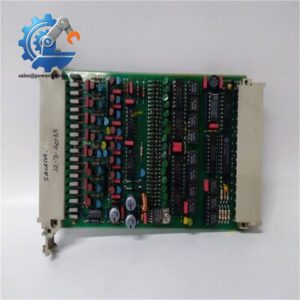
HIMA F7126 H51q
Module 4: Application Scenarios & Field Realities
- Inside an H51q rack where a controller or I/O group suddenly loses system power, the F7126 should be checked before replacing downstream electronics. Its job is upstream of the 5 VDC-powered electronics, so a supply fault can mimic multiple module failures at once. HIMA documentation specifically identifies F7126 as an H51q power-supply module.
- For redundant power arrangements, output-voltage matching is not a minor commissioning detail. HIMA specifies a maximum difference of 0.025 V between redundant F7126 outputs; measure both supplies under the applicable operating condition before placing them into parallel service.
- During a brownfield cabinet repair, the 8-TE physical requirement matters. Confirm that the replacement module uses the same rack position and mechanical envelope before removing the failed unit. A supplier shipping weight of roughly 3–5 kg appears in several commercial records, but that is packaging-dependent and should not be used as the engineering weight of the module.
- When investigating intermittent rack resets, inspect the 5 VDC output rather than relying only on the front-panel indication. The F7126 includes a front-panel test socket and an output-adjustment potentiometer; HIMA cautions that adjustment requires an accurate measuring instrument. —Do not turn the potentiometer casually during fault finding.
Module 5: Migration, Compatibility & Installation Traps
Replacement Matrix
| Replacement Type | Assessment |
|---|---|
| Drop-in Replacement | Yes, for a like-for-like F7126 installation in the compatible H51q rack arrangement |
| Software Compatible | Not applicable — F7126 is a power-supply module rather than a programmable controller |
| Hardware Modification Required | Normally no for an exact F7126 replacement; rack position, supply wiring, redundancy arrangement, and output setting must still be verified |
⚠️ Field Traps — Watch Out
1. Redundant supply mismatch.
When two F7126 modules share a redundant load, do not assume factory settings are sufficiently matched. HIMA specifies that the output-voltage difference must not exceed 0.025 V. The documented factory setting is 5.4 VDC ±0.025 V, while the normal adjustment range is approximately 5 VDC ±0.5 V.
2. Incorrect output adjustment.
The front-panel potentiometer is functional, not decorative. HIMA’s documentation calls for a suitable high-accuracy measuring instrument when adjusting the output. A mistaken adjustment can push the rack’s 5 VDC rail outside the expected operating window.
3. Input tolerance must be checked at the cabinet supply.
The specified primary input is 24 VDC −15%/+20%, with a ripple specification below 15%. A weak or badly regulated 24 VDC source can therefore create symptoms that look like an F7126 failure. Confirm the upstream supply first.
Module 6: Quality Assurance SOP
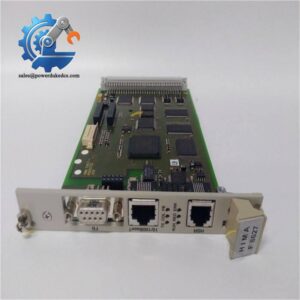
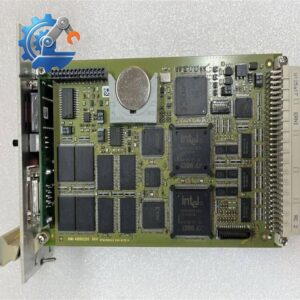
- OEM anti-counterfeit visual inspection — inspect HIMA identification, front-panel markings, nameplate information, connectors, housing, mounting features, and visible manufacturing details.
- Exact part-number verification — confirm F7126 character-for-character against the purchase order, physical label, and inventory record.
- Mechanical inspection — check the 8-TE rack format, PCB/housing condition, terminal interfaces, front-panel test socket, adjustment control, and mounting hardware for physical damage.
- Power-input verification — confirm the test source is within the documented 24 VDC −15%/+20% input range before energizing the module.
- Power-on self-test (POST) — energize the module under controlled laboratory conditions and monitor output behavior, abnormal current draw, overheating, and any available status indications.
- 5 VDC output verification — measure the output through the designated test point using a calibrated high-accuracy instrument. Record both unloaded and appropriate loaded measurements.
- Output-current validation — verify operation against the documented 10 A nominal output, while confirming that abnormal loading does not produce unexpected current behavior; the specified current limitation is approximately 13 A.
- Protection-function check — where the laboratory setup permits safe testing, verify the documented overvoltage/current-limiting behavior without exposing the module or connected equipment to uncontrolled fault conditions.
- Communication handshake verification — not applicable as a standalone test, because F7126 performs power conversion rather than digital communication.
- Redundancy verification where required — for dual-supply applications, measure both F7126 outputs and confirm the voltage difference is within HIMA’s specified 0.025 V limit before release.
- Final QC and packaging — record the part number, visible revision information, electrical test results, serial/label photographs where available, and packaging condition before shipment.


 Start Chat