

Description
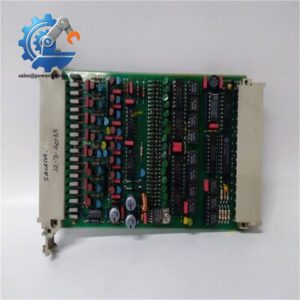
- Brand: HIMA
- Full Model Number: Z6012
- System/Series Family: HIMA H51q safety system / K1412A and K1412B central racks
- Core Function: Rack cooling fan module with continuous fan-run and fuse-failure monitoring
- Top 3 Hardcore Specs: 24 VDC supply; 5 W maximum consumption; 4 A time-delay fuse, 5 × 20 mm
- Alarm Output: Relay contact, 24 VDC / 1 A
- Operating Temperature: -25°C to +60°C
- Storage Temperature: -40°C to +85°C
- Dimensions: 100 × 50 × 80 mm
- Weight: Approx. 0.2 kg
- Stock Status: New Surplus or Fully Tested Refurbished; batch-specific availability
The available technical references consistently identify Z6012 as a HIMA fan module with integrated monitoring, intended for the H51q platform and K1412A/B central racks.
Module 3: Technical Product Introduction
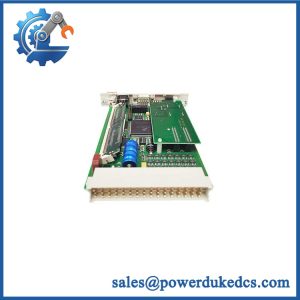
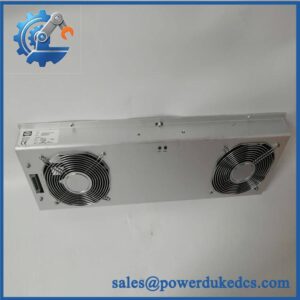
When cabinet cooling degrades inside a safety rack, the first symptom may not be a failed fan. It can appear as increasing cabinet temperature, intermittent hardware behavior, or a maintenance alarm. HIMA Z6012 is a dedicated fan module with monitoring functions for the H51q safety system. Its circuit continuously monitors fan operation and fuse status, while a relay output provides an external alarm indication when the cooling circuit develops a fault. The module is documented for installation in K1412A/B central racks.
The electrical envelope is straightforward: 24 VDC supply, maximum power consumption of 5 W, and a 4 A slow-blow fuse in a 5 × 20 mm format. The alarm contact is rated at 24 VDC and 1 A. Physical references give approximately 100 × 50 × 80 mm and 0.2 kg, with an operating range of -25°C to +60°C. These numbers are useful during cabinet replacement work because the Z6012 is a rack-specific cooling and diagnostic component, not a generic panel fan.
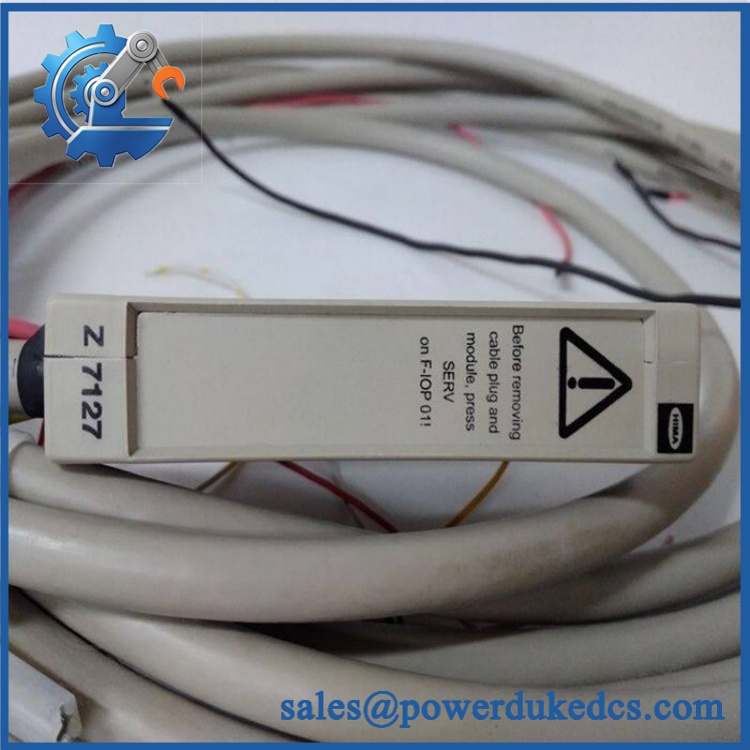
HIMA Z6012
Module 4: Application Scenarios & Field Realities
- Inside an H51q central rack, Z6012 provides active cooling while simultaneously supervising fan operation. The monitoring circuit matters because a running controller can otherwise remain exposed to rising internal temperature after a cooling failure.
- For K1412A or K1412B rack maintenance, the module is designed around the rack’s existing mechanical architecture rather than serving as a free-standing cabinet fan. That makes connector arrangement and rack compatibility part of the replacement decision.
- During a safety-system cabinet inspection, technicians can use the fuse-monitoring and relay alarm path to distinguish a cooling-circuit fault from unrelated controller or I/O problems. A blown fuse should be investigated rather than simply replaced repeatedly, since excessive fan current can indicate a mechanical or electrical fault.
- In continuously operated process cabinets, the -25°C to +60°C operating range gives a useful boundary for maintenance planning. Actual cabinet temperature still depends on rack loading, enclosure ventilation, ambient conditions, and nearby heat sources — a fan module cannot compensate for an enclosure with inadequate heat rejection.
Module 5: Migration, Compatibility & Installation Traps
Replacement Matrix
Replacement classification: Drop-in Replacement when replacing an existing HIMA Z6012 in a compatible K1412A/B installation and retaining the same wiring, fuse arrangement, connector interface, and rack architecture.
Software compatibility: Not applicable. is a hardware cooling and monitoring assembly rather than a programmable controller or I/O processor.
Cross-model replacement: Hardware compatibility required. A physically similar HIMA fan assembly should not be assumed interchangeable because fuse monitoring, alarm output, rack interface, and mechanical dimensions may differ.
Field Traps — Watch Out
1. Verify the fuse before energizing. The documented configuration uses a 4 A time-delay fuse in a 5 × 20 mm format. Installing the wrong fuse rating or a fast-acting substitute can alter the intended protection characteristics.
2. Check the alarm circuit, not only the fan motor. A replacement is not fully commissioned simply because the fan spins. Verify that the fan-run monitoring and fuse-failure alarm reach the existing control or diagnostic circuit through the correct relay contact. The specified alarm contact is 24 VDC / 1 A.
3. Confirm the rack family. Available references place in the H51q system and identify K1412A/B as the mounting rack. Do not substitute a cabinet fan merely because its 24 VDC rating matches; the mechanical interface and monitoring function are equally important.
Module 6: Quality Assurance SOP
Pre-Shipment Inspection Protocol for HIMA
- OEM identity inspection: Verify HIMA marking, exact designation, identification labels, hardware markings, connector arrangement, and revision information where present.
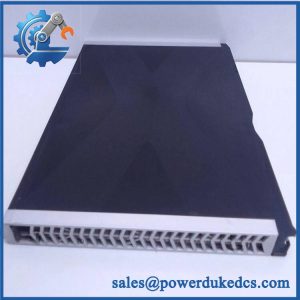
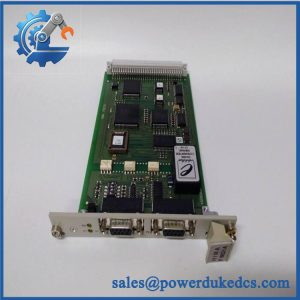
- Mechanical inspection: Examine the housing, fan assembly, mounting features, connector interface, protective grille, labels, and fasteners for cracks, deformation, corrosion, contamination, or unauthorized modification.
- Fan inspection: Check the fan manually for bearing roughness, shaft play, blade damage, scraping, or abnormal mechanical resistance before electrical testing.
- Fuse inspection: Verify the installed or supplied fuse is the documented 4 A time-delay, 5 × 20 mm type and inspect the holder for looseness, discoloration, or heat damage.
- Power-on verification: Apply a controlled 24 VDC supply and monitor startup behavior, current draw, abnormal acoustic noise, vibration, and temperature rise.
- Fan-run verification: Confirm continuous fan operation and verify the associated monitoring circuit changes state correctly when the fan is operating.
- Fuse-monitoring verification: Use an appropriate controlled test method to simulate a fuse-open condition and confirm that the diagnostic/alarm circuit responds as expected.
- Alarm-output verification: Test the relay alarm contact under a controlled low-voltage test circuit and confirm correct contact behavior against the applicable wiring diagram.
- Thermal observation: Operate the assembly for an extended test interval and record abnormal temperature rise, unstable operation, or intermittent monitoring behavior.
- Rack-interface test: Where a compatible /B test rack is available, verify mechanical seating, connector engagement, fan operation, and alarm communication in the intended rack environment.
- Final QC record: Record model, hardware identification, fuse rating, supply voltage, measured current, fan test result, alarm test result, test date, and inspector approval.
- ESD and mechanical packaging: Protect connectors, fan blades, mounting surfaces, and monitoring circuitry from ESD, impact, moisture, dust, and mechanical shock during shipment.
Procurement note: The available references agree on the core identity of HIMA as a 24 VDC monitored fan module for the H51q system, but some reseller pages incorrectly classify it as a CPU or generic PLC module. For purchasing, the functional description, /B rack compatibility, fuse arrangement, and alarm interface are more reliable identifiers than those generic product-category labels.



 Start Chat