

Description
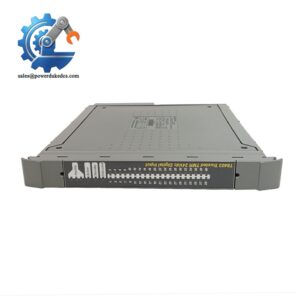
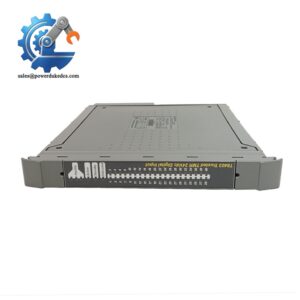
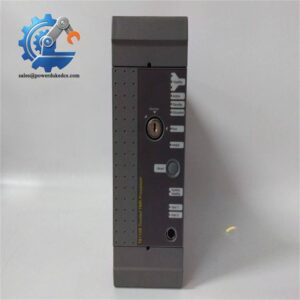
- ICS Triplex T8831 | CE-Compliant Safety Control Module
Unboxing & Physical Snapshot
- Model & Brand: ICS Triplex T8831
- Product Type: Trusted™ Analog Input Field Interface Module for ICS Triplex Trusted Safety Instrumented Systems (SIS).
- Approximate Physical Dimensions (W × H × D):
- Approximately 30 × 266 × 303 mm
- Standard Trusted Series rack-mounted module with integrated front panel and retaining clips.
- Estimated Shipping Weight:
- Module weight: approximately 1.1 kg
- Typical packaged shipping weight: 1.8–2.2 kg
- What’s in the Box:
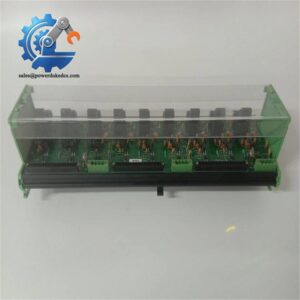
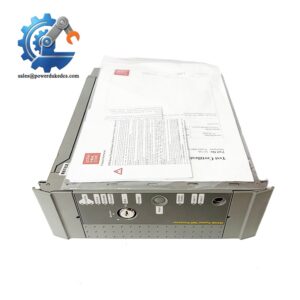
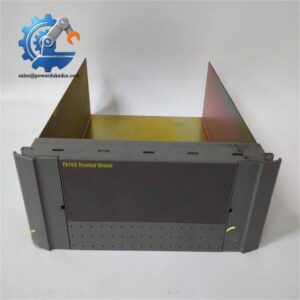
- ICS Triplex T8831 Analog Input Module
- Factory-installed front panel assembly
- Product identification label
- Anti-static (ESD) shielding bag
- Protective foam packaging
- Original documentation (when supplied by the distributor or OEM)
Product Introduction
Safety input modules spend years operating inside control cabinets exposed to vibration, airborne contaminants, and continuous thermal cycling. Every replacement should preserve the original certified hardware configuration because functional safety validation depends on predictable electrical behavior (particularly during proof testing after maintenance).
The ICS Triplex T8831 installs directly into the Trusted Series backplane and serves as the interface between field analog instrumentation and the safety controller. The anodized front panel, precision backplane connector, and retaining clips are engineered for repeated maintenance activities without disturbing adjacent modules. Before installation, compare the hardware revision, firmware level, and configured channel database with the plant’s approved maintenance records.
Core Technical Specifications
| Parameter | Value |
|---|---|
| Manufacturer | ICS Triplex |
| Model | T8831 |
| Product Family | Trusted™ Series |
| Module Type | Analog Input Module |
| Safety Architecture | Triple Modular Redundancy (TMR) compatible |
| Input Channels | Configuration dependent within Trusted platform |
| Input Signal Types | Industrial analog process signals |
| System Interface | Trusted backplane |
| Diagnostics | Continuous self-diagnostics and fault monitoring |
| Hot Replacement | Supported under approved maintenance procedures |
| LED Indicators | Module health, communication, diagnostics |
| Isolation | Channel isolation designed for safety applications |
| Operating Voltage | System backplane supplied |
| Typical Power Consumption | Approximately 10–15 W (configuration dependent) |
| Heat Dissipation | Low-power design; primary heat originates from analog conditioning circuitry and diagnostic electronics |
| Mounting Method | Trusted rack backplane insertion |
| Operating Temperature | 0°C to +60°C |
| Storage Temperature | -25°C to +70°C |
| Relative Humidity | 5–95% RH, non-condensing |
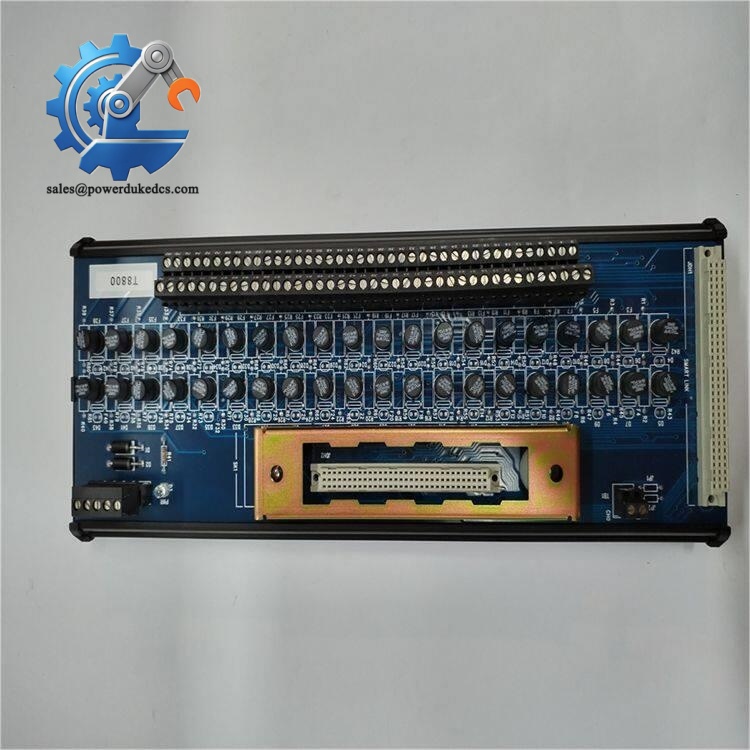
ICS Triplex T8831
? Global Compliance & Industry Certifications
Typical compliance expectations for hardware in this product category include:
- CE Mark for EMC and Low Voltage Directive compliance when installed within an approved system.
- UL/cUL Listed as part of qualified industrial control equipment.
- IEC 61508 Functional Safety for deployment in Safety Instrumented Systems requiring certified hardware architecture.
- ATEX / IECEx suitability depends on the complete installation. The module itself is not normally installed directly inside hazardous locations unless incorporated into an approved certified system.
- Marine Approvals (DNV GL) may apply when integrated into qualified marine automation cabinets.
Functional safety certification is significant because certified hardware demonstrates predictable failure behavior, allowing engineers to calculate Safety Integrity Level (SIL) performance during lifecycle assessments.
Verify specific lot certifications with OEM.
? Long-Term Storage & Asset Preservation Guide
Store the module inside its original anti-static shielding bag until installation. The exposed backplane connector should never remain uncovered inside warehouse shelving (even clean facilities accumulate conductive dust over time).
Maintain storage humidity below 60% RH and avoid rapid temperature swings that may produce condensation on PCB assemblies.
Inspect warehouse inventory every 12–24 months. Examine connector plating, retaining clips, front-panel fasteners, and identification labels. Before commissioning, perform a controlled power-up and verify that the installed firmware revision matches the validated plant baseline.
Physical Installation Prerequisites
- Install only in a compatible ICS Triplex Trusted Series chassis.
- Verify the designated slot assignment before inserting the module.
- Leave at least 50 mm (2 inches) of clearance above and below the rack to maintain convection airflow.
- Confirm the module is fully seated against the backplane connector before securing the retaining clips.
- Verify protective earth grounding for the control cabinet.
- Route analog signal wiring separately from high-voltage power conductors to minimize electrical noise.
- Perform functional verification and channel calibration after installation.
Buyer’s FAQ (Logistics & Compliance Focus)
Q: Which HS Tariff Code is generally used when shipping the T8831 internationally?
A: Industrial safety I/O modules are commonly classified under HS 8538 as parts suitable for industrial control equipment. Final classification should always be confirmed with the customs broker and the importing country’s tariff schedule.
Q: Does the Country of Origin affect compliance documentation?
A: Yes. Country of Origin (COO) documentation supports customs clearance, import duty determination, equipment traceability, and maintenance audit requirements. The COO should match the manufacturer’s identification and accompanying shipping documents.
Q: Is cargo insurance recommended for this module?
A: Absolutely. Although the enclosure protects the electronics, impact loads can damage the precision backplane connector or internal analog circuitry without leaving obvious external marks. Insurance is inexpensive compared with replacing a discontinued safety module.
Q: Does the ship with the latest firmware already installed?
A: Not necessarily. Firmware revisions depend on manufacturing date, service history, and previous maintenance activities. Verify the installed firmware level against the approved system configuration before placing the module into operational service.


 Start Chat