

Description
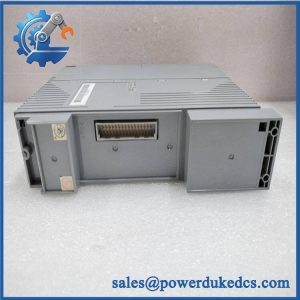
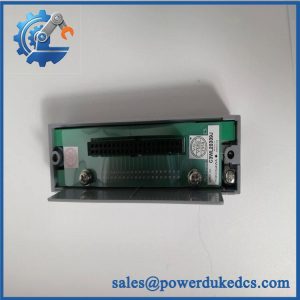
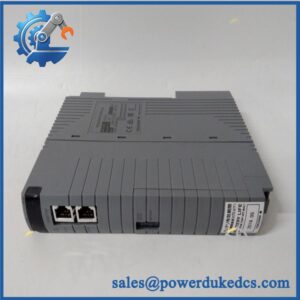
- Model: AFV30D-A41152
- Brand: Yokogawa
- Series: CENTUM VP Field Control Unit (FCU)
- Part Type: Duplexed Field Control Unit
- Core Function: Acts as the redundant control node within a CENTUM VP Field Control Station, executing configured process-control and sequence-control applications while maintaining redundant communication and power paths.
- Key Specs: 19-inch rack-mount construction, dual-redundant Vnet/IP, dual-redundant power architecture, support for two CP461/CP471 processor modules, up to 13 connected node units, and main-memory battery protection.
Product Introduction
When a CENTUM VP control station loses its FCU, the problem is rarely confined to one I/O point. The YOKOGAWA AFV30D-A41152 is a duplexed Field Control Unit designed to serve as the control core of a Vnet/IP-based Field Control Station, coordinating application execution and communications with associated FIO/node hardware. Its redundant design is intended to keep control functions available when a processor or associated hardware path develops a fault.
For brownfield plants, the exact suffix matters. Current technical listings identify A41152 as a specific AFV30D configuration, including dual-redundant Vnet/IP and redundant power. The part therefore belongs in a controlled legacy migration and spare-parts program rather than being selected simply as a generic “AFV30D” controller.
Core Technical Specifications
| Parameter | Value |
|---|---|
| Manufacturer | Yokogawa Electric Corporation |
| Model | AFV30D-A41152 |
| Product Type | Duplexed Field Control Unit |
| System | CENTUM VP |
| FCU Architecture | Duplex / redundant |
| Mounting | 19-inch rack-mount |
| Vnet/IP | Dual-redundant interface |
| Power Supply | Dual-redundant configuration |
| Processor Configuration | 2 × CP461 or 2 × CP471 processor modules, depending on system configuration |
| Main Memory | 128 MB |
| Memory Protection | Battery-backed main-memory retention, commonly specified up to 72 hours |
| Maximum Node Units | Up to 13 ESB Bus or Optical ESB Bus node units |
| READY Contact | 2 terminals, NC/C configuration |
| READY Contact Rating | 30 V DC, maximum 0.3 A |
| Application | CENTUM VP Field Control Station |
| Approx. Weight | About 8.0 kg for the AFV30D assembly |
| Environmental Range | Verify the exact system-generation installation specification before commissioning |
Multiple current listings agree on the core FCU characteristics, including dual-redundant Vnet/IP, 128 MB memory, 72-hour memory backup, 19-inch mounting, and support for up to 13 node units. Some third-party sources publish conflicting power-supply and temperature figures, so those details should be checked against the applicable Yokogawa hardware specification for the installed CENTUM VP revision.
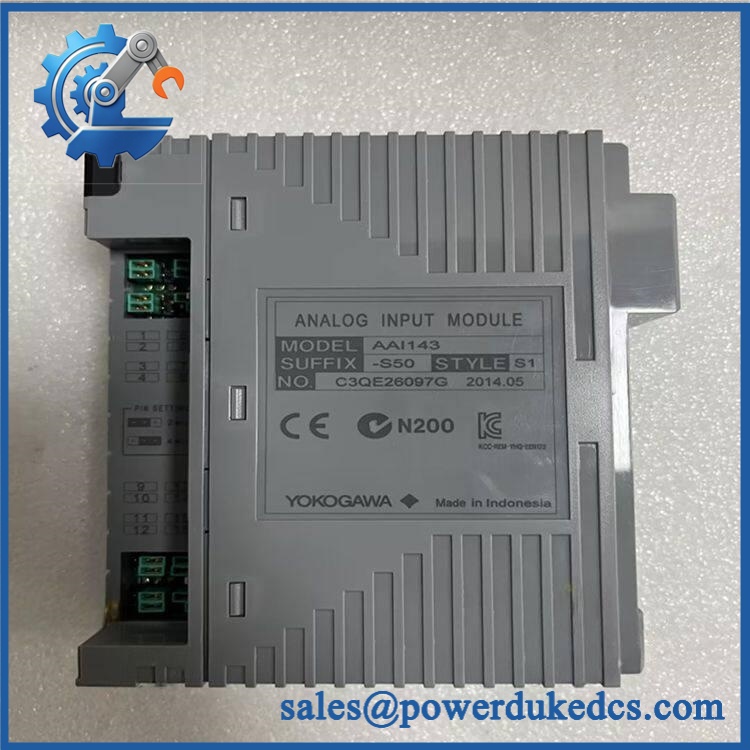
YOKOGAWA AFV30D-A41152
Application Scenarios & Pain Points
A control station fault becomes much more expensive when the spare FCU is the wrong hardware variant. The -A41152 is used where redundant control execution and Vnet/IP communications are required, so procurement accuracy has a direct effect on recovery time.
Oil & Gas Process Units
In refinery and upstream process applications, the FCU can serve as the central execution hardware for a CENTUM VP Field Control Station. Redundant communication and processing paths help reduce the effect of individual hardware faults.
Chemical Processing Plants
For continuous batch or process operations, an FCU failure can affect multiple control loops and sequences at once. Maintaining a tested spare is particularly important where the installed control system is several revisions behind the current product generation.
Power and Utility Systems
Where turbine auxiliaries, boiler systems, or balance-of-plant processes remain on CENTUM VP, the provides the FCS execution platform for the configured control strategy. Battery-backed memory is useful during power disturbances because retained application data can reduce recovery work.
Brownfield CENTUM VP Upgrades
A common procurement error is selecting an with a different electrical or network suffix. The A41152 configuration needs to be compared against the existing processor, power, Vnet/IP, and FIO architecture before shipment.
Hot Control Cabinets
At sustained 50°C+ cabinet temperatures, check ventilation and surrounding equipment closely. Even when a component’s published limit appears adequate, cabinet heat, airflow restrictions, and aging power supplies can accelerate intermittent failures.
Common Error Codes & Diagnostic Symptoms
Symptom/Code: FCU Fault / Redundant Pair Loses Ready State
→ Diagnosis: Possible processor-module fault, power-path failure, backplane/interconnect issue, or internal FCU hardware problem.
→ Action: Review CENTUM VP diagnostics and redundancy status, isolate the faulty side, and replace the affected FCU hardware after external causes are eliminated.
Symptom/Code: Vnet/IP Communication Loss
→ Diagnosis: A failed communication interface, network path, connector, or associated configuration can cause loss of communication between the FCU and other CENTUM VP nodes. Dual-network architecture should be checked path by path.
→ Action: Verify both Vnet/IP paths and switch/network infrastructure; replace the FCU when the communication fault follows the controller hardware.
Symptom/Code: Main Memory / Battery Diagnostic Alarm
→ Diagnosis: A depleted or defective memory backup battery can compromise retained memory during an extended power interruption. Current technical listings specify up to 72 hours of memory retention with battery backup.
→ Action: Follow the approved battery-maintenance procedure and replace the FCU assembly when the battery or associated circuitry is confirmed defective.
Do not assign an arbitrary numeric alarm code to the -. Exact diagnostic codes depend on the CENTUM VP release, FCU configuration, and the system engineering/maintenance interface.
Cross-Reference & Lifecycle Migration
The is part of the duplexed FCU family, but the complete suffix must be retained during replacement.
Important configuration relationship:
Current technical references associate the with dual-redundant Vnet/IP, redundant power, and CENTUM VP operation. They also identify other configurations such as and , which should not be treated as automatically interchangeable.
Processor compatibility:
The architecture can use two identical CP461 or CP471 processor modules for duplex operation, depending on the specific FCU configuration. Confirm the processor generation in the existing station before ordering a replacement FCU.
Firmware / application transfer:
The FCU itself is part of the CENTUM VP control architecture; application programs and engineering data are managed through the system engineering environment. Do not assume that a replacement chassis is automatically ready for service. Verify the installed CENTUM VP release, processor compatibility, application backup, and node configuration before commissioning.
Drop-in replacement:
No universal drop-in claim should be made across suffixes. Electrical configuration, processor type, Vnet/IP architecture, node connections, and system revision all require verification.
Lifecycle status:
For procurement purposes, treat – as a legacy/availability-dependent FCU unless the current Yokogawa regional product catalog confirms active OEM supply for the exact configuration. Current secondary-market sources continue to list the part, while Yokogawa’s current public search results do not provide a direct product page confirming active production. That uncertainty supports keeping verified spare inventory for operating brownfield systems.
Field Engineer’s Tech Notes
First warning: do not change the processor pairing casually. A duplex FCU depends on matched processor hardware and compatible system configuration. Replacing one side with a different processor generation can create startup or redundancy problems even when the FCU chassis itself powers normally.
Second warning: check both network and power paths before replacing the FCU. A failed Vnet/IP switch, loose connection, or degraded redundant supply can mimic an FCU failure. Trace each redundant path independently (a “one side is healthy” indication is not the same as proving the controller itself is defective).
Strict QA & Testing SOP
1. Inbound inspection
Verify the complete identification, chassis condition, processor bays, connectors, mounting hardware, and visible manufacturing labels.
2. Configuration verification
Record the complete part number and compare the suffix against the intended station configuration. Check the required processor and power architecture before energization.
3. Visual and mechanical inspection
Inspect the rack chassis, backplane connections, processor interfaces, communication connectors, power interfaces, and grounding points for corrosion, impact damage, contamination, or bent contacts.
4. Controlled power-up
Apply the correct supply configuration through a controlled test arrangement. Verify startup behavior, diagnostic status, processor recognition, and redundancy indications.
5. Processor test
Where a suitable test rack is available, verify both processor positions with compatible CP461/CP471 hardware. Confirm that the FCU recognizes the redundant pair correctly.
6. Vnet/IP communication test
Exercise both redundant communication paths independently. Verify link integrity and expected system-node communication rather than checking only one Ethernet path.
7. Node-interface verification
Connect representative compatible ESB/Optical ESB node hardware and verify correct node recognition. The is documented for connection to up to 13 node units.
8. Memory-retention check
Verify the status of the battery-backed memory function and inspect the battery condition according to the applicable maintenance procedure. The commonly documented retention target is up to 72 hours.
9. Extended run test
Operate the FCU through an extended test cycle while monitoring power stability, processor status, communications, redundancy behavior, and temperature.
10. Final QC release
Record serial/identification information, configuration details, test measurements, diagnostic results, photographs, and technician sign-off.
11. Packaging
Use ESD protection around sensitive electronics and rigid mechanical packaging suitable for international freight. Protect processor and connector interfaces from impact.
12. Evidence package
Provide the QC report and identification photographs with the shipment. Test videos are available to document power-up, redundancy checks, and communication testing.
Buyer’s FAQ
the saAFV30D-A41252?
A: No automatic interchangeability should be assumed. The suffix identifies the hardware configuration, and current trade data shows both models separately. Verify power, processor, and system configuration before substitution.
Q: Can I replace the FCU while the CENTUM VP system is operating?
A: The duplex architecture is designed to support redundant control operation, but physical replacement procedures depend on the installed station configuration and Yokogawa maintenance rules. Do not remove an FCU simply because the other side appears healthy.
Q: How do I verify a “Ne?
A: Request the complete nameplate, serial information, chassis photographs, processor compatibility details, and a documented functional-test report. For a legacy FCU, those records provide much stronger purchasing evidence than a generic “original” claim.
Q: What warranty should I require?
A: Require a written warranty tied to the exact supplied unit and serial number. The purchase documentation should state whether the FCU is new, new surplus, refurbished, or used, and should include the final QC/test report.



 Start Chat