

Description
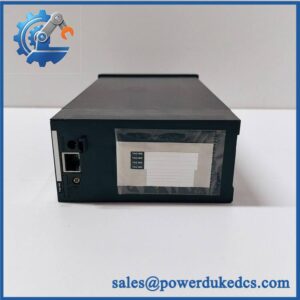
Unboxing & Physical Snapshot
- Model & Brand: Yokogawa FLEXA21. The designation appears incomplete for procurement-grade identification; Yokogawa FLEXA analyzers normally require the complete model/configuration code.
- Physical Dimensions: Not reliably established from “FLEXA21” alone. Obtain the exact Yokogawa model code and mechanical drawing before rack or panel planning.
- Estimated Shipping Weight: Not reliably established. Use the actual packed instrument weight for freight calculation.
- What’s in the Box: FLEXA21 analyzer/transmitter assembly only where confirmed by the exact order code. Sensor, holder, cable, calibration accessories, mounting hardware, and manuals should not be assumed to be included.
- Receiving inspection: Record the complete model code, suffix/options, serial number, software/firmware revision, measurement configuration, and nameplate ratings.
Product Introduction
The FLEXA platform is Yokogawa’s modular family of industrial analyzers/transmitters used for continuous process measurement. Depending on the specific FLEXA configuration, the instrument can support measurements such as pH/ORP, conductivity, dissolved oxygen, and related analytical parameters. The “FLEXA21” designation alone does not establish which measurement function or sensor interface is installed.
That distinction is important for spare-parts control. A FLEXA transmitter configured for conductivity is not automatically interchangeable with a unit configured for pH/ORP or dissolved oxygen. Before issuing this asset, match the complete model code, input module, sensor type, power supply, output configuration, and communication options against the installed instrument (especially in chemically aggressive process areas).
Core Technical Specifications
| Parameter | Value |
|---|---|
| Manufacturer | Yokogawa |
| Product family | FLEXA |
| Supplied designation | FLEXA21 |
| Instrument type | Industrial analytical transmitter/analyzer |
| Measurement function | Configuration-dependent — verify complete model code |
| Sensor input | Configuration-dependent |
| Analog outputs | Configuration-dependent |
| Digital communications | Configuration-dependent |
| Supply voltage | Verify exact nameplate |
| Power consumption | Verify exact configuration |
| Heat dissipation | Verify exact configuration |
| Display | Configuration-dependent |
| Enclosure/mounting | Verify exact model and enclosure version |
| Operating temperature | Verify exact product revision |
| Storage temperature | Verify exact product revision |
| Dimensions | Not established from FLEXA21 designation alone |
| Weight | Not established from designation alone |
| Hazardous-area approval | Verify exact certification and model code |
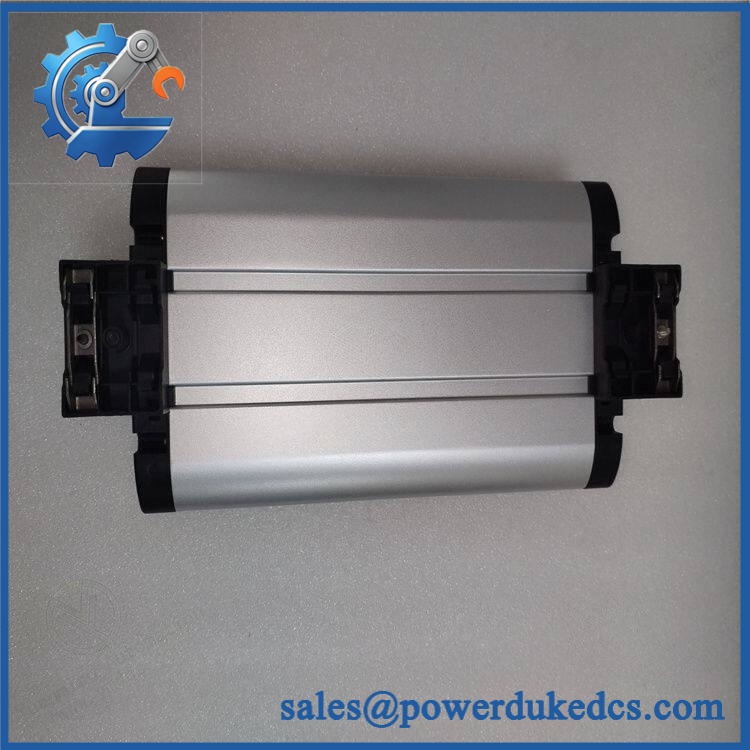
Yokogawa FLEXA21
Do not populate missing specifications by borrowing values from another FLEXA transmitter. Yokogawa uses configuration codes to identify measurement type, sensor inputs, power supply, outputs, and other options.
For an audit-grade inventory record, the complete Yokogawa model and suffix code should be mandatory. A generic “” entry is insufficient to establish electrical interchangeability.
Global Compliance & Industry Certifications
- CE Mark: Verify the applicable Yokogawa Declaration of Conformity for the exact FLEXA configuration.
- UL/cUL: Confirm product-specific certification where required by the North American installation.
- ATEX/IECEx: If the transmitter is intended for a hazardous area, verify the exact FLEXA configuration, protection concept, temperature class, gas/dust group, and certificate. Do not infer hazardous-area approval from the FLEXA family name.
- Marine approvals: DNV, ABS, LR, or other marine approvals require exact certificate verification.
- EMC: Confirm the manufacturer’s applicable EMC compliance documentation and installation requirements.
Hazardous-area certification is particularly important for process analyzers because the transmitter may be installed near flammable process chemicals. A general industrial CE or EMC declaration does not establish intrinsic safety or explosion-protection suitability.
Verify specific lot certifications with OEM.
Long-Term Storage & Asset Preservation Guide
- Protect the electronics from moisture and chemicals. Keep the transmitter in its original packaging or an appropriate ESD/moisture barrier. Do not store it near solvents, acids, caustics, chlorine-generating equipment, or other corrosive atmospheres.
- Keep sensor interfaces protected. If the unit has exposed sensor connectors, maintain their protective caps during storage. Do not allow conductive dust or oxidation products to accumulate on low-level analytical signal contacts (measurement accuracy can be compromised by contamination that is visually difficult to detect).
- Preserve configuration records. Photograph the complete nameplate and option code, then record firmware/software revision, serial number, calibration information, and measurement type. This is particularly important because FLEXA instruments can be configured for different analytical measurements.
Do not store a removed process sensor together with the transmitter unless the sensor has its own manufacturer-approved preservation procedure. Electrodes and analytical sensors have separate storage requirements.
Physical Installation Prerequisites
- Mounting: Verify the exact FLEXA mechanical version before selecting panel, wall, or other mounting hardware.
- Clearance: Provide enough space around the enclosure for wiring, display visibility, terminal access, and heat removal. Use the Yokogawa installation drawing for final clearance.
- Environmental protection: Confirm enclosure/IP/NEMA requirements against the actual installation location. Chemical exposure can be more significant than ambient temperature in process-analysis applications.
- Grounding: Connect protective and functional grounding according to Yokogawa’s installation documentation. Verify PE continuity before energization.
- Signal wiring: Keep analytical sensor wiring separated from high-voltage switching, motor, VFD, and heater conductors to reduce electrical interference.
- Sensor compatibility: Match sensor chemistry, measurement range, connector, cable, and temperature-compensation method to the configured transmitter.
- Process isolation: Where the sensor is installed in a pressurized or chemically hazardous process, verify the process connection, isolation valve, holder, and maintenance procedure before sensor removal.
- Commissioning: Verify the measurement configuration, calibration constants, sensor type, analog output scaling, alarms, and communication parameters before returning the analyzer to service.
Buyer’s FAQ
Q: What HS tariff code should be used for Yokogawa ?
A: Do not classify it from the short designation alone. The appropriate HS/national tariff code depends on the instrument’s actual analytical function and technical construction. Obtain the complete model code and technical description, then have the importing-country customs broker validate the classification.
Q: What should be declared as Country of Origin?
A: Use the actual manufacturing Country of Origin (COO) supported by the nameplate or Yokogawa/supplier documentation. The distributor’s shipping location is not sufficient evidence of origin.
Q: Should a FLEXA transmitter be insured during international shipping?
A: Insurance is appropriate when the unit has significant replacement value or is difficult to source. Protect the display, connectors, enclosure, and any calibration accessories with suitable packaging, and photograph the serial number and physical condition before carrier handoff.
Q: Does a replacement include the latest firmware?
A: Do not assume it does. The supplied designation is incomplete, and firmware depends on the exact hardware/configuration and production revision. Record the firmware/software revision before commissioning and compare it with the site’s approved configuration.
Asset-control note: “” should be treated as an incomplete purchasing identity. Request the full Yokogawa model/order code before approving the item as an interchangeable spare. The measurement function, sensor interface, power arrangement, outputs, hazardous-area certification, and physical configuration all need to be established from the complete identification.



 Start Chat


