

Description
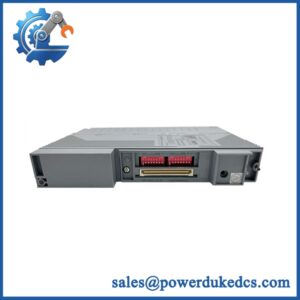
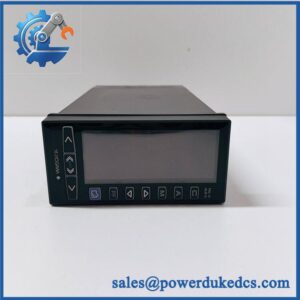
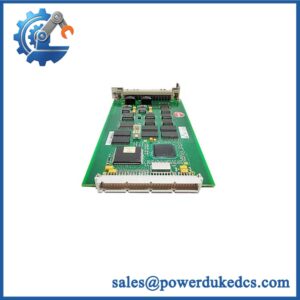
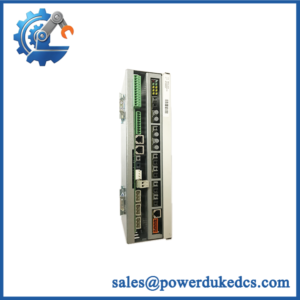
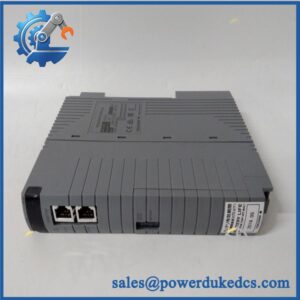
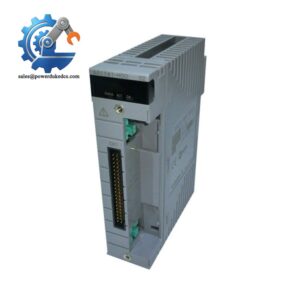
Unboxing & Physical Snapshot
- Model & Brand: Yokogawa Electric AFF50D, a duplexed Compact Field Control Unit (FCS) for the CENTUM VP V net architecture. Yokogawa specifies the AFF50D for V net and FIO and identifies it as a 19-inch rack-mountable type.
- Architecture: Compact-type FCS with 32 MB main memory; the
Ddesignation identifies the duplexed configuration. - Physical Dimensions: The AFF50D is a rack-mounted FCS assembly rather than a small plug-in controller. Use the exact Yokogawa mechanical drawing for the rack unit, mounting hardware, and installed modules before cabinet fabrication.
- Estimated Shipping Weight: Verify from the assembled configuration. AFF50D shipping weight varies with installed FIO modules, node/interface hardware, power supplies, rack hardware, and packaging.
- What’s in the Box: AFF50D FCS hardware and OEM packaging when supplied as a complete assembly. FIO modules, ESB/ER bus hardware, cables, power components, and application software should not be assumed included unless specifically listed on the PO.
- Receiving Inspection: Record the complete AFF50D identification, serial number, hardware/style codes, installed module complement, firmware revision, and rack configuration before inventory acceptance.
Product Introduction
Architecture Hook
The is a duplexed Compact Field Control Unit within Yokogawa CENTUM VP. It performs the field-control functions that execute control computations for function blocks and process I/O, with the FIO architecture connected through the applicable ESB/ER bus arrangement. Yokogawa lists as a Compact FCS for V net and FIO, with 32 MB main memory.
This is therefore a system-level spare, not a generic CPU board. The replacement must be evaluated against the installed FCS software, I/O module population, bus architecture, redundancy configuration, and cabinet hardware. Yokogawa’s system documentation also identifies dedicated control-function software for Compact FCS, including LFS1350 for Compact Field Control Station configurations.
Core Technical Specifications
| Parameter | Value |
|---|---|
| Manufacturer | Yokogawa Electric Corporation |
| Model | |
| Product Type | Duplexed Compact Field Control Unit |
| System | CENTUM VP |
| Network Architecture | V net |
| I/O Architecture | FIO |
| FCS Type | Compact |
| Configuration | Duplexed |
| Main Memory | 32 MB |
| Mounting | 19-inch rack-mountable type |
| Control Function | Function-block control computation and process I/O handling |
| Applicable FIO Architecture | ESB/ER bus-connected FIO |
| Control Software | CENTUM VP Compact FCS control-function software |
| Related Control Package | LFS1350 |
| Communication | V net; additional subsystem communications depend on installed modules |
| I/O Expansion | FIO modules and applicable node/interface hardware |
| Cooling | Rack/cabinet thermal management |
| Dimensions | Configuration-dependent; verify OEM mechanical drawing |
| Weight | Configuration-dependent |
| Firmware | Hardware/system revision dependent |
Yokogawa AFF50D
Yokogawa explicitly identifies as a duplexed Compact FCS for V net and FIO, with 32 MB main memory and a 19-inch rack-mountable construction.
The actual heat load cannot be established from the designation alone. Installed FIO modules and communication hardware contribute to cabinet power consumption, so the complete rack configuration should be used for thermal calculations.
? Global Compliance & Industry Certifications
- CE Mark: Yokogawa’s CENTUM hardware documentation specifies safety and EMC installation requirements associated with CE-marked systems, including use of appropriate power-distribution protection and metallic cabinet installation where required.
- UL/CSA: Applicable Yokogawa system configurations may use UL/CSA-compliant protective equipment and installation arrangements. Do not record UL/cUL certification for the alone without documentation covering the exact hardware configuration.
- ATEX/IECEx: Do not assume hazardous-area certification from the designation. Hazardous-area suitability depends on the exact hardware, associated equipment, enclosure, and certified installation arrangement.
- Marine Approvals: ABS, DNV, or Lloyd’s Register approval should be verified against the specific configuration and project certificate before offshore deployment.
- EMC: Yokogawa identifies metallic cabinet installation as part of meeting applicable safety and EMC requirements for rack-mountable equipment.
- Safety Relevance: The is a process-control FCS, not by itself a safety-instrumented system. Yokogawa separately identifies ProSafe-RS as its SIL 3 safety-system architecture. Do not treat an control function as a substitute for a certified SIS.
- Audit Record: Preserve the FCS nameplate, serial number, hardware revision, installed-module list, applicable conformity documentation, and cabinet/system certification records.
Verify specific lot certifications with OEM.
? Long-Term Storage & Asset Preservation Guide
- Store the complete FCS assembly in controlled ESD packaging. If the is held as a rack-level spare, protect the backplane, connectors, module guides, and exposed interfaces from dust and electrostatic discharge. Do not leave removed FIO modules loose inside the rack.
- Control humidity and condensation. Maintain a clean storage environment, preferably below 60% RH, with stable temperature. Long-term condensation exposure is particularly undesirable around the backplane and high-density control-network connectors.
- Preserve the exact hardware configuration. Photograph the installed module positions and record every FIO, communication, interface, and power component associated with the spare. An incomplete assembly can be mistaken for a complete replacement during an emergency outage.
- Maintain software backups separately. Record the CENTUM VP revision, FCS database/project identification, firmware information, and redundancy arrangement. Hardware preservation without configuration preservation does not guarantee rapid recovery.
Physical Installation Prerequisites
- Rack Mounting: The is specified as a 19-inch rack-mountable Compact FCS. Use the approved rack hardware and mechanical drawing rather than adapting generic shelf hardware.
- Clearance: Maintain sufficient front and rear clearance for module removal, cable routing, connector service, and airflow. Do not block rack ventilation with wiring bundles or adjacent heat-producing equipment.
- Cabinet: Use the specified metallic cabinet arrangement where required for safety and EMC compliance. Yokogawa specifically identifies keyed metallic cabinet installation for rack-mountable devices in applicable CENTUM system documentation.
- Grounding: Establish the rack and cabinet protective-earth connection before energization. Follow Yokogawa’s system grounding and shield-termination requirements.
- Power: Verify the complete FCS power-distribution architecture, including dedicated protective breakers and redundant supply arrangements where applicable.
- FIO Compatibility: Confirm the installed FIO modules, ESB/ER bus components, and node hardware against the target configuration.
- Redundancy: The
Dconfiguration is duplexed. Confirm that both sides of the redundant control architecture contain compatible hardware and that the system database recognizes the intended pair. - Commissioning: Verify FCS database, software revision, V net communication, FIO module population, control-function execution, redundancy status, alarms, and I/O operation before returning the plant to normal service.
Buyer’s FAQ
Q1. What HS tariff code should be used for ?
Do not assign an HS code from the model number alone. The is a distributed-control-system field control unit, and the final tariff classification depends on its technical function and the importing country’s tariff schedule.
Have the customs broker confirm the classification before issuing the commercial invoice. Describe the product by its actual function rather than using a generic term such as “electronic board.”
Q2. Does Country of Origin affect this shipment?
Yes. COO can affect customs duty, preferential tariff eligibility, origin declarations, and trade-compliance screening.
Yokogawa is a Japanese manufacturer, but manufacturer nationality does not establish the manufacturing origin of a particular assembly. Obtain COO from the physical equipment, OEM documentation, or supplier Certificate of Origin.
Q3. Should shipping insurance be purchased?
For a complete FCS assembly, insurance is strongly worth evaluating because replacement cost and process downtime exposure can be substantial. Freight weight can also increase significantly once the rack contains FIO and interface modules.
Before dispatch, photograph the complete rack, nameplate, module population, serial numbers, connector areas, and packaging. Use rigid mechanical protection and ESD packaging rather than treating the assembly as ordinary electronic freight.
Q4. Does include the latest firmware and application configuration?
Do not assume it does. The operates as part of a CENTUM VP system, and Yokogawa identifies dedicated Compact FCS control-function software and system-level configuration requirements.
For receiving inspection, record the hardware revision, firmware information, FCS database/project association, installed I/O modules, and redundancy configuration. A replacement rack should not be released for commissioning until its software and hardware configuration have been reconciled with the target system.
Asset-control note: is not a flow transmitter. It is a duplexed Compact Field Control Unit for Yokogawa CENTUM VP, V net and FIO. This distinction is important because some non-OEM online listings incorrectly describe as a flow transmitter. Yokogawa’s own system documentation clearly identifies as a Compact FCS.


 Start Chat