

Description
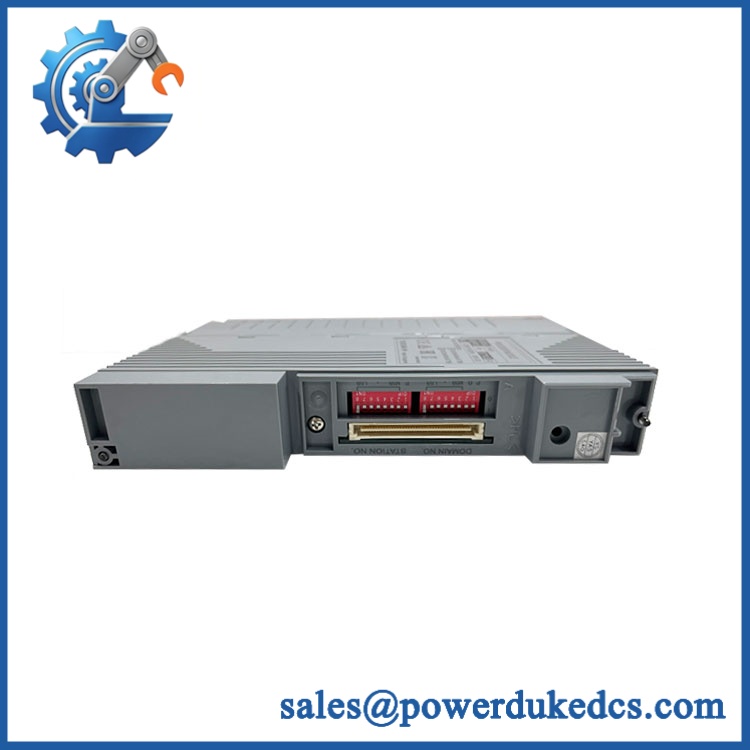
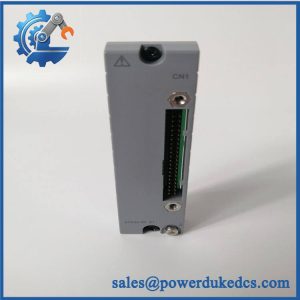
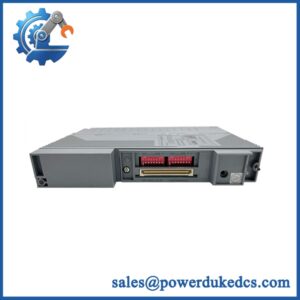
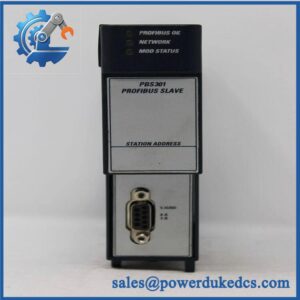
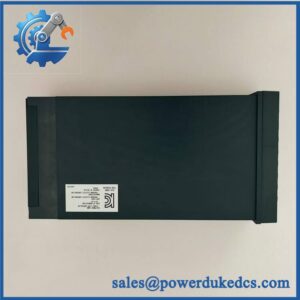
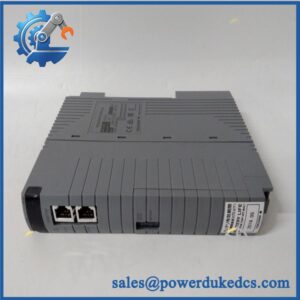
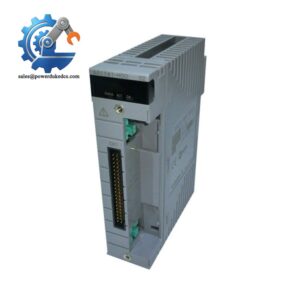
Unboxing & Physical Snapshot
- Manufacturer: Yokogawa Electric Corporation
- Model: CP451-50 S2
- Product type: CENTUM VP Field Control Station control processor / CPU module.
- Hardware family: CP451 series Vnet/IP control processor.
- Redundancy: The CP451 architecture supports dual-redundant processor configurations when installed with the appropriate paired hardware.
- Approximate dimensions: Approximately 100 × 130 × 60 mm (W × H × D) for preliminary logistics planning; verify the exact Yokogawa mechanical drawing before rack-space allocation.
- Estimated shipping weight: Approximately 0.8–1.2 kg packed, depending on ESD packaging, mounting hardware, and carton.
- What’s in the box: CP451-50 S2 processor module and supplied mounting/accessory hardware only if explicitly listed on the packing list.
- Incoming inspection: Record the full CP451-50 S2 identification, serial number, hardware revision, firmware/software revision, and connector condition.
Product Introduction
The CP451-50 S2 is a Yokogawa CENTUM VP control processor used within the Field Control Station architecture. Unlike a standalone PLC CPU, it is installed as part of a Yokogawa control-station assembly, where processor redundancy, Vnet/IP communications, power architecture, and station configuration determine the actual system behavior.
The suffix should remain intact in the asset database. CP451-50 S2 is not interchangeable with every CP451-family processor simply because the front panel and connector arrangement appear similar (hardware revision and CENTUM VP compatibility must be confirmed before deployment).
Core Technical Specifications
| Parameter | Value |
|---|---|
| Manufacturer | Yokogawa Electric Corporation |
| Product Family | CENTUM VP |
| Model | CP451 |
| Complete Identification | CP451-50 S2 |
| Product Type | Field Control Station Control Processor |
| CPU Function | FCS control processing |
| Network Architecture | Vnet/IP |
| Redundancy | Dual-redundant configuration supported |
| Processor | Yokogawa-specified control processor |
| Control Execution | CENTUM VP FCS control functions |
| Memory | Configuration/revision dependent |
| Communication | Vnet/IP and station-level interfaces according to configuration |
| Mounting | Yokogawa FCS base/rack assembly |
| Power | Supplied through the FCS power architecture |
| Cooling | Cabinet/rack airflow |
| Application | Continuous process control |
| Installation | Control-room/instrument cabinet |
| Firmware | Hardware-revision and CENTUM VP release dependent |
- Ywa S2
Becahe S2 is a system-specific FCS processor, exact CPU frequency, memory capacity, power consumption, and firmware compatibility should be taken from the applicable Yokogawa hardware specification for the S2 revision. Do not populate an inventory database with figures taken from an earlier revision.
For a replacement decision, the critical parameters are the CENTUM VP release, hardware revision, redundancy arrangement, station configuration, and Vnet/IP architecture rather than processor clock speed alone.
? Global Compliance & Industry Certifications
he S2 is industrial DCS hardware, but certification must be established from the exact Yokogawa configuration.
- CE Mark: Verify the applicable Yokogawa Declaration of Conformity for the revision.
- UL/cUL: Confirm the specific certification record before using the module in a North American compliance file.
- EMC: Compliance depends on the FCS assembly, cabinet grounding, cable routing, shielding, and associated power equipment.
- ATEX/IECEx: Do not assume certification. A standard processor should not be treated as hazardous-area equipment without an applicable product certificate.
- Marine approvals: DNV GL or equivalent marine certification should only be claimed when the exact configuration is covered by the relevant approval.
- Functional safety: Do not confuse ordinary FCS control functionality with SIL certification. A processor does not by itself establish SIS compliance.
For regulatory audits, retain the hardware identification label, conformity documentation, certificate references, and installed-system configuration together. This prevents a generic CENTUM VP certification from being incorrectly applied to a specific spare.
Verify specific lot certifications with OEM.
? Long-Term Storage & Asset Preservation Guide
Khe S2 inside its original ESD shielding bag. The board-level electronics and backplane connector should remain protected from dust, fingerprints, and electrostatic discharge until installation.
Control humidity below 60% RH where practical. Avoid condensation and rapid temperature transitions, especially when a spare moves from a climate-controlled warehouse into a warmer process area. Connector oxidation is an easy-to-miss failure source on long-stored DCS hardware.
Preserve software compatibility records with the physical processor. Record the hardware revision, serial number, firmware revision, CENTUM VP release, and station configuration associated with the spare (a processor that powers up successfully can still be incompatible with the installed control-system release).
Before installation, inspect the backplane connector, retaining hardware, housing, labels, and PCB-access areas. Quarantine units showing corrosion, cracked plastic, contamination, or damaged connector contacts.
Physical Installation Prerequisites
- Insthe S2 only in the specified Yokogawa CENTUM VP FCS hardware architecture.
- Do not treat it as a generic DIN-rail PLC CPU.
- Verify the correct base/rack and backplane connector before insertion.
- Ensure the module’s retaining mechanism is fully engaged after insertion.
- Provide cabinet airflow sufficient to prevent heat accumulation around the FCS processor assembly.
- As a preliminary cabinet practice, allow approximately 50 mm around ventilation paths, unless the applicable Yokogawa rack drawing specifies another clearance.
- Maintain protective-earth continuity through the FCS cabinet/rack grounding system.
- Keep Vnet/IP communication wiring separated from high-energy switching and motor cables.
- Verify redundant power arrangements before commissioning a redundant processor pair.
- Confirm both processor modules are the correct hardware revision before creating a redundant pair.
- Verify the station configuration and CENTUM VP release before applying the replacement.
- Perform the applicable FCS redundancy, communication, control-function, and alarm checks before returning the station to automatic operation.
Buyer’s FAQ
Which HS tariff code should be uor S2?
Do not classify the module solely as a “PLC CPhe S2 is a DCS Field Control Station processor, and the correct HS classification depends on its principal function and the importing country’s tariff schedule. Have the customs broker validate the final tariff code.
What about Country of Origin?
The Country of Origin must be supported by the actual unit or reliable manufacturer documentation. Do not infer COO from the seller’s warehouse, export location, or Yokogawa’s corporate headquarters. Keep the COO evidence with the commercial invoice and asset record.
Should I insure the shipment?
For a processor supporting a production DCS, insurance is reasonable when replacement cost and process downtime exposure are significant. Use ESD shielding, anti-static cushioning, and a rigid outer carton; photograph the serial-number label and connector condition before shipment.
es S2 contain the latest firmware?
Do not assume it does. Firmware compatibility is tied to the hardware revision and installed CENTUM VP environment. Before issuing the spare, record the existing processor’s firmware/software revision, station configuration, and redundancy arrangement, then verify compatibility with Yokogawa documentation before installation.
Inventory-control recommendation: Keep as the complete identity in your ERP/CMMS record. Do not shorten it to “,” because that can create an avoidable interchangeability error during an emergency DCS replacement.


 Start Chat