

Description
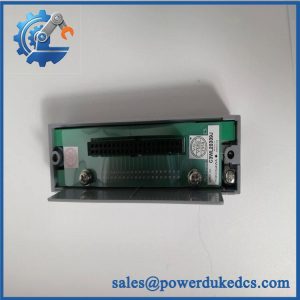
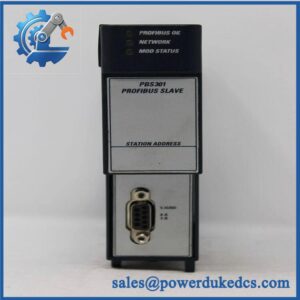
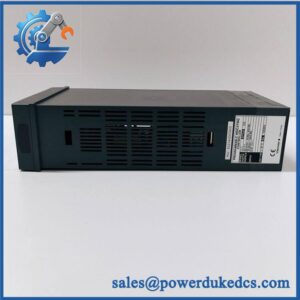
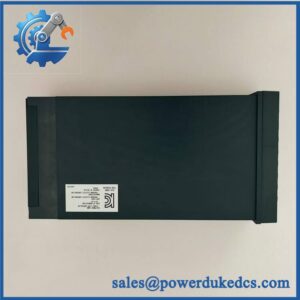
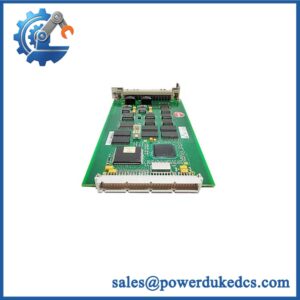
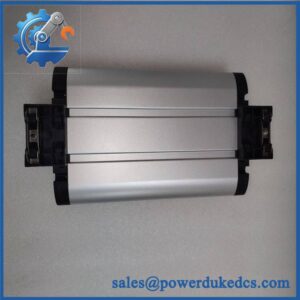
Unboxing & Physical Snapshot
- Model & Brand: Yokogawa Electric CP471-00 S1 — CENTUM VP field control unit processor module. Yokogawa identifies CP471 as a processor module for AFV30, AFV40, A2FV50, and A2FV70 field control units.
- Exact Identity: CP471-00 denotes the version with no explosion protection and the basic type; the S1 designation identifies the S1 series in available product records.
- Physical Dimensions: Use the Yokogawa mechanical drawing for the actual cabinet assembly. Do not substitute dimensions from a complete field control unit.
- Estimated Shipping Weight: Approximately 0.7 kg net according to Yokogawa’s hardware specification; allow approximately 1.2–1.5 kg gross for ESD protection, cushioning, and export packaging.
- What’s in the Box: CP471-00 processor module and OEM packaging/documentation when supplied as a factory-new spare. Field-control-unit backplane hardware, ESB bus coupler, software media, and application configuration should not be assumed included.
- Receiving Inspection: Photograph the complete model/suffix marking, S1 identification, serial number, hardware/style information, connectors, and front-panel LEDs before the asset is accepted into controlled stock.
Product Introduction
Architecture Hook
The CP471-00 S1 is a processor module intended for installation in Yokogawa CENTUM field control units. It is not a standalone PLC CPU; its compatibility depends on the host field control unit, ESB bus architecture, CENTUM VP software revision, and the surrounding redundant-control configuration. Yokogawa specifies CP471 for AFV30, AFV40, A2FV50, and A2FV70 field control units.
System compatibility must be checked before a replacement is released. Yokogawa specifically states that CP471 can be used in dual-redundant configurations and that it can replace CP461 under defined conditions, while an existing should not simply be replaced with CP461 (which is critical when managing legacy DCS spares).
Core Technical Specifications
| Parameter | Value |
|---|---|
| Manufacturer | Yokogawa Electric Corporation |
| Model | -00 |
| Series | S1 |
| Product Type | CENTUM VP processor module |
| Application | Field Control Unit / DCS |
| Applicable FCS Families | AFV30, AFV40, A2FV50, A2FV70 |
| Explosion Protection | No explosion protection |
| Basic / G3 Configuration | Basic type for the documented -00 configuration |
| Control Network | Dual-redundant Vnet/IP interface |
| Redundancy | Two modules can be used in dual-redundant configuration |
| Memory Protection | Battery-backed main memory |
| Main-Memory Backup | Maximum 72 hours during power failure |
| Battery Recharge Time | Minimum 48 hours |
| Weight | Approximately 0.7 kg |
| Operating Software | CENTUM VP Control Function for Field Control Station |
| Minimum Software | Version-dependent; later documentation specifies R6.05 or later for |
| ESB Compatibility | EC401 style code S3 or later |
| Front Interface | Status/diagnostic LED indicators |
| Firmware / Application | Configuration and revision dependent |
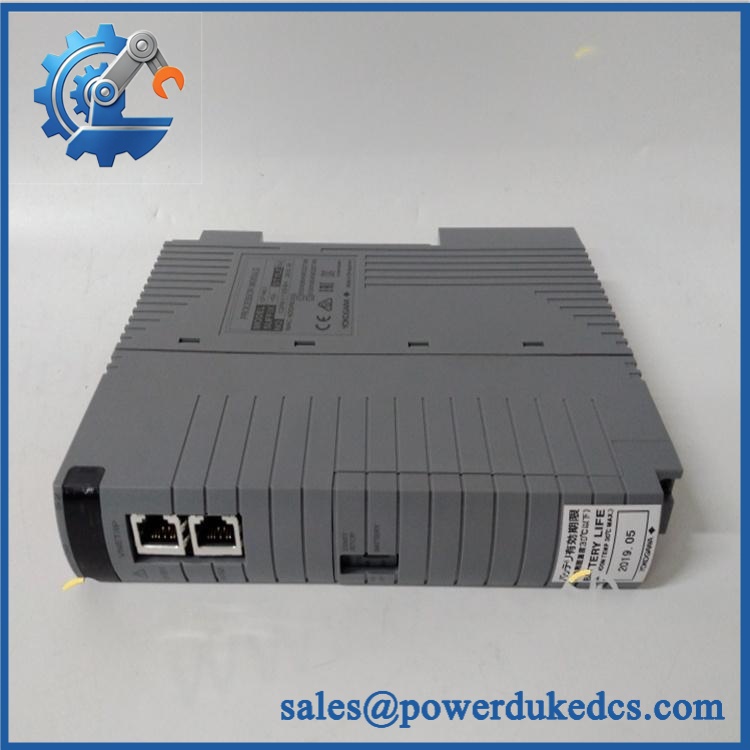
Yokogawa CP471-00 S1
Yokogawa’s documentation identifies dual-redundant Vnet/IP as the control-bus interface and specifies approximately 0.7 kg for the processor module. The battery provides main-memory protection for a maximum of 72 hours, with a minimum recharge time of 48 hours.
Software compatibility is a hard receiving criterion. Yokogawa’s later documentation specifies CENTUM VP R6.05 or later for the documented configuration, while earlier revisions of the specification describe earlier CENTUM VP releases with required patches. Always match the software requirement to the exact documentation revision in the installed system.
? Global Compliance & Industry Certifications
- CE Mark: Yokogawa’s documentation defines specific installation restrictions for CE-marking applicable countries and distinguishes non-explosion-protection and explosion-protection configurations. The
-00version is the non-explosion-protection/basic configuration. - UL/cUL: Do not record UL/cUL approval without a certificate covering the exact hardware and applicable field-control-unit configuration.
- ATEX/IECEx: should not be treated as an explosion-protected module. Yokogawa explicitly distinguishes the
-00configuration from versions intended for explosion-protection applications. - FM: Yokogawa documents separate variants for FM non-incendive applications in countries/areas where that certification route applies. Do not substitute those certification variaor .
- Marine Approvals: Yokogawa states that marine standards can include ABS, Bureau Veritas, and Lloyd’s Register, but also notes that applicable specifications vary by hardware apparatus. Do not assign marine approval to this specific part without the applicable certificate.
- Safety Relevance: The explosion-protection suffix is a material safety attribute. Installing a non-explosion-pred where an explosion-protection configuration is required can invalidate the equipment’s intended certification basis.
- Audit Record: Preserve the nameplate, serial number, S1/style identification, hardware revision, applicable declaration of conformity, and field-control-unit configuration.
Verify specific lot certifications with OEM.
? Long-Term Storage & Asset Preservation Guide
- Khe in its original ESD shielding bag. The processor is a densely populated DCS electronics assembly; exposed connector contacts and PCB surfaces should not be handled or stored without ESD protection.
- Pay particular attention to the backup battery. Yokogawa specifies battery-backed main-memory protection, with a maximum backup period of 72 hours during power failure and a minimum recharge time of 48 hours. For long-term strategic storage, record the battery condition and follow the OEM maintenance procedure rather than allowing an aged battery to remain indefinitely in an uncontrolled spare.
- Maintain dry, stable warehouse conditions. A clean environment below approximately 60% RH is a sensible preservation target, with no condensation cycles. Do not expose the processor to rapid temperature transitions immediately before installation.
- Preserve the software association. Record the CENTUM VP version, processor hardware revision, FCS association, and redundancy arrangement. A replacement without compatible control-function software can become a non-deployable spare despite passing a basic hardware inspection.
Physical Installation Prerequisites
- Host Compatibility: Install only in a Yokogawa-supported field control unit. is documented for AFV30, AFV40, A2FV50, and A2FV70 families.
- ESB Bus: Confirm that the associated EC401 ESB bus coupler is style code S3 or later, as specified by Yokogawa for .
- Redundant Configuration: When operating duplexed, confirm that both processor positions use compatible hardware. and CP461 cannot simply be mixed as a dual-redundant pair.
- Clearance: Maintain the field-control-unit manufacturer’s specified spacing around the module and chassis for connector access and cooling. Do not obstruct cabinet ventilation paths with wiring ducts or adjacent power equipment.
- Grounding: The complete field control unit must be installed with the specified protective-earth and cabinet grounding arrangement. Follow Yokogawa’s system installation documentation rather than grounding the processor independently.
- Cabinet: Where required for safety and EMC compliance, use the specified keyed metallic cabinet/enclosure. Yokogawa’s field-control-unit documentation identifies metallic cabinet installation as necessary to meet applicable safety and EMC requirements.
- Power: Verify the host field-control-unit power architecture before installation; the is not powered as an independent standalone controller.
- Commissioning: Verify CENTUM VP software revision, EC401 style, Vnet/IP redundancy, processor status, battery condition, and FCS configuration before returning the control loop to service.
Buyer’s FAQ
Q1. What HS tariff code should be uor S1?
Do not assign an HS code solely from the model number. The module functions as a DCS field-control-unit processor, and the final tariff classification depends on the importing country’s tariff schedule and the precise functional description.
Have the customs broker confirm the classification before issuing the commercial invoice. Keep the technical description consistent: Yokogawa CENTUM VP processor module for field control unit.
Q2. Does Country of Origin affect this spare?
Yes. COO can affect duty rates, preferential tariff treatment, origin declarations, and trade-compliance screening.
The available technical documentation identifies Yokogawa Electric Corporation in Japan, but the actual manufacturing COO should be confirmed from the unit, OEM records, or supplier Certificate of Origin. Manufacturer headquarters and manufacturing origin should not be treated as the same field.
Q3. Should shipping insurance be purchased?
For a DCS processor, insurance is reasonable when replacement cost and process downtime exposure are material. The module weighs only about 0.7 kg, but its operational value can be considerably higher than its freight value.
Photograph the serial number, connector condition, LEDs, and packaging before dispatch. Use ESD shielding and rigid cushioning to prevent connector or PCB damage.
Qes S1 include the latest firmware pre-loaded?
Do not assume it does. The operates within a specific CENTUM VP Control Function for Field Control Station environment, and Yokogawa identifies software-version requirements and patches for different documentation generations.
For receiving inspection, record the processor’s hardware/style information and serial number, then verify compatibility with the target CENTUM VP release before deployment. The application configuration should remain a separately controlled backup.
Asset-control note: Preserve the complete identity as YWA S1. The -00 suffix is significant because it identifies the non-explosion-protection/basic configuration; it must not be substituted casually with -01, -10, or -11 variants.


 Start Chat