

Description
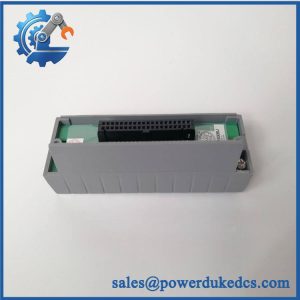
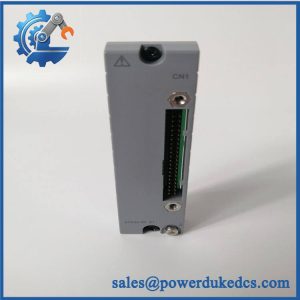
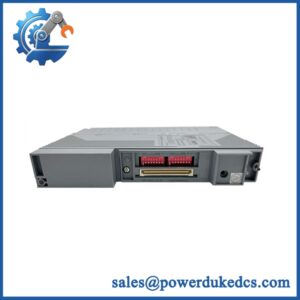
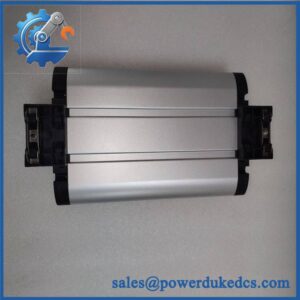
Unboxing & Physical Snapshot
- Manufacturer: Yokogawa Electric Corporation
- Model: CP451-50
- Product family: Yokogawa CENTUM control-system hardware.
- Hardware classification: Processor/CPU module; exact system generation and compatible base unit must be verified from the nameplate and OEM documentation.
- Physical dimensions: OEM verification required. Do not use CP451-10 dimensions as a substitute.
- Unit weight: OEM verification required.
- Estimated packed shipping weight: Determine from the actual packaged unit; do not use an assumed value for customs documentation.
- What’s in the box: CP451-50 processor module; mounting hardware, mating connectors, manuals, and accessories only if included on the original packing list.
- Receiving inspection: Photograph the complete model label, serial number, hardware revision, date code, connector arrangement, and ESD packaging.
Product Introduction
Architecture hook: The CP451-50 should be managed as a system-specific Yokogawa control processor rather than as a generic electronic board. Compatibility depends on the host CENTUM architecture, base unit/backplane, system revision, communication arrangement, and firmware baseline.
Do not substitute specifications from the CP451-10 simply because both carry a CP451 designation. The suffix -50 identifies a different configuration, and processor hardware should be released against the exact Yokogawa system documentation (this is particularly important for legacy DCS spare inventories where visually similar assemblies can have different system roles).
Core Technical Specifications
| Parameter | Value |
|---|---|
| Manufacturer | Yokogawa |
| Model | -50 |
| Product type | Yokogawa DCS processor/control module |
| System family | CENTUM architecture; exact generation requires verification |
| CPU architecture | Verify against OEM documentation |
| Memory capacity | Verify against exact hardware revision |
| Supply voltage | Verify against applicable Yokogawa base unit |
| Power consumption | OEM verification required |
| Communication interfaces | System/revision dependent; verify actual unit |
| Backplane interface | Verify against compatible base unit |
| Operating temperature | OEM verification required |
| Storage temperature | OEM verification required |
| Relative humidity | OEM verification required |
| Dimensions | OEM verification required |
| Weight | OEM verification required |
| Mounting | Yokogawa system/base-unit dependent |
| Firmware | Revision-dependent |
| Certifications | Verify against exact hardware revision and lot |
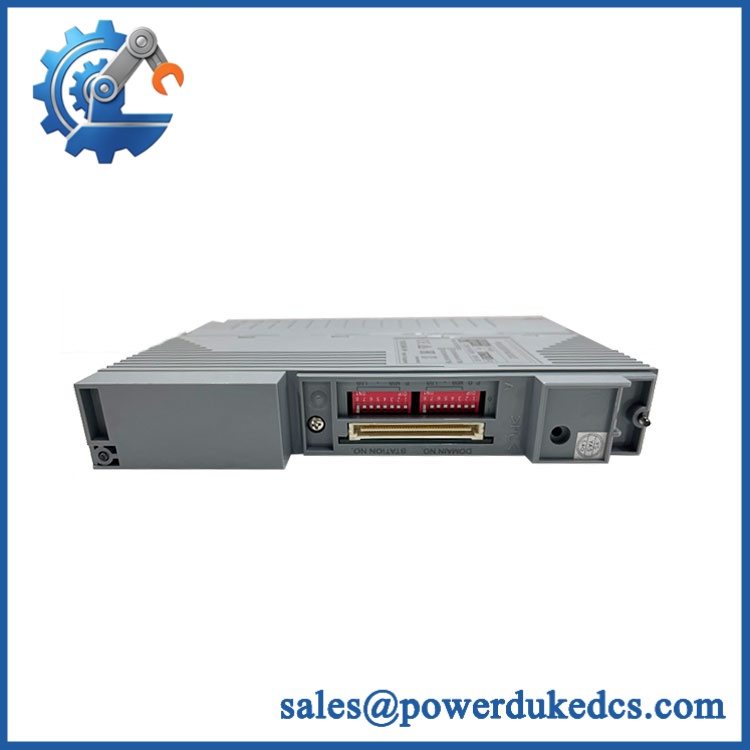
Yokogawa CP451-50
Technical data-control warning
Publicly available information for is not sufficiently consistent to establish trustworthy values for memory, dimensions, weight, power consumption, or environmental limits without the relevant Yokogawa manual.
For an auditable inventory record, use OEM verification required rather than importing values from -10, -51, or another Yokogawa processor. That distinction protects the asset database from false technical equivalence.
Global Compliance & Industry Certifications
For a legacy Yokogawa processor, certification must be established from the actual hardware revision and applicable system documentation.
- CE Mark: Verify the applicable Yokogawa Declaration of Conformity for the exact -50 configuration.
- UL/cUL: Verify the physical certification marking and applicable certification record.
- ATEX/IECEx: Do not assume hazardous-area approval. Certification must explicitly cover the applicable hardware and installation.
- Marine approvals: DNV/DNV GL, ABS, Bureau Veritas, or Lloyd’s Register approval must be verified separately when required.
- RoHS: Confirm the environmental compliance status for the actual production revision.
- EMC: Verify the applicable EMC requirements for the complete DCS assembly rather than the processor alone.
A DCS processor’s certification status cannot be evaluated independently from the host cabinet in every application. Power distribution, grounding, communication wiring, enclosure, and environmental conditions can all affect system-level compliance.
Verify specific lot certifications with OEM.
Long-Term Storage & Asset Preservation Guide
Keep -50 inside its original ESD shielding bag. Protect the backplane connector and exposed electronic circuitry from static discharge, conductive dust, and mechanical damage.
Maintain a clean, dry warehouse environment. Avoid condensation, corrosive gases, salt contamination, and large temperature excursions. A practical long-term target is below 60% RH, even where the formal Yokogawa storage specification permits a broader range.
Preserve configuration traceability. Record the complete part number, serial number, hardware revision, date code, firmware version, and original packaging. For legacy DCS processors, configuration identity can be more important than physical condition because an incompatible revision can prevent successful system commissioning.
Physical Installation Prerequisites
- Install only into the Yokogawa base unit/rack specified for -50.
- Verify the target CENTUM system generation and hardware revision before releasing the spare.
- Confirm the applicable DC supply and power-distribution requirements before energization.
- Inspect the backplane connector for bent, contaminated, or oxidized contacts.
- Use an approved ESD wrist strap and grounded work surface during installation.
- Confirm the cabinet’s forced-air or convection cooling path is unobstructed.
- Do not assign a generic 50 mm clearance requirement unless the applicable Yokogawa installation manual specifies it.
- Verify cabinet protective grounding and bonding.
- Back up the existing processor configuration before replacement where the approved maintenance procedure permits.
- Confirm firmware compatibility before transferring the processor into service.
- After installation, verify processor diagnostics, communication status, system alarms, and redundant/standby status where applicable.
Buyer’s FAQ
Q: What HS tariff code should be used?
A: Do not classify this module solely from the designation. The final Harmonized System classification should be based on its confirmed control/processor function and the destination country’s tariff schedule. Obtain customs-broker validation before export.
Q: Can Japan be used as the Country of Origin because this is a Yokogawa product?
A: No. Yokogawa’s corporate nationality does not establish the manufacturing origin. Use the actual product marking, OEM origin documentation, or supplier Certificate of Origin for the specific unit.
Q: What shipping weight should appear on the commercial invoice?
A: Use the actual gross packed weight, including the ESD bag, cushioning, carton, and accessories. Because a reliable OEM unit-weight figure has not been established here, do not copy the -10 weight into record.
Q: contain the latest firmware?
A: Do not assume it does. Verify the processor’s actual firmware/hardware revision against the target CENTUM system before commissioning. Record the revision during incoming inspection and retain it with the asset history.
Asset-Control Warning
should remain technically controlled until the exact Yokogawa documentation is matched to the physical unit. In particular, do not populate memory, power, dimensions, weight, or certification fields with -10 data merely because the model prefixes are similar. For procurement, customs, and maintenance purposes, the complete nameplate and OEM documentation take precedence over reseller-generated specifications.



 Start Chat


