

Description
- Brand: Yokogawa
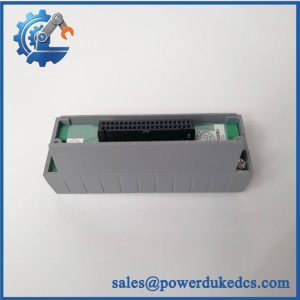
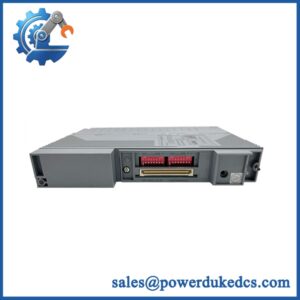
- Full Model Number: CP471-00
- Lifecycle Status: Active / supported product family; Yokogawa continues to publish CP471 documentation and product information
- Core Function: CENTUM VP Field Control Unit processor module
- Top 3 Technical Specs: Basic type / no explosion protection | Dual-redundant operation supported | CENTUM VP Control Function for Field Control Station
- System Compatibility: AFV30□ / AFV40□ / A2FV50□ / A2FV70□ field control units
- Stock & Condition: New original / tested surplus; exact warehouse quantity and condition require physical confirmation
Module 3: Obsolescence & Supply Chain Deep Dive
A failed Yokogawa CP471-00 can stop an FCU even when the I/O modules and field wiring remain fully serviceable. Yokogawa defines CP471 as a processor module mounted on CENTUM field control units, and two CP471 modules can operate in a dual-redundant configuration on a duplexed FCU. The -00 suffix identifies the basic type with no explosion protection. Yokogawa’s specification also states that CP471 can be installed on defined AFV30, AFV40, A2FV50 and A2FV70 FCUs.
For a plant running CENTUM VP, replacing the processor is normally a much smaller TCO event than migrating an entire control platform. Existing I/O, field termination, cabinet hardware and application engineering can remain in place when the replacement is approved for the installed FCU. Yokogawa also documents that can replace an existing CP461, providing a defined processor migration path within the CENTUM architecture. The engineering team should still verify the installed CENTUM VP release and required software patch before procurement; Yokogawa’s earlier documentation specifies software-patch requirements for several R5 and R6 releases.
Module 4: Compatibility & Replacement Matrix
| Approval Point | Assessment |
|---|---|
| Replacement Class | Drop-in replacement when the installed FCU is approved for -00 |
| Processor Architecture | Native CENTUM VP FCU processor |
| Software Compatibility | Software-release verification required; applicable CENTUM VP revision and patch level must be checked |
| Hardware Modification | None expected for an approved -00 replacement |
| Explosion Protection | No explosion protection; the -00 suffix identifies the basic type |
| Redundancy | Supported in duplexed FCUs using two processors |
| Estimated Switch Time | ~30–90 minutes for a controlled processor replacement; configuration and restart checks may extend the maintenance window |
| Engineering Effort | Low–Moderate for a same-part replacement |
| TCO Position | Generally favorable versus FCU or DCS migration |
Yokogawa explicitly lists -00 as applicable to specified non-explosion-protected FCU configurations, while other suffixes are provided for G3 and explosion-protection requirements.
Field Traps — Watch Out
FCU compatibility: -00 is not a universal CENTUM CPU. Yokogawa restricts mounting to specified field control-unit families and configurations. Confirm the complete FCU model code before approving the purchase.
Software patch level: Earlier Yokogawa documentation states that operation with certain CENTUM VP R5/R6 releases requires a specific software patch. Do not treat a hardware-identical processor as automatically compatible with every historical CENTUM VP installation.
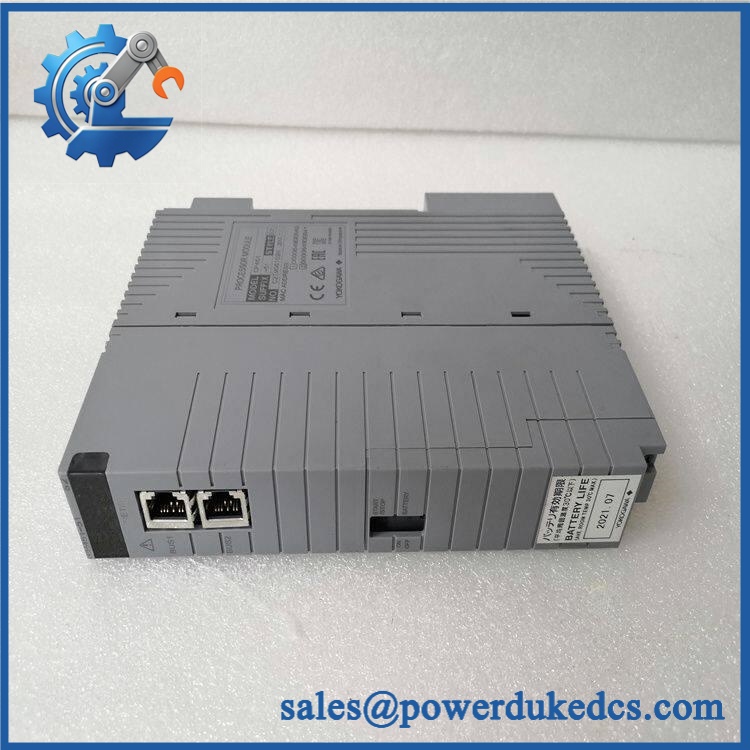
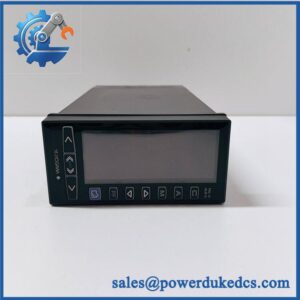
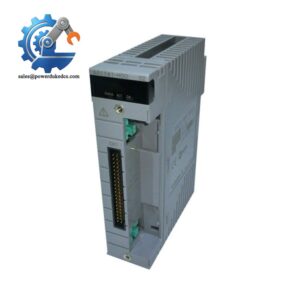
Yokogawa CP471-00
Module 5: Quality Assurance & Testing SOP
Processor modules should be tested in an appropriate CENTUM environment rather than released solely on the basis of a successful power-up.
- Part identity verification: Record Yokogawa, , serial number, revision, manufacturing information and all nameplate markings.
- OEM anti-counterfeit visual inspection: Inspect PCB markings, labels, connectors, components, solder workmanship and evidence of unauthorized rework.
- Mechanical inspection: Check the card edge, mounting hardware, connector housings and module structure for impact, oxidation or deformation.
- Electrical inspection: Verify applicable power and ground paths before installation in the FCU test environment.
- Power-on self-test (POST): Energize the module in a compatible FCU and record startup diagnostics and processor status indications.
- FCU recognition test: Confirm that the FCU identifies correctly without module or hardware diagnostic faults.
- Control-function test: Execute representative control-processing functions and verify expected processor behavior.
- Communication test: Verify communication with the applicable FCU and associated CENTUM VP engineering/control environment.
- Redundancy test: Where a dual-processor test setup is available, verify primary/standby recognition and processor-state transition.
- Software compatibility check: Record the CENTUM VP release and verify the required support patch where applicable.
- Extended run test: Operate the processor under representative control workload and monitor for diagnostic, communication or thermal abnormalities.
- Final QC release: Document processor identity, software environment, diagnostics, test results and photographs before ESD-safe packaging.
Yokogawa’s current specification identifies as a processor module for CENTUM VP field control units and states that it can operate in a dual-redundant configuration.
Module 6: Procurement & Lifecycle FAQ
1. Is Yoko genuinely in stock, and what is the emergency-shipping cutoff?
Current secondary inventory listings adver units, including new-stock claims, but those listings do not independently establish warehouse quantity. For emergency procurement, request an actual-unit photograph, complete nameplate, serial number, quantity, condition, test status and same-day carrier cutoff before releasing the PO.
2. How do you verify the condition and authenticity of a sur?
Require exact part-number and suffix verification, serial traceability, PCB and connector inspection, controlled power-up, FCU recognition testing, CENTUM communication testing and a documented processor functional test. For a critical DCS spare, the test report should accompany the shipment.
3. Are there firmware or software compatibility issues engineers should check before issuing the PO?
Yes. Yokogawa’s documentation identifies supported CENTUM VP releases and, for several earlier R5/R6 revisions, specifies software patches required for support. The engineering team should therefore record the installed CENTUM VP release before approving the replacement.
4. replace a CP461?
Yes. Yokogawa’s official specification explicitly states that existing CP461 can be replaced with on the applicable field control units. The exact FCU model and configuration still need to be verified before the change.
5. What warranty and return terms should procurement require?
The PO should specify Yoko, the basic/no-explosion-protection suffix, accepted condition, processor functional-test scope, warranty duration, DOA definition and return window. For a DCS processor, acceptance should include FCU recognition and communication testing rather than visual inspection alone.


 Start Chat