

Description
- Brand HIMA
- Full Model Number X-FAN1503
- System/Series Family HIMax Safety System
- Core Function Dedicated cooling fan assembly for maintaining airflow and thermal conditions inside HIMax system hardware
- Top 3 Hardcore Specs HIMax-specific fan assembly | Forced-air cabinet/rack cooling | Safety-system thermal management
- Stock Status New Surplus — verify fan revision, connector configuration, and physical condition before shipment
Module 3: Technical Product Introduction
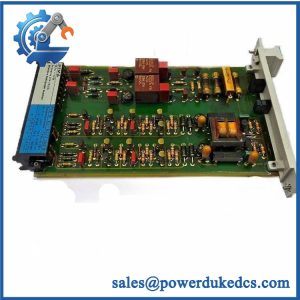
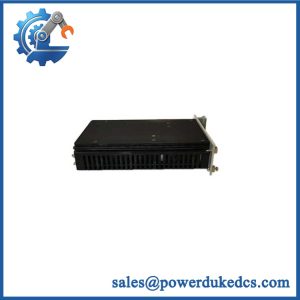
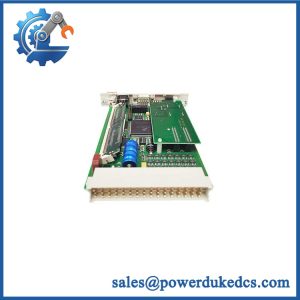
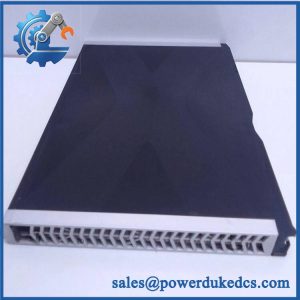
Thermal faults can become intermittent long before a controller reports a hard failure. HIMA X-FAN1503 is identified as a dedicated HIMax cooling fan module, used to maintain forced airflow around the system hardware. Its job is straightforward but important: remove heat generated by energized processing and I/O equipment so the cabinet remains within its specified operating conditions. Current product references identify X-FAN1503 specifically as a HIMax cooling-fan module.
Unlike a CPU or I/O card, the X-FAN1503 does not increase processing capacity or add field channels. Its technical value is thermal control. A replacement decision should therefore focus on fan mechanical fit, connector and supply compatibility, airflow direction, bearing condition, and system-level fan supervision rather than protocol compatibility. Publicly available references confirm the HIMax association, but they do not provide a sufficiently reliable OEM datasheet for exact voltage, airflow, rotational speed, acoustic level, or power-consumption figures; those parameters should be confirmed from the installed revision or controlled HIMA documentation before publication or procurement.
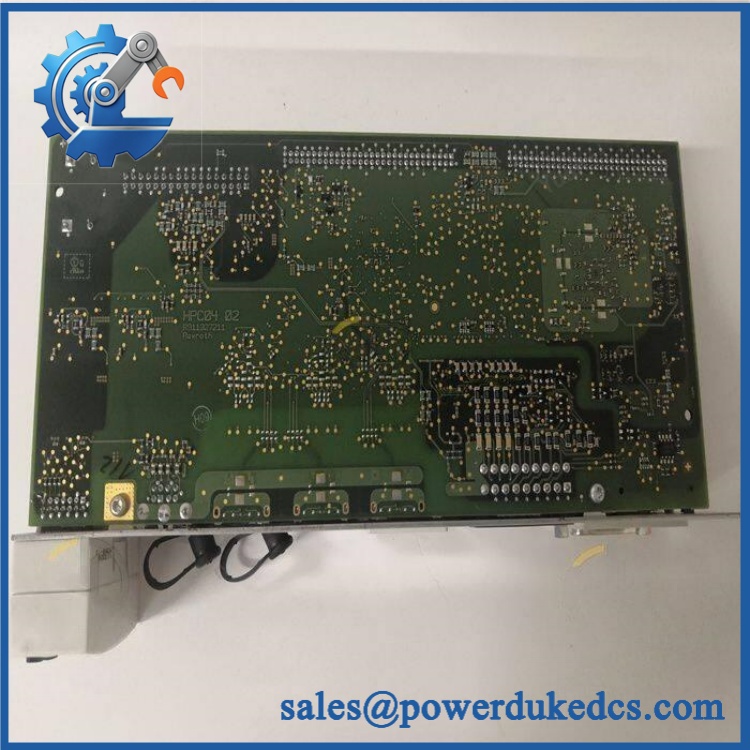
HIMA X-FAN1503
Module 4: Application Scenarios & Field Realities
- Inside a HIMax safety-controller cabinet, the X-FAN1503 is used to maintain airflow across heat-producing electronics. A fan that spins slowly, intermittently, or with excessive bearing noise should be treated as a maintenance issue before cabinet temperature becomes the primary fault symptom.
- During summer operation or high cabinet loading, cooling performance becomes more sensitive to enclosure ventilation, filter condition, ambient temperature, and neighboring equipment heat dissipation. Replacing the fan alone will not compensate for blocked cabinet airflow.
- When a system reports a fan or thermal-related diagnostic, inspect the complete cooling path rather than replacing the controller immediately. Check fan rotation, connector seating, airflow obstruction, cabinet filters, and any associated temperature or fan-monitoring circuit.
- For planned HIMax maintenance, keeping a dedicated X-FAN1503 spare on hand can reduce the risk of an otherwise unnecessary controller shutdown. The component is specifically identified in available product references as a HIMax cooling fan module.
Module 5: Migration, Compatibility & Installation Traps
Replacement Matrix
| Replacement Status | Engineering Assessment |
|---|---|
| Drop-in Replacement | Yes, when replacing an X- with the same approved HIMax configuration and matching mechanical/electrical interface. |
| Software Compatible | Not normally applicable. The fan assembly is not a programmable controller or user-configured logic module. |
| Hardware Modification Required | Normally no for an exact X- replacement. Modification may be required when the replacement differs in connector, mounting arrangement, fan specification, or monitoring interface. |
⚠️ Field Traps: Watch Out
Do not assume a generic industrial fan is an acceptable substitute. Mechanical dimensions may match while the supply voltage, connector pinout, tachometer or alarm output, airflow direction, or starting current differs. For a safety controller, those differences matter.
Confirm the complete identification from the installed unit. The base designation is clearly associated with HIMax cooling hardware, but publicly indexed sources do not provide enough controlled technical data to establish every electrical variant. Check the physical label, connector, revision, and cabinet documentation before ordering a substitute.
Check airflow direction. A physically compatible fan installed backward can reduce cooling performance even though the fan operates normally. Follow the original airflow path and the cabinet’s approved ventilation design.
Inspect the connector before energizing. Fan assemblies can have supply and monitoring conductors in the same harness. A visually similar connector with a different pin assignment can damage the fan circuit or disable monitoring.
Module 6: Quality Assurance SOP
A surplus X- should be tested as a rotating electromechanical safety-system component, not cleared solely from a visual inspection.
- OEM anti-counterfeit visual inspection: Verify HIMA identification, exact designation, visible revision information, housing construction, connector style, fan label, and molded markings against known references.
- Part-number and traceability check: Record all available model, revision, serial, date-code, and manufacturer markings.
- Mechanical inspection: Check the fan frame, mounting points, rotor, blades, connector housing, cable insulation, and retaining hardware for cracks, deformation, contamination, corrosion, or signs of impact.
- Free-rotation check: With power removed, inspect the rotor for abnormal resistance, axial play, grinding, scraping, or bearing noise.
- Power-input verification: Apply the verified fan supply specified for the particular X- revision using a current-limited laboratory source. Do not infer the correct voltage solely from the model name.
- Startup test: Confirm reliable starting without repeated restart attempts, hesitation, or excessive inrush behavior.
- Running-current measurement: Record operating current after stabilization and compare it with the controlled reference for the exact revision.
- RPM or tachometer verification: Where the assembly provides a monitoring signal, verify that the fan-monitoring output changes correctly with rotation.
- Alarm/monitoring verification: Install the unit in an appropriate HIMax test arrangement and confirm that expected fan or thermal diagnostics respond correctly to normal operation and controlled fault conditions.
- Airflow verification: Confirm that airflow direction and delivery are appropriate for the intended HIMax cabinet position.
- Extended run test: Operate the fan continuously under controlled conditions and monitor for bearing noise, vibration, speed instability, connector heating, or intermittent monitoring faults.
- Communication handshake verification: Not applicable as a standalone network module. The appropriate system-level check is successful recognition of the fan/thermal monitoring function by the associated HIMax hardware.
- Final QC record: Document model and revision, measured supply voltage, running current, rotation behavior, monitoring result, airflow direction, physical condition, traceability information, and packing status.
Technical Identification Note: Available references consistently classify HIMA X- as a HIMax cooling fan module, including listings that explicitly describe it as a dedicated HIMax cooling-fan assembly. Exact electrical and performance specifications are not sufficiently documented in the publicly indexed sources reviewed here, so those values should not be fabricated or assumed during procurement.


 Start Chat