

Description
- Brand HIMA
- Full Model Number Z6011
- System/Series Family H41q / H51q central rack power assembly
- Core Function DC decoupling and fuse protection for power-supply feed circuits
- Top 3 Hardcore Specs 4 A slow-blow internal fuse | 5 × 20 mm fuse format | 24 VDC safety-system power architecture
- Stock Status New Surplus — verify revision and fuse configuration before shipment
Module 3: Technical Product Introduction
A power-supply fault does not always originate in the power-supply module itself. In HIMA H41q/H51q rack assemblies, Z6011 provides the decoupling and fuse-protection function associated with the power-supply feed. HIMA documentation for the B 5233 assembly identifies Z6011 as an internal fuse position using a 4 A time-delay fuse in a 5 × 20 mm format, with HIMA fuse part number 57 0174169 in that documented configuration.
This is a power-distribution protection component, not a programmable CPU or I/O processor. In the B 5232-1/-2 mounting set, three Z6011 modules are used for decoupling and fuse protection of the power-supply modules, while Z6012 handles fan and fuse monitoring and Z6013 is used for the watchdog-signal supply path. That architecture matters during troubleshooting: a blown Z6011 fuse should prompt a downstream supply-current investigation rather than simply installing another fuse.
Module 4: Application Scenarios & Field Realities
- Inside an H41q/H51q central rack power assembly, Z6011 sits in the supply distribution path and provides individual protection for the associated power-supply feed. HIMA assembly documentation specifically shows three units serving the power-supply modules in the documented rack arrangement.
- When a power-supply branch repeatedly loses its fuse, check the connected F7126 power-supply module, wiring, and downstream load before replacing . The documented 4 A slow-blow fuse is protection hardware, so recurrent operation is a fault indication rather than normal operating behavior.
- During redundant rack maintenance, maintaining the original branch allocation is important. The H41q documentation describes multiple power-supply modules operating in parallel, with the associated fuse/decoupling arrangement protecting the supply paths. Incorrect branch reassignment can undermine the intended power architecture.
- For a cabinet rebuild or spare-parts replacement, should be treated as a matched HIMA rack component rather than a generic fuse holder. The mounting set documentation identifies its specific role alongside F7126, F7131, F8651, Z6012, and Z6013 components.
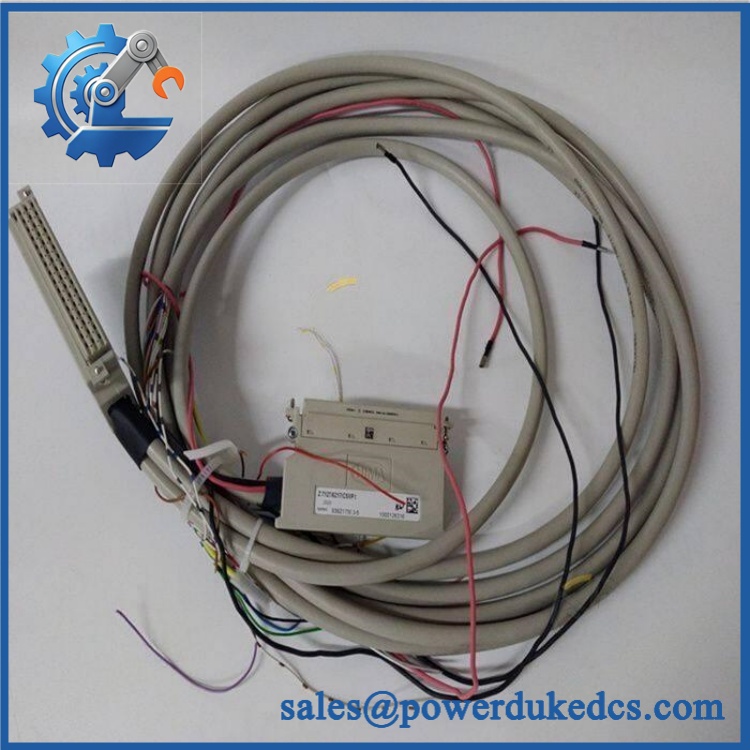
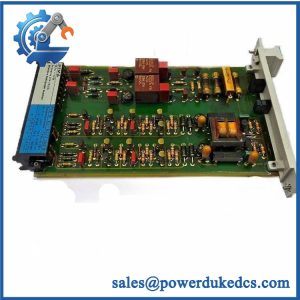
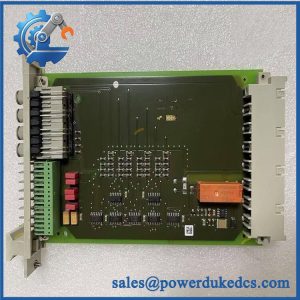
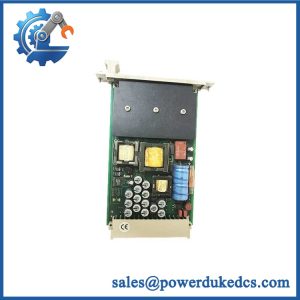
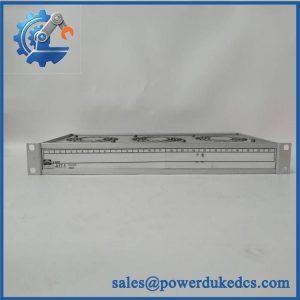
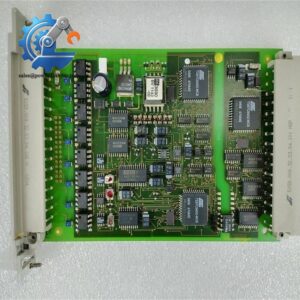
HIMA Z6011
Module 5: Migration, Compatibility & Installation Traps
Replacement Matrix
| Replacement Status | Engineering Assessment |
|---|---|
| Drop-in Replacement | Yes, for an exact replacement within the same approved H41q/H51q rack assembly and matching fuse configuration. |
| Software Compatible | Not applicable. is passive electrical protection and decoupling hardware. |
| Hardware Modification Required | Normally no for an exact replacement. Modification may be necessary when changing rack architecture, supply topology, mounting assembly, or fuse specification. |
⚠️ Field Traps: Watch Out
Use the correct fuse characteristic. HIMA documentation identifies the relevant protection as a 4 A slow-blow / time-delay fuse, 5 × 20 mm. Installing a fast-blow or incorrectly rated fuse can change the protection behavior and may produce nuisance trips during normal power-supply startup.
Do not treat the fuse as the fault. If the fuse opens again after replacement, investigate the associated power-supply branch. The documented H41q architecture places in the supply path for power-supply modules, so repeated fuse operation can indicate a fault in the connected power circuit.
Check the related Z-series parts before ordering. , Z6012, and Z6013 have different functions. HIMA documentation distinguishes as the internal-fuse/decoupling element, Z6012 as the fan/fuse-monitoring unit, and Z6013 as a separate fused supply path for the watchdog signal.
Module 6: Quality Assurance SOP
is simple electrically, but it sits directly in the power-protection chain of a safety-system cabinet. Pre-shipment inspection should therefore verify both the physical assembly and the protection element.
- OEM anti-counterfeit visual inspection: Verify HIMA identification, exact marking, board or assembly construction, terminal/connector arrangement, mounting features, and visible revision information.
- Part-number and traceability check: Record the complete designation and all available serial, revision, date-code, and manufacturing information.
- Mechanical inspection: Check the housing or PCB assembly, fuse holder, contacts, mounting hardware, insulating barriers, and connectors for cracking, corrosion, contamination, discoloration, or unauthorized rework.
- Fuse verification: Confirm that the fitted fuse matches the documented 4 A slow-blow, 5 × 20 mm specification for the applicable HIMA assembly.
- Fuse continuity test: Check electrical continuity through the installed fuse with power removed and record the result.
- Contact-resistance inspection: Verify that fuse-holder and supply contacts do not show abnormal resistance or evidence of overheating.
- DC path continuity test: Check the intended input-to-output conduction path under a controlled, de-energized test procedure.
- Insulation verification: Confirm there is no unintended continuity between isolated conductive sections according to the applicable HIMA assembly test procedure.
- Controlled energization: Apply the approved rack supply in a suitable test fixture and verify correct protected supply distribution without abnormal current draw or heating.
- Protection-response verification: Where the laboratory fixture permits, conduct a controlled overload/protection test using an appropriate current-limited source rather than an uncontrolled short circuit.
- System-level verification: Check the associated F7126 power-supply branch and rack monitoring circuit to ensure installation does not introduce a supply fault. The H41q/HRS documentation describes dedicated monitoring connections for fuses and fans.
- Communication handshake verification: Not applicable to itself; acceptance is based on correct protected power distribution and associated rack diagnostics.
- Final QC record: Document fuse rating, continuity, measured resistance, physical inspection, traceability, test-fixture identification, and packing status.
Technical Identification Note: HIMA documentation identifies as an internal fuse/decoupling component used in H41q/H51q power-supply assemblies, with a documented 4 A slow-blow 5 × 20 mm fuse for the referenced configuration. Some secondary listings incorrectly label as a generic CPU or standalone PLC module; the HIMA assembly documentation supports the decoupling-and-fusing interpretation and should be used for engineering and procurement decisi



 Start Chat