

Description
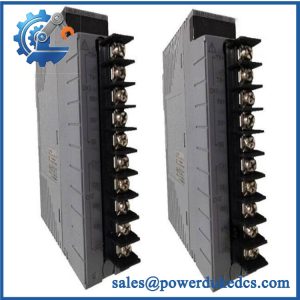
Unboxing & Physical Snapshot
- Manufacturer: Yokogawa
- Model: CP451-10
- Product type: Yokogawa DCS processor module. Secondary-market technical records identify it with Yokogawa’s CENTUM control-system architecture.
- Physical dimensions: Approximately 51 × 152 × 203 mm (H × W × D) according to one published equipment record; other supplier listings report different dimensions, so physical measurement should take precedence for freight documentation.
- Unit weight: Approximately 0.7 kg according to a published distributor specification.
- Estimated packed shipping weight: Approximately 1.2–1.8 kg, depending on ESD shielding, cushioning, and carton size. Use the actual packed weight for the commercial invoice.
- Power supply: Published secondary-market specifications identify 24 VDC; exact power consumption varies across available records and should be confirmed against the applicable Yokogawa documentation.
- What’s in the box: CP451-10 processor module; mounting hardware and mating connectors only if supplied with the specific lot; OEM documentation if included.
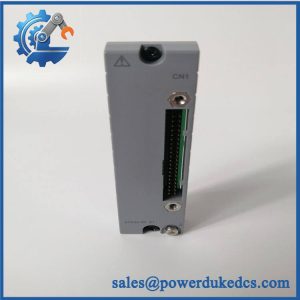
- Receiving inspection: Photograph the nameplate, serial number, hardware revision, connectors, mounting mechanism, and ESD packaging before inventory acceptance.
Product Introduction
Architecture hook: The CP451-10 is a processor-level DCS spare, not a conventional field I/O module. Its role is tied to the Yokogawa control-system architecture, so compatibility must be established against the target system revision, processor configuration, communication architecture, and associated FCS hardware before installation.
That distinction is important for legacy Yokogawa assets. Publicly available secondary-market records disagree on several detailed specifications—including memory, dimensions, and power consumption—which means those values should not be copied into an auditable asset master without checking the physical nameplate and applicable Yokogawa documentation.
Core Technical Specifications
| Parameter | Value |
|---|---|
| Manufacturer | Yokogawa |
| Model | CP451-10 |
| Product type | DCS processor module |
| System association | Yokogawa CENTUM control-system family |
| Supply voltage | 24 VDC |
| Processor | Published records identify a 32-bit processor architecture |
| Communication | System-dependent; verify actual installed interfaces |
| Memory | Revision-dependent; published secondary sources report conflicting values |
| Operating temperature | Verify against the applicable Yokogawa hardware manual |
| Storage temperature | Verify against OEM documentation |
| Humidity | Verify against OEM documentation |
| Approx. dimensions | 51 × 152 × 203 mm reported by one source |
| Approx. weight | 0.7 kg reported by one source |
| Mounting | System/FCS hardware dependent |
| Firmware | Revision-dependent |
| Cooling | Cabinet/system airflow dependent |
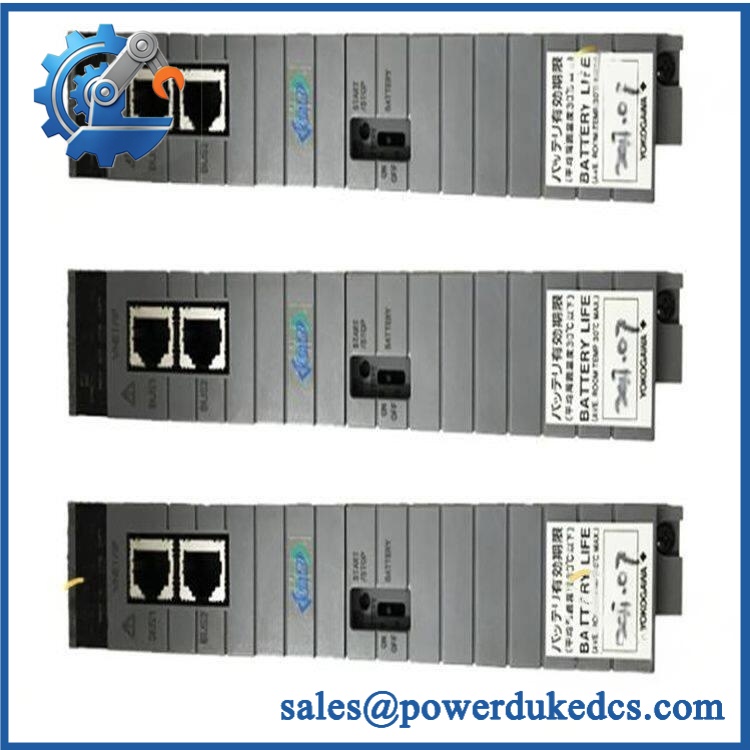
Yokogawa CP451-10
Data-quality warning: Do not use the conflicting online figures of 128 KB RAM / 1 MB flash, 2 MB, 64 MB RAM, or 1 GB/2 GB flash interchangeably. These appear to originate from inconsistent third-party records and may refer to different hardware revisions or entirely incorrect product associations.
For an inventory master, mark undocumented electrical, thermal, and memory values as “OEM verification required” rather than creating false precision.
Global Compliance & Industry Certifications
For a Yokogawa DCS processor, certification should be evaluated against the exact hardware revision and complete system configuration.
- CE Mark: Verify the applicable Yokogawa declaration for the specific CP451-10 configuration.
- UL/cUL: Verify the actual product marking and applicable certification record before declaring North American safety approval.
- ATEX/IECEx: Do not assume hazardous-area certification merely because the module is used in process industries. Hazardous-location approval must apply to the specific hardware and installation configuration.
- Marine approvals: Yokogawa identifies marine standards such as ABS, Bureau Veritas, and Lloyd’s Register within its broader DCS compliance framework, but approval varies by hardware apparatus and software package.
- EMC: Verify the applicable EMC declaration for the complete DCS cabinet/system.
- RoHS: Confirm the environmental compliance statement applicable to the production revision.
Certification is particularly important for DCS processor hardware because a processor module forms part of a larger control system whose cabinet power, grounding, communication, and environmental characteristics determine system-level compliance.
Verify specific lot certifications with OEM.
Long-Term Storage & Asset Preservation Guide
Keep the CP451-10 inside its original ESD shielding bag. Processor boards contain static-sensitive semiconductor devices, and repeated handling outside controlled ESD conditions can damage a spare without leaving obvious physical evidence.
Maintain a clean, dry storage environment. Avoid condensation, conductive dust, corrosive vapors, and uncontrolled temperature cycling. For long-term warehouse preservation, keeping RH comfortably below 60% is a sensible maintenance target even where the formal OEM limit permits higher humidity (the objective is to reduce connector oxidation and moisture-related PCB degradation).
Preserve configuration identity. Record the serial number, hardware revision, date code, firmware version, and original packaging information. A processor that physically fits the cabinet but carries an incompatible firmware/system revision can create a much larger outage risk than an obvious mechanical mismatch.
Physical Installation Prerequisites
- Install only in the Yokogawa system/FCS architecture specified for the revision.
- Confirm the target system’s hardware and software revision before issuing the spare.
- Verify the 24 VDC supply against the applicable Yokogawa power-distribution specification.
- Use the designated backplane/base-unit mounting mechanism; do not substitute a generic DIN-rail mounting arrangement.
- Inspect the backplane connector for bent contacts, contamination, oxidation, or mechanical damage.
- Follow the cabinet’s specified forced-air or convection cooling path.
- Do not block ventilation openings or install adjacent equipment in a manner that restricts heat removal.
- Confirm protective grounding and cabinet bonding before energization.
- Apply ESD controls when inserting or removing the processor.
- Back up the existing processor configuration before replacing a live unit whenever the maintenance procedure permits.
- After installation, verify processor diagnostics, communication status, system alarms, and firmware compatibility before returning the FCS to service.
Buyer’s FAQ
Q: What HS tariff code should be used for the ?
A: One secondary-market listing reports 8537109060, but that classification should be treated only as a reference. The correct HS classification depends on the module’s documented function and the importing country’s tariff schedule. Have the customs broker validate the final code before shipment.
Q: Can Japan be declared as the Country of Origin because Yokogawa is Japanese?
A: No. Brand nationality does not establish COO. Obtain the manufacturing-origin statement from the physical nameplate, OEM documentation, or supplier declaration for the actual serial-numbered unit.
Q: Should I insure a 0.7 kg processor module?
A: Yes, where the replacement cost or plant outage exposure is significant. Weight is irrelevant to the economic value of a critical DCS processor. Use ESD protection, shock-resistant cushioning, and pre-shipment photographs of the serial number and packaging.
Q: Does a replacement include the latest firmware?
A: Do not assume it does. Firmware must be verified against the target CENTUM system revision before commissioning. Record the firmware/software baseline of the installed processor and compare it with the spare before deployment. Yokogawa maintains dedicated documentation, firmware, and discontinued-product resources through its support organization.
Asset-control note: Because available third-party specifications contain significant inconsistencies, the nameplate, serial number, hardware revision, and OEM documentation should take precedence over reseller-generated specifications when creating the final warehouse master record.


 Start Chat