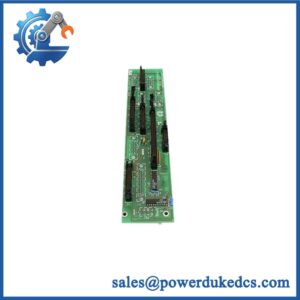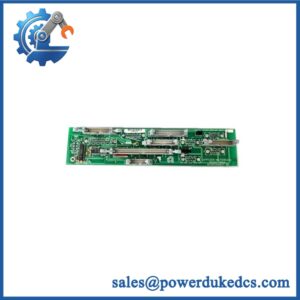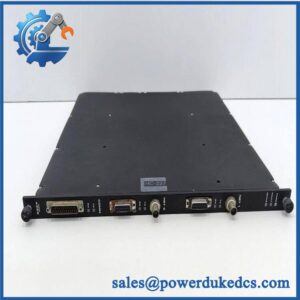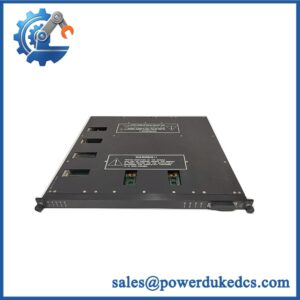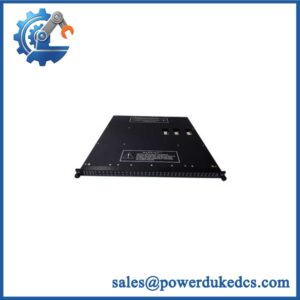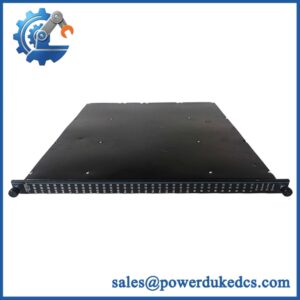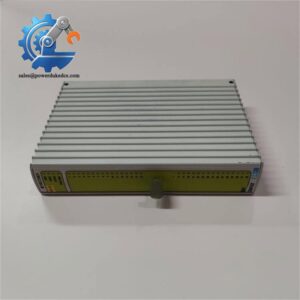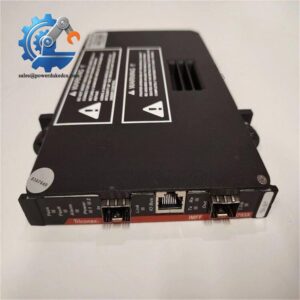
Description
-
Brand: TRICONEX
-
Full Model Number: CIM3211 (Model 3211)
-
Product Type: Communications Integration Module (CIM)
-
System Platform: Triconex Trident v3 and compatible configurations
-
Lifecycle Status: Current production and support status unverified; confirm availability for the required revision
-
Core Function: Communication between Trident main processors, external control systems, engineering workstations, and networked equipment
-
Top 3 Technical Specifications:
-
Serial Interfaces: Three optically isolated RS-232 or RS-485 serial ports through the associated CIM media adapter
-
Network Interfaces: Two Ethernet network ports with RJ-45 and SFP connection options, subject to the installed media configuration
-
Supported Protocols: Modbus RTU, Modbus TCP, TriStation 1131, TSAA, Triconex Peer-to-Peer, and OPC UA
-
-
Modbus TCP Capacity: Up to 16 Modbus TCP ports on the Trident CIM
-
Power Requirements: 24 VDC nominal; specified operating range of 19.2–30 VDC
-
Power Consumption: Maximum 11.5 W for the CIM, excluding SFP power consumption
-
Required Hardware: CIM baseplate Model 2211; CIM media adapter Model 2211-100 for the documented serial interface configuration
-
Stock and Condition: Actual availability, revision, packaging, and condition subject to written confirmation
-
Dispatch Lead Time: Confirmed after physical stock verification and order approval
-
Warranty: Written coverage and return conditions required before purchase order approval
Obsolescence and Supply Chain Deep Dive
A communications module failure can interrupt data exchange between a Trident controller and external systems, restricting process visibility and complicating fault diagnosis. The TRICONEX CIM3211 provides serial and Ethernet communication capabilities for configured Trident installations. Its supported applications include communication with distributed control systems, engineering workstations, other Triconex controllers, and compatible networked equipment. Because this module handles several communication paths, the correct replacement must match the installed controller generation, media adapter, baseplate, and protocol configuration. Model identification alone does not establish compatibility with every Trident installation.
For a functioning Trident installation, sourcing a verified CIM3211 may cost less than migrating the control platform or redesigning its communication architecture. Total Cost of Ownership (TCO) should include the replacement module, required accessories, freight, engineering labor, configuration checks, and commissioning. A like-for-like replacement can preserve existing communication paths when the hardware and application configuration match. However, the cost comparison must also account for the availability of compatible media adapters and support for the installed software. Establish a spare-parts plan before a failure creates an urgent sourcing requirement (delivery depends on the actual module, media adapter, and baseplate inventory). For long-term planning, evaluate migration costs separately rather than assuming that one replacement resolves future lifecycle risks.
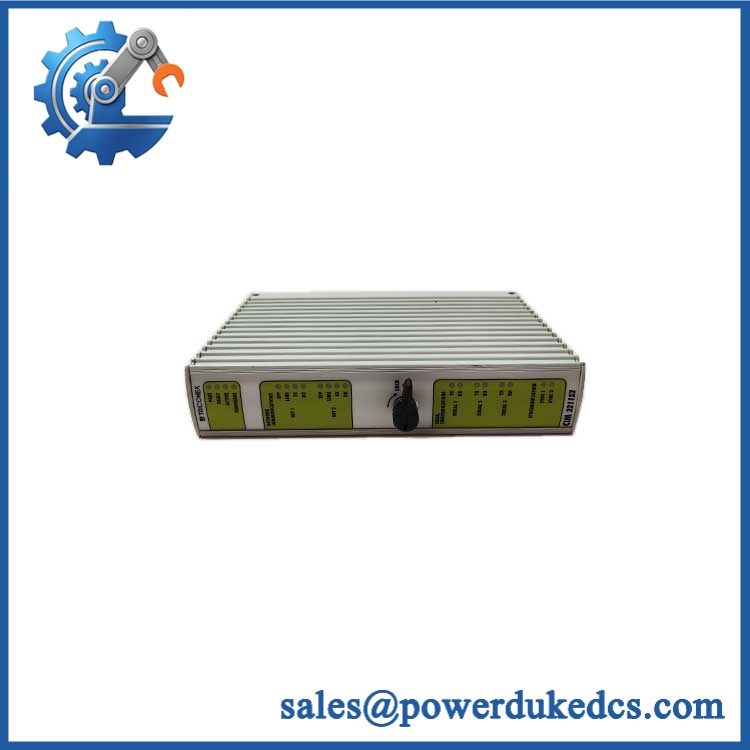
Triconex CIM3211
Compatibility and Replacement Matrix
The CIM3211 is a communications integration module for the Trident platform. It should not be treated as interchangeable with every Triconex communication module.
|
Replacement Scenario |
Compatibility Assessment |
Required Action |
|---|---|---|
|
Identical CIM3211 with matching hardware and media configuration |
Candidate drop-in replacement |
Verify model, revision, baseplate, media adapter, and controller configuration |
|
CIM3211 installed in a different Trident hardware generation |
Compatibility requires verification |
Confirm the controller generation and applicable hardware documentation |
|
without the required media adapter |
Complete functionality may not be available |
Verify whether the associated Model 2211-100 media adapter is required and included |
|
with different serial or Ethernet media requirements |
Configuration review required |
Match RS-232/RS-485 wiring, RJ-45 connections, and SFP requirements |
|
replaced with the older 3201 Communication Module |
Not an automatic drop-in replacement |
Compare supported protocols, network interfaces, application requirements, and baseplate compatibility |
|
Replacement involving different network architecture or software requirements |
Engineering changes may be required |
Assess protocol support, IP configuration, controller compatibility, and application changes |
Replacement Cost and Time Estimates
The following figures are preliminary planning allowances, not manufacturer-approved service durations or supplier quotations.
|
Activity |
Preliminary Planning Allowance |
|---|---|
|
Part identification and compatibility review |
30–60 minutes |
|
Baseplate and media adapter inspection |
30–60 minutes |
|
Like-for-like module replacement |
1–2 labor hours |
|
Serial and Ethernet communication testing |
1–3 labor hours |
|
Application-level communication verification |
1–2 labor hours |
|
Replacement module and expedited freight |
Supplier quotation required |
|
Preliminary maintenance window |
Approximately 2–5 hours, subject to site conditions |
These estimates assume that the correct hardware is available, configuration records are accessible, and existing wiring is intact. Network troubleshooting, changes to external devices, or application modifications can extend the maintenance window.
Field Traps to Check Before Ordering
Baseplate and media adapter mismatch: The is associated with the Model 2211 communications integration baseplate. Its documented serial interfaces operate through the CIM media adapter. Confirm which components are included in the quotation; a module-only offer may not constitute a complete replacement assembly.
Protocol and network mismatch: Modbus TCP, Modbus RTU, TSAA, TriStation 1131, and OPC UA have different configuration requirements. Confirm the actual protocol, serial interface mode, network addressing, and connected-device requirements before ordering.
Power and module configuration: Verify the documented 24 VDC logic-power arrangement and the installed baseplate. The stated 11.5 W maximum excludes SFP power consumption, so the media configuration must be considered when checking the available power budget.
Controller generation: Confirm the installed Trident version and applicable product documentation. Do not assume that a , a 3201 communication module, or a similarly named communications product can be substituted without engineering verification.
Quality Assurance and Testing SOP
Pre-shipment QA should confirm the identity, physical condition, communication interfaces, and test coverage of the actual TRICONEX being supplied. Testing must reflect its communications function rather than treating it as a digital or analog I/O module.
|
QA Stage |
Required Procedure |
Acceptance Criteria |
|---|---|---|
|
Part identification |
Record the or Model 3211 designation, available serial or batch information, revision, and traceability records |
Identification matches the purchase specification |
|
OEM anti-counterfeit visual inspection |
Examine labels, PCB markings where accessible, components, connectors, soldering, and signs of unauthorized repair |
No unexplained identity discrepancies or visible defects affecting use |
|
Mechanical inspection |
Inspect the module housing, backplane interface, mounting points, and media adapter connections |
No damage that compromises installation or electrical contact |
|
Power-supply verification |
Verify operation through a compatible Trident baseplate within the documented supply range |
Startup behavior agrees with the applicable hardware documentation |
|
Power-on self-test (POST) |
Record startup sequence and fitted status indicators |
No unresolved diagnostic fault; observed states documented |
|
Status indicator verification |
Inspect PASS, FAULT, ACTIVE, and FIRMWARE indicators where fitted |
Indications are consistent with the applicable test procedure |
|
Serial-interface testing |
Test the required RS-232 or RS-485 interfaces through the appropriate media adapter |
Communication succeeds using the specified protocol and configuration |
|
Ethernet testing |
Verify each required network port, link status, and data transmission |
Required interfaces communicate without unresolved link or transmission faults |
|
Protocol testing |
Exercise the interfaces required by the application, including Modbus RTU, Modbus TCP, TSAA, or TriStation where applicable |
Observed protocol behavior meets the agreed test criteria |
|
OPC UA verification |
Confirm OPC UA communication where supported and included in the test scope |
Client communication and data access operate as expected |
|
Controller data-path testing |
Verify reads and writes to approved test variables through the configured communications path |
Expected data values and responses are recorded; no unintended control commands are issued |
|
Final inspection and packing |
Photograph the actual module and included accessories, record test results, and use ESD-protective packaging |
Shipped goods match the inspected items and test records |
Pre-Shipment Test Documentation
The test report should identify the module, serial or batch markings where available, revision, media adapter, power arrangement, interfaces tested, protocols exercised, and any limitations.
A successful power-on test does not prove that all communication protocols work. Likewise, a working Ethernet link does not establish that the controller application, Modbus register mapping, or OPC UA data access is configured correctly.
Direct I/O load testing is not a standalone test because this module provides communications rather than field-output channels. Where applicable, verify the end-to-end transfer of controller I/O data through the approved application and test arrangement. If a complete Trident test rack is unavailable, disclose the limitation instead of claiming full application-level verification.
Procurement and Lifecycle FAQ
Is the TRICONEX genuinely in stock, and what is the emergency shipping cutoff?
Physical availability must be confirmed for the exact module and required accessories. Request written confirmation of quantity, model and revision, condition, media adapter inclusion, and expected dispatch date. Emergency shipping depends on order approval, payment clearance, inspection, export documentation, packaging, and carrier collection. No fixed dispatch cutoff should be assumed without confirmation.
How do you verify the condition and authenticity of a surplus ?
Request photographs of the actual module, front-panel indicators, product identification, connectors, and available internal markings. The quotation should distinguish new original, new surplus, and used equipment, as applicable. Ask for traceability records and a unit-specific inspection report. Visual inspection alone cannot establish authenticity or complete communication functionality.
Are there firmware or communication compatibility issues to resolve before issuing the purchase order?
Yes. Verify the Trident controller generation, required firmware and application configuration, serial-interface mode, Ethernet arrangement, and supported protocols. Confirm the required CIM media adapter and baseplate. If Modbus TCP, OPC UA, or Triconex Peer-to-Peer communication is required, include those functions in the compatibility review rather than relying on the model designation alone.
What warranty and return terms apply to the TRICONEX ?
The written quotation should specify the warranty period, coverage conditions, defective-on-arrival procedure, return authorization requirements, and exclusions. For surplus or used equipment, confirm whether the warranty covers functional failure and what test evidence is needed for a claim. Retain the identification photographs, inspection report, communication test results, and shipping records.
Is replacing the more economical than migrating the communication architecture?
A verified like-for-like replacement may have a lower immediate cost when the existing Trident controller and connected systems remain suitable. Compare the module and accessory costs, freight, installation labor, network verification, and downtime exposure against the engineering, software changes, network redesign, and commissioning associated with migration. If spare availability remains uncertain, include future inventory needs and a planned migration assessment in the lifecycle budget.|